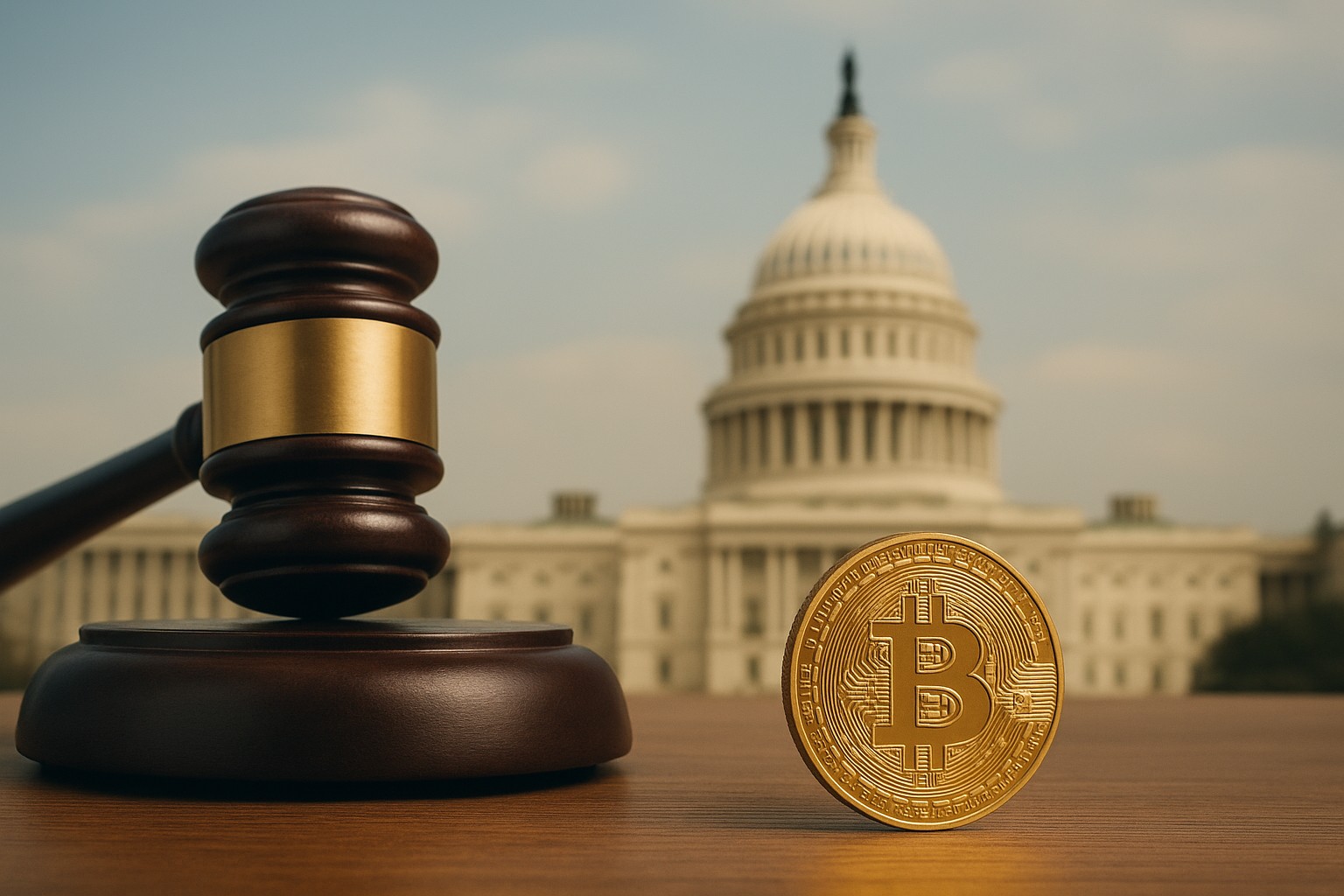
Court battle begins as CFTC presses three states on crypto prediction market regulation. What looks like a narrow dispute over event contracts is quickly turning into a high-stakes test of who sets the rules for crypto-linked prediction markets in the US: federal derivatives regulators or state gaming authorities.
Introduction: why this court fight matters now
The Commodity Futures Trading Commission (CFTC) stepping into open litigation against multiple states marks a shift from policy debate to precedent-setting legal combat. If the courts side with the federal view, certain crypto prediction market products could scale nationally under a single rulebook; if not, platforms may face a patchwork of state-by-state restrictions that can be practically impossible to navigate.
As a reader, you don’t need to be a lawyer to feel the impact. These cases affect whether event contracts (including sports-style outcomes, election-like questions, and other real-world events) are treated like regulated financial instruments—or like gambling products subject to local licensing, enforcement, and criminal penalties.
News: what the CFTC is suing over and what it wants from the courts
At the center of the dispute is how to classify event-based contracts that resemble bets but can also be structured as derivatives. The CFTC’s position, in essence, is that when an event contract is offered through federally regulated market infrastructure, federal commodities law should control—even if a state believes the same activity resembles unlawful gambling under its statutes.
This is also about speed. The federal government’s litigation posture signals it wants a fast, clarifying ruling rather than years of inconsistent outcomes across jurisdictions. In practical terms, that would reduce uncertainty for exchanges and brokers, but it also reduces the ability of states to apply local public-policy choices (especially around sports wagering) to these newer products.
From an industry perspective, the shift to lawsuits is a tell: informal negotiations and guidance documents haven’t produced a stable boundary line. Now both sides are forcing courts to draw that line, which means the eventual result could harden into a durable rule that shapes market structure for years.
Market Structure: federal derivatives vs state gambling—where the boundary gets messy
Prediction markets sit awkwardly between finance and gaming. A traditional derivative references a price, rate, or measurable outcome; an event contract references a real-world event (who wins, what happens, when it happens). The closer the contract feels to sports betting, the more state regulators tend to treat it as gambling. The closer it looks like a standardized, risk-managed contract listed on a regulated venue, the more it resembles a financial product.
The market structure question matters because it determines which compliance stack applies. Under a derivatives framework, you think in terms of exchange registration, surveillance, position limits, market integrity controls, and customer protections that look like financial regulation. Under a gambling framework, you’re dealing with licensing, geofencing, permissible bet types, advertising restrictions, and sometimes criminal enforcement.
My personal take: the tension isn’t going away because both sides have legitimate objectives. States want to control socially sensitive wagering and protect local tax bases tied to regulated sportsbooks. Federal regulators want coherent national markets and to prevent regulatory arbitrage where products are engineered to look like one thing while functioning like another.
Sports as the fault line: why sports-style event contracts trigger the toughest scrutiny
Sports outcomes are the flashpoint because states have spent years building detailed sports wagering regimes—often with carefully negotiated rules on integrity fees, league data, consumer protections, and taxation. When a prediction market offers sports-like contracts at a national scale, states may view it as bypassing that regime, even if the platform insists it is offering federally governed event contracts rather than “bets.”
This isn’t just semantics; product design is the real battlefield. Two offerings can feel similar to a user while being structured differently under the hood. Order books, clearing mechanisms, margining, and contract specifications can push a product closer to a derivatives identity, while parlay-like mechanics, promotional wagering incentives, and purely recreational framing pull it toward gambling in the eyes of state regulators.
Practical compliance questions platforms should ask before listing sports-like contracts
- Contract design: Does the contract behave like a standardized derivative (transparent pricing, settlement rules, anti-manipulation controls), or like a sportsbook market?
- Distribution model: Is access routed through a regulated exchange or broker model, or direct-to-consumer in a way that resembles wagering apps?
- User protections: Are there robust disclosures, risk controls, and surveillance tools comparable to financial markets?
- State exposure: Is the platform actively preventing access where state law clearly prohibits similar activity, and does it have a response plan for cease-and-desist actions?
If you’re building in this space, this is where legal theory meets product reality. Courts may talk about preemption and jurisdiction, but the facts they rely on often come down to what the product actually does and how users actually experience it.
The federal bet: what “preemption” could mean for crypto prediction markets
The CFTC’s legal strategy is effectively a bet that federal law should override state attempts to classify certain event contracts as illegal gambling when offered through federally regulated channels. If courts agree, the outcome could create a de facto national passport for eligible event contracts—making it easier for platforms to operate across state lines without fifty separate approvals.
However, even a federal win may not equal a free-for-all. Federal jurisdiction can bring strict obligations: governance, reporting, market surveillance, and enforcement risk if the product crosses prohibited lines (for example, contracts that raise public-interest concerns or are viewed as facilitating manipulation). In other words, federal preemption can replace state friction with federal scrutiny—not remove scrutiny altogether.
On the flip side, if states win key points, platforms may be forced to localize: restricting markets to approved states, limiting contract types, or partnering with state-licensed gaming entities. That could reduce innovation and liquidity, but it might also push prediction markets to adopt clearer responsible-use guardrails that states have refined over years in the sports betting context.
The regulator’s internal contradiction: innovation vs protection, and the problem of “look-alike” products
A recurring challenge in US crypto policy is that regulators are asked to both foster innovation and prevent consumer harm—often without a single unified framework. Event contracts highlight that contradiction because they can serve legitimate hedging and information-discovery purposes, yet they can also become speculative entertainment products with gambling-like behavior patterns.
Another complication is the rise of “look-alike” products. Two platforms can offer nearly identical interfaces, but one is built to comply with financial market expectations while the other operates more like a sportsbook. When states see consumers using both in the same way, they may conclude the distinction is artificial. When federal regulators see one operating through regulated market plumbing, they may conclude states are overreaching.
If you’re a trader or everyday user, the key insight is that regulatory classification can change your practical protections: dispute resolution processes, disclosures, market integrity standards, and the likelihood of sudden delistings or access restrictions. Legal uncertainty often shows up as product instability—markets disappear, liquidity fragments, and users get whiplash.
Learn: what traders, builders, and investors should do during the legal uncertainty
This court battle will take time, and the path may include preliminary rulings, appeals, and parallel enforcement actions. During that uncertainty, the smartest move is to treat availability today as not guaranteed tomorrow—especially for sports-style or headline-driven contracts that attract political and regulatory attention.
For traders, risk management isn’t only about price movement; it’s also about platform and jurisdiction risk. If a market is halted or a product is restricted in your state, you need to know how positions settle, what happens to open orders, and whether you can withdraw funds promptly under stress scenarios. For builders, a compliance-by-design mindset is no longer optional; it is the difference between scaling and constantly firefighting.
A practical checklist that I recommend keeping handy:
– Review the platform’s regulatory posture (registration claims, public disclosures, enforcement history, and terms of service).
– Understand settlement and cancellation rules, including what happens if an event becomes ambiguous or disputed.
– Avoid concentrating funds in a single venue when the legal status of key products is actively contested.
– Monitor state regulator announcements as closely as federal ones; state actions can be faster and more disruptive operationally.
Conclusion: a defining moment for US crypto prediction market regulation
The court battle begins as CFTC presses three states on crypto prediction market regulation, and the stakes are larger than a single product category. This is a referendum on whether event contracts will be governed primarily as national financial instruments under federal derivatives law—or treated as gambling-like activity controlled by state regimes built around sports wagering and consumer protection.
Either outcome will reshape the industry. A strong federal ruling could accelerate standardization and liquidity, but likely with tighter federal oversight and clearer lines around what is permissible. A strong state-friendly outcome could entrench fragmentation, pushing platforms toward localized compliance or partnerships with licensed gaming operators. For now, the most realistic approach—whether you’re trading, investing, or building—is to plan for volatility in both markets and rules, because the next big catalyst may come from a courtroom, not a chart.