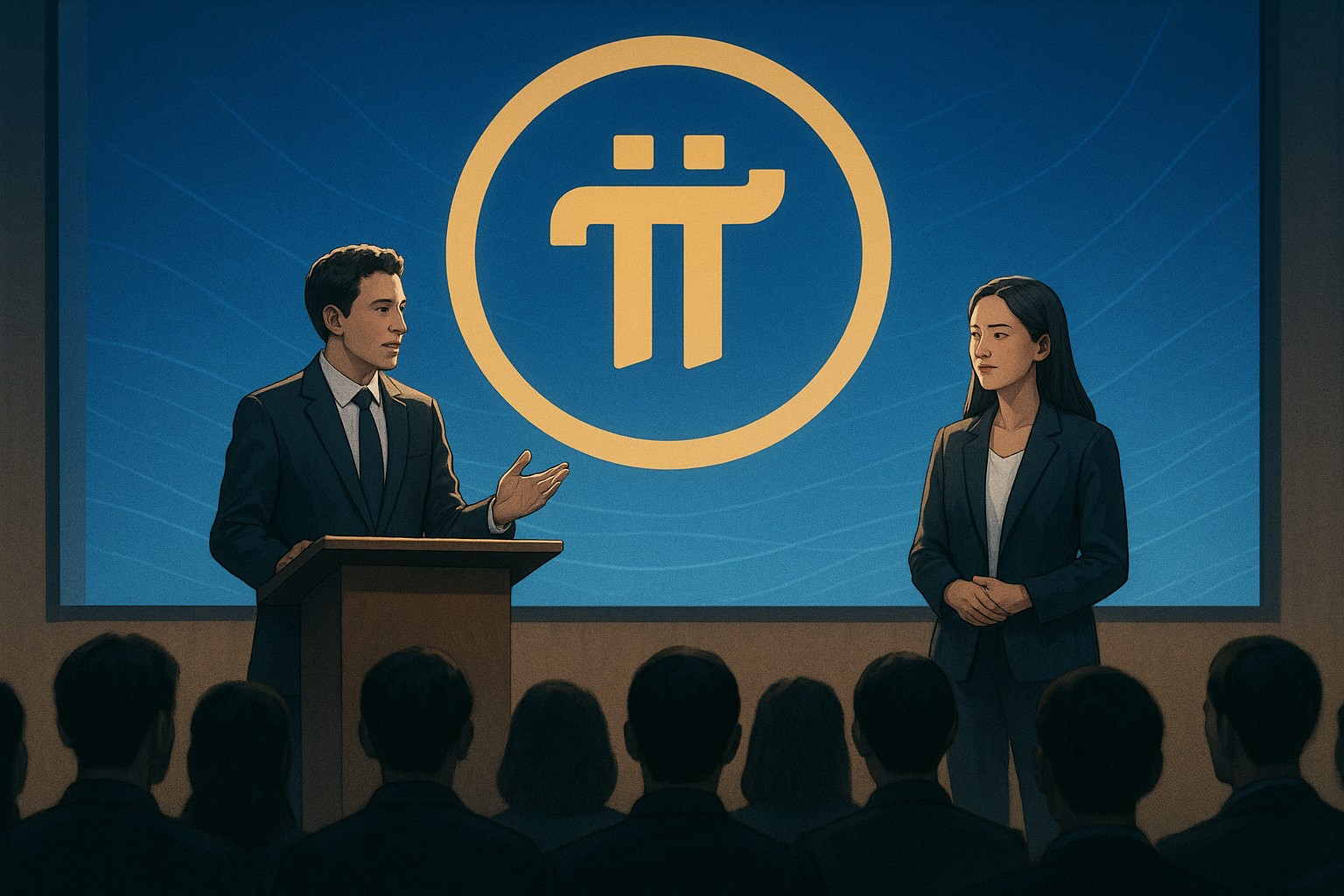
What Pi Network founders will share at Consensus 2026 with Protocol 23 on the horizon is likely less about hype and more about proving real utility at scale. With smart contracts approaching and public visibility rising, the next few weeks may shape how developers, investors, and everyday Pioneers evaluate Pi’s roadmap.
Why Consensus 2026 matters for Pi Network right now
Consensus 2026 is one of the few crypto conferences where mainstream institutions, builders, and policymakers overlap in the same venue. For Pi Network, showing up in that environment isn’t just marketing; it’s a credibility test. When a project steps onto a major stage close to a major upgrade, the industry tends to read it as a signal that the team is ready to be judged by outcomes rather than narratives.
Timing is the big story. With Protocol 23 on the horizon, the founders’ appearances can set expectations for what “programmability” and “utility” mean in Pi’s ecosystem—especially for developers deciding whether to build, and for businesses considering Pi integrations. Personally, I see Consensus as the moment Pi needs to translate its large community into a clear, technical value proposition that outsiders can verify.
Beyond the stage itself, Consensus often triggers a wave of secondary effects: partnership conversations, developer meetups, exchange and custody discussions, and media interpretation. If Pi wants to be evaluated like a top-tier platform, it has to communicate like one—clear milestones, realistic constraints, and measurable adoption targets.
Pi Network confirms Consensus 2026 sponsorship: what that signals to the market
When Pi Network confirms Consensus 2026 sponsorship, the message is bigger than a logo on an event page. Sponsorship typically comes with structured visibility: curated programming, press access, and higher-intent conversations with enterprise and institutional attendees. That can accelerate relationship-building—but it also raises the bar for what the project must demonstrate.
From an SEO and media perspective, sponsorship changes the framing from “community phenomenon” to “industry participant.” That shift matters because Pi has long had to navigate skepticism about whether its network effects convert into on-chain economic activity. Sponsorship puts the project in the same comparison set as other major ecosystems that regularly court developers and enterprises at top conferences.
At the same time, visibility can amplify volatility and over-interpretation. Markets often front-run conference weeks and then cool off when headlines fade. The way to break that pattern is substance: shipping upgrades, publishing documentation, enabling builders, and showing real apps with real users. Sponsorship creates the microphone; Protocol 23 needs to provide the proof.
Protocol 23 countdown: smart contracts, developer readiness, and ecosystem impact
The Protocol 23 countdown is essentially a countdown to Pi being evaluated as a programmable platform rather than a single-purpose network. Smart contracts expand what can be built—DeFi primitives, on-chain identity integrations, tokenized access, creator monetization, loyalty systems, and more. But adding smart contracts is only step one; making them usable, secure, and well-documented is what determines adoption.
The practical question for builders is not simply “Are smart contracts live?” but “Is there a reliable developer experience?” That includes stable tooling, clear standards, test environments, audits, and upgrade policies. It also includes predictable economics: fees, throughput expectations, and how contract deployment interacts with account verification and anti-bot design.
If I were a developer evaluating Pi post-Consensus, I would look for three things right away: (1) a clear contract model and documentation, (2) transparent guidance on identity and compliance constraints, and (3) an ecosystem roadmap that shows where apps can realistically find users and revenue. Protocol 23 can unlock the technical surface area, but the ecosystem needs a practical on-ramp.
Key themes the Pi Network founders may emphasize on the Consensus stage
Given the timing and Pi’s positioning, the founders’ most valuable contribution at Consensus 2026 would be to connect Pi’s long-term thesis—real humans, real utility—with the immediate launch realities of Protocol 23. In other words: what changes for builders and businesses the week smart contracts arrive, and what stays the same in Pi’s approach to identity, safety, and accessibility.
Expect an emphasis on “utility-first Web3” rather than speculation-first crypto. Pi has always leaned into everyday usability, and Consensus is where that claim will be challenged by sophisticated audiences who ask hard questions about security, decentralization, and sustainable app economics.
A strong appearance would also clarify what Pi is not trying to be. For instance, Pi doesn’t need to claim it will replace every L1 overnight; it can credibly argue it has a distinct advantage where human verification, distribution, and consumer-scale onboarding matter. Clear positioning is often more persuasive than broad ambition.
How to prove you’re human in an AI world (without doxing yourself)
One of the most talked-about narratives in crypto right now is proof-of-personhood, especially as AI-generated accounts flood social platforms and even on-chain systems. If Pi leans into this topic, it can frame its identity approach as infrastructure for safer markets, fairer airdrops, and more trustworthy governance.
Key points that may resonate with builders and institutions include:
- How human verification reduces bot-driven exploitation in token launches, rewards programs, and community votes
- How privacy-preserving identity can enable compliance without turning Web3 into full surveillance
- How verified uniqueness can support fair distribution and Sybil resistance for on-chain applications
- How proof-of-personhood compares to alternatives such as biometrics-heavy or hardware-dependent systems
From my perspective, the strongest message Pi can deliver here is practical: not just that it has verification at scale, but that developers can integrate it easily and ethically—without collecting unnecessary personal data.
KYC, proof-of-personhood, and the competitive landscape (Worldcoin and beyond)
Pi’s KYC and verification narrative places it in direct competition with other proof-of-personhood initiatives, including high-profile projects that prioritize biometric uniqueness or specialized hardware. The competitive question isn’t only who verifies more people; it’s who creates the most useful network effects from verification—apps that meaningfully benefit from knowing users are real and distinct.
For enterprises, verification is often framed as risk reduction: fewer fraud accounts, fewer chargebacks in commerce flows, cleaner incentives, and more reliable user metrics. For developers, it can enable fair reward distribution and reduce the need for aggressive anti-spam mechanisms. For users, the tradeoff is always privacy vs. access: what data is required, how it’s stored, and whether the process feels legitimate.
A mature way to talk about KYC at Consensus would be to acknowledge the tradeoffs openly. If Pi can articulate how it protects user privacy, governs sensitive processes, and keeps verification inclusive across regions, it can turn a controversial topic into a competitive advantage. In 2026, trust is product—especially when AI makes deception cheap.
What to watch after Consensus: practical checkpoints for Pioneers, developers, and investors
Conference appearances create headlines; post-conference execution creates lasting confidence. If you’re trying to evaluate Pi Network after the founders speak, it helps to focus on observable signals rather than social sentiment. Protocol 23 will likely intensify attention, so having a checklist can prevent getting swept up in noise.
For developers, the most important checkpoints are documentation quality, tooling maturity, and real examples. Look for clear guides, SDKs (if provided), testnet access, contract templates, security best practices, and a transparent process for reporting vulnerabilities. If Pi wants a thriving app layer, it needs to reduce the friction for the first 1,000 serious builders.
For investors and community members, watch for measurable ecosystem outputs: active apps, transaction activity tied to real utility, and credible partnerships that go beyond announcements. Also pay attention to how the team communicates constraints—fee policy, scalability expectations, and governance plans. In my experience, teams that can explain limitations clearly tend to execute better than teams that promise everything.
Conclusion: a rare moment where narrative and delivery can align
What Pi Network founders will share at Consensus 2026 with Protocol 23 on the horizon will be judged against immediate follow-through. Sponsorship and stage time can raise awareness, but they also raise expectations—especially among developers and institutions that want clarity, not slogans.
If Pi uses Consensus to explain its identity thesis in practical terms, outline developer-ready smart contract plans, and set measurable ecosystem goals, it can turn a high-visibility week into a durable inflection point. The real win won’t be a headline; it will be developers shipping useful apps and users experiencing benefits that only a verified, large-scale network can deliver.