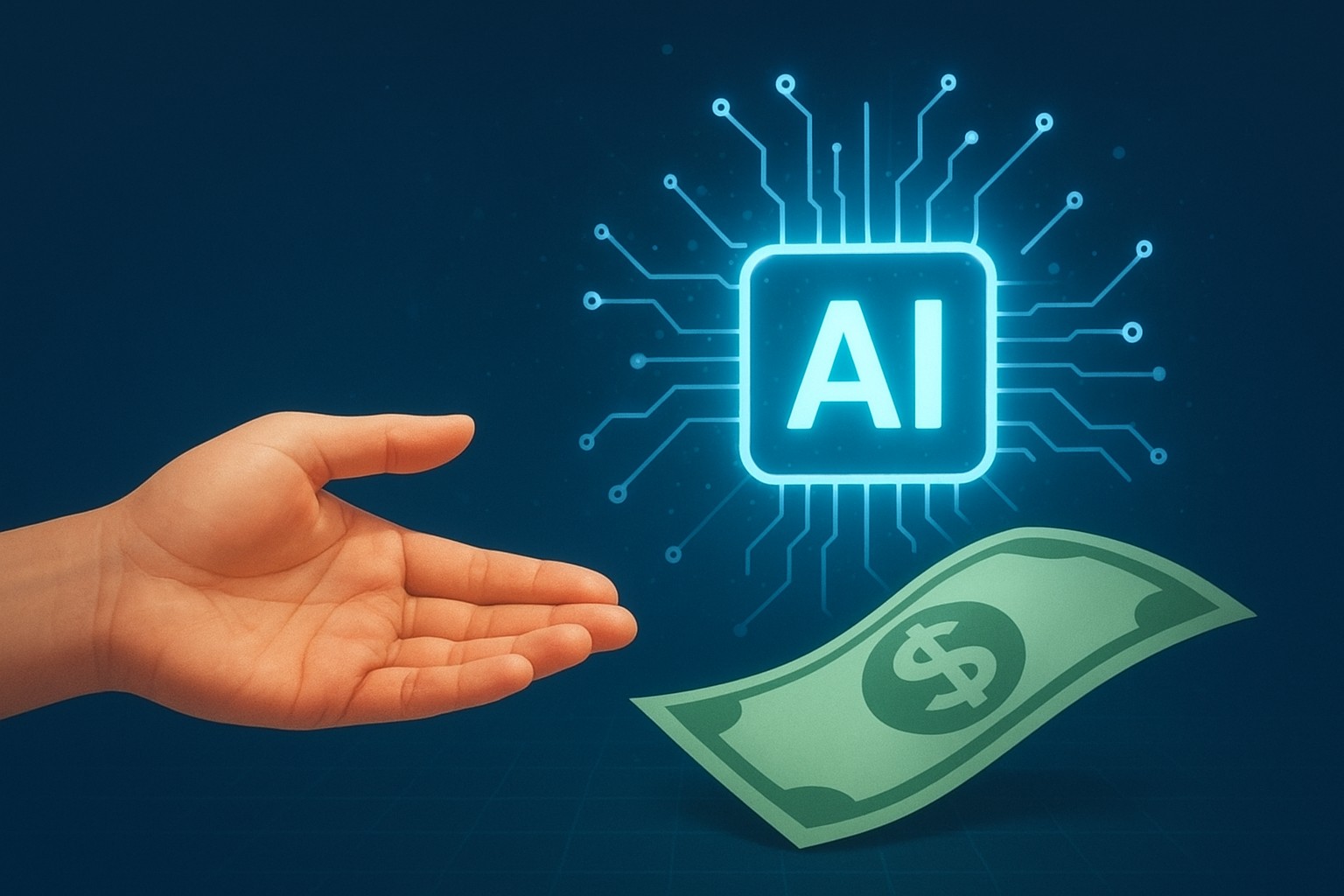
TRON DAO launches a 1B fund to accelerate AI innovation by scaling its investment push from experimental pilots to serious infrastructure building for the emerging agentic economy. The move signals that crypto-native payment rails, identity, and tokenized assets may become core plumbing for machine-led commerce.
Introduction: why this $1B move matters now
TRON DAO’s decision to expand its AI-focused funding to $1 billion is less about chasing hype and more about underwriting the building blocks that AI agents will actually need: identity, payments, and reliable settlement. If AI systems are going to buy services, rebalance portfolios, or manage on-chain operations autonomously, they must transact safely and cheaply—at scale.
From a market perspective, this announcement also lands at a moment when both AI and crypto are searching for “real” utility beyond speculation. Personally, I see this as one of the more pragmatic intersections: AI wants always-on payments and programmable ownership; blockchain already specializes in exactly those primitives.
What the fund is designed to back (and what “agentic economy” implies)
The phrase agentic economy generally points to a near-future environment where autonomous software agents can discover opportunities, negotiate terms, and execute transactions with minimal human intervention. That requires infrastructure that can authenticate agents, move stable value, and represent ownership in ways that other systems can verify.
TRON DAO’s expanded fund suggests a portfolio approach: invest in early-stage teams and, where it makes strategic sense, acquire technology that accelerates time-to-market. In practice, that means funding not only AI apps, but also the boring-yet-critical middleware—SDKs, compliance tooling, identity frameworks, and financial automation components.
If you’re building in this space, the biggest takeaway is that “AI innovation” here is not limited to model development. It’s about making AI agents economically capable: able to hold credentials, control wallets, pay invoices, and interact with tokenized real-world assets without breaking security or regulatory expectations.
Fund comes as payment protocols gain attention
This funding expansion arrives as payment protocols gain attention across the broader crypto landscape—especially protocols and standards aimed at enabling machine-to-machine settlement. The momentum makes sense: as AI agents proliferate, payment experiences must become API-first, low-fee, and dependable in high-frequency environments.
A key practical issue is transaction design. Traditional payment systems assume a human in the loop for approvals, reversals, and dispute handling. Agentic payments flip the model: approvals may be policy-based, risk-scored, and executed automatically. That pushes demand for:
– stable-value settlement (to avoid volatility),
– clear identity or reputation signals (to prevent bot-to-bot fraud),
– and composable smart contract flows (so payments can embed conditions, escrow, and audit trails).
From an industry viewpoint, the race is no longer just about throughput; it’s about usability for developers shipping autonomous commerce. Payment rails that integrate cleanly with agent tooling—wallets, permissions, monitoring, key management—are likely to win mindshare, even if their raw TPS isn’t the only differentiator.
Stablecoin rails: the practical “AI payments” layer
Stablecoin rails are often pitched as the most realistic bridge between crypto and everyday settlement, and that argument becomes stronger in an AI-driven context. An AI agent budgeting for cloud compute, data subscriptions, or microservices doesn’t want exposure to volatile assets; it needs predictable unit economics.
TRON has historically been associated with high stablecoin activity, which—if leveraged responsibly—could make it attractive for high-volume, low-margin payment flows. For builders, what matters is not marketing claims but whether the network can support:
– consistent confirmation times,
– low fees that stay low under load,
– and stablecoin liquidity deep enough for real business activity.
My own view: stablecoin-based settlement is one of the few crypto categories where “better plumbing” directly translates into adoption. If TRON DAO’s fund meaningfully improves developer experience—wallet permissions, invoicing standards, compliance integrations—that could be more impactful than funding yet another AI chatbot with a token.
Agent identity systems and autonomous finance: what startups should build
Identity is the quiet prerequisite for an agentic economy. If agents can open accounts, hold credentials, and sign transactions, then everyone else needs a way to verify what those agents are allowed to do and who is responsible when something goes wrong.
In parallel, autonomous finance tools—think automated treasury policies, strategy execution, on-chain accounting, and risk controls—become the operating system for machine-led economic activity. Done well, these tools reduce human workload while improving consistency and auditability.
Builder checklist: where the fund’s themes translate into products
- Agent identity systems
- Verifiable credentials for agents and operators
- Permissioning frameworks (spend limits, allowed counterparties, time locks)
- Reputation signals and fraud detection aligned to on-chain activity
- Autonomous finance developer tooling
- Policy engines that translate rules into transaction approvals
- Monitoring and alerting for agent-driven wallets and contracts
- Key management and recovery designed for automated systems
- RWA and tokenized real-world assets
- Asset issuance and lifecycle tooling (cap tables, compliance, reporting)
- Oracles and proof frameworks that reduce data manipulation risk
- Secondary market integrations that preserve transfer restrictions
If you’re a founder, a strong positioning angle is to treat AI agents as regulated financial actors-in-miniature. That doesn’t mean full KYC everywhere; it means designing systems that can support accountability, audit logs, and configurable compliance as defaults rather than add-ons.
RWA and tokenized assets: turning ownership into machine-readable primitives
Tokenized real-world assets (RWA) are frequently discussed as a path to bring traditional finance on-chain, but their relevance to AI is sometimes underexplained. The key link is machine readability: once ownership, rights, and restrictions are encoded in standardized formats, agents can reason about them, price them, and transact against them.
A $1B fund that explicitly targets RWA-adjacent infrastructure could help address persistent gaps: credible issuance pipelines, reliable attestations, and enforceable transfer rules. Without those, tokenization risks becoming superficial—tokens that represent claims, but can’t be used confidently in automated workflows.
From a practical lens, the “win condition” is interoperability. If AI agents are going to manage diversified portfolios of tokenized assets, they need consistent metadata standards, reliable corporate actions handling, and dispute or exception processes that don’t collapse back into manual operations.
What this means for developers, investors, and the broader ecosystem
For developers, this kind of funding can be a signal to build picks-and-shovels rather than consumer apps. In an agentic economy, the highest leverage opportunities often sit in infrastructure: permissions, security, identity, payments, and settlement coordination. If TRON DAO deploys capital into these layers thoughtfully, it can accelerate a wave of products that feel less like crypto demos and more like real financial software.
For investors, it’s a reminder that AI + crypto is splitting into two tracks: speculative narratives and functional rails. The latter is harder and slower, but it’s also where defensible businesses tend to emerge. Watch for investments that improve measurable outcomes—developer onboarding time, transaction failure rates, compliance readiness, cost per payment—rather than vague promises about “AI synergy.”
For the ecosystem, this announcement also underscores increasing competition among networks positioning themselves as settlement layers for AI agents. Differentiation will likely come from reliability, tooling, liquidity, and integrations—not just branding. If TRON DAO’s fund is executed with clear milestones and transparent criteria, it could help set a higher bar for how ecosystem funds are judged.
Conclusion: a $1B bet on machine-led commerce infrastructure
TRON DAO launches a 1B fund to accelerate AI innovation as a direct bet that autonomous agents will need robust identity, stablecoin payment rails, RWA infrastructure, and autonomous finance tooling to operate at scale. The strongest upside is not a single killer app, but a compounding effect: better primitives enabling more credible products.
Whether this becomes transformative depends on execution—smart allocations, developer-friendly standards, and real-world integrations. Still, as someone who’s watched many “AI + blockchain” headlines come and go, this is one of the clearer infrastructure-oriented plays, and that practical focus is exactly what the category needs to mature.