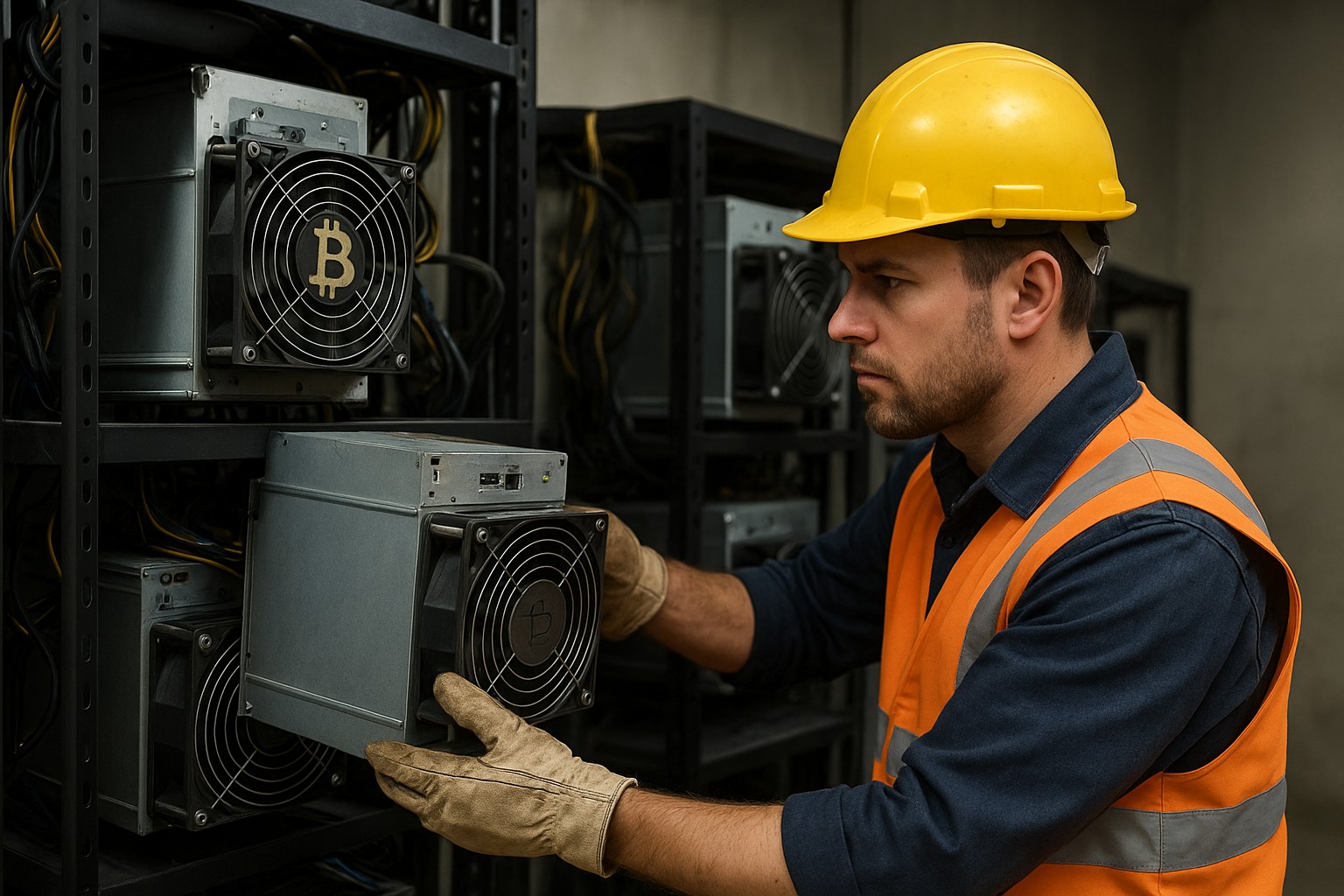
US Bitcoin miners could be forced to replace Chinese-made machines under new rules. The policy push is part supply-chain security, part industrial strategy—and it could reshape how mining firms buy, deploy, and finance hardware over the next few years.
News: What the new rules could mean for US Bitcoin mining hardware
The core idea behind the latest Washington momentum is simple: if the United States is going to host a large share of global hashrate, policymakers want the machines that generate that hashrate to be trusted, auditable, and less dependent on China-linked manufacturing. That sounds abstract until you translate it into procurement checklists, compliance documentation, and potentially forced replacement cycles for existing fleets.
If rules evolve from proposals into enforceable standards, miners may need to certify the origin and security posture of ASICs, firmware, and supply-chain components. In practice, that can mean anything from import restrictions and certification requirements to eligibility rules tied to tax incentives, federal energy programs, or access to regulated capital markets.
There’s also a timing issue many miners are underestimating. ASIC fleets are typically planned around multi-year ROI assumptions, power contracts, and facility buildouts. A sudden policy-driven need to swap out a large portion of Chinese-made machines could compress timelines, raise capex, and create operational risk—especially for operators with thin margins or high leverage.
Why Washington got here: supply-chain risk meets industrial policy
The US has become one of the world’s biggest Bitcoin mining hubs, but the supply chain for specialized mining hardware remains concentrated abroad. Policymakers increasingly frame that concentration as a strategic vulnerability: if the hardware is mostly designed and assembled in one geopolitical sphere, then the US industry is exposed to shocks ranging from export controls to firmware integrity questions.
This is not purely about politics; it’s also about basic continuity planning. Mining is an infrastructure business now—large campuses, long-term power agreements, grid interconnections, and significant employment in certain regions. When an industry starts looking like critical infrastructure, the questions shift from cheap unit cost to resilience, traceability, and long-run control over essential inputs.
My personal take: miners shouldn’t dismiss this as election-cycle noise. Even if the strictest version of the rules never passes, the direction of travel is clear—more disclosure, more certification, and more pressure to diversify away from single-country dependence. The smart operators will treat compliance readiness as a competitive advantage, not a burden.
What this bill represents: reshoring, certification, and a new compliance layer
At a high level, the policy effort signals that Bitcoin mining is being folded into broader digital-asset strategy and industrial policy: reshore manufacturing where possible, reduce exposure to concentrated supply chains, and standardize how hardware is evaluated. That is a major step change from earlier debates that focused mostly on energy use and local noise complaints.
If certification requirements become standard, miners could be asked to demonstrate hardware provenance and security properties. That might involve documentation around manufacturing origin, secure boot processes, firmware signing, remote management tools, and supply-chain custody. Even if only certain categories of miners are targeted (for example, publicly listed firms or those seeking federal support), the compliance bar could spread across the industry as lenders and insurers adopt the same standards.
Practical compliance checklist miners can start using now
- Inventory every ASIC model, purchase date, vendor channel, and firmware version across all sites
- Document custody and chain-of-provenance for newly purchased units (invoices, shipping, brokers)
- Standardize firmware management, including signed firmware policies and update procedures
- Segment networks and restrict remote access pathways used for monitoring and fleet control
- Prepare a replacement roadmap that prioritizes older, less-efficient units first (worst ROI impact)
- Build a vendor scorecard that includes origin, support quality, lead times, and security posture
The miners that move early can negotiate better supply terms and avoid being forced into spot-market buying later. In a scenario where many operators rush to replace hardware at once, the bottleneck won’t just be ASIC availability—it will be electrical retrofits, racking, networking, and the human capacity to deploy at scale.
Markets: cost shocks, hashrate shifts, and who wins if replacements accelerate
A forced replacement cycle would ripple through the mining economy. If large US operators accelerate purchases of non-Chinese machines (or domestically assembled alternatives), demand could spike for a limited pool of compliant hardware. That can raise prices, lengthen lead times, and shift bargaining power toward manufacturers and integrators.
There’s also a second-order effect on hashrate distribution. If compliance rules create friction primarily for US-based miners, some marginal hashrate could migrate to jurisdictions with looser requirements—at least in the short term. On the other hand, if the rules come with incentives (tax credits, grants, preferential financing, or easier permitting tied to certified hardware), compliant US miners could actually strengthen their position by lowering their effective cost of capital.
From a business perspective, expect “compliance premium” pricing to emerge. Two ASICs with similar efficiency may not be valued equally if one is clearly eligible for regulated financing, insurance coverage, and institutional partnerships. This is already common in other industries—think of how certified components matter in aerospace or healthcare—and mining may be heading in the same direction.
Learn: How miners can manage risk—procurement, financing, and operations
Miners who assume this is only about buying different brands are missing the deeper operational consequences. Hardware selection affects facility design (power density, cooling needs), maintenance cycles (spare parts, failure rates), and firmware/tooling compatibility. A rushed swap-out can create downtime that dwarfs the price difference between machines.
Start with scenario planning. Build three models: a light-touch disclosure regime, a certification requirement for new purchases only, and a stricter regime that pressures replacement of existing Chinese-made fleets over time. In each model, estimate capex, downtime risk, deployment labor, and how quickly you can procure and energize new units without violating power constraints.
Financing strategy matters just as much. If rules incentivize domestic or certified supply chains, lenders may offer better terms for compliant hardware. Conversely, fleets seen as non-compliant could face higher interest rates, tougher covenants, or discounted collateral value. If you’re a smaller miner, partnering with hosting providers or integrators who can prove compliant sourcing may be the simplest path.
Directory: Where replacement demand could concentrate and what to ask vendors
If the industry pivots away from Chinese-made machines, demand will concentrate on a smaller set of alternatives: domestically assembled options, non-China OEMs, and integrators that can provide documentation and support. That will likely expand a “directory-like” ecosystem of approved vendors, auditors, and service firms that specialize in certification-ready deployments.
When evaluating vendors, miners should ask more than just price per terahash. You want clarity on origin, transparency on the bill of materials where feasible, firmware governance, warranty enforcement, and repair logistics within the US. A cheap machine becomes expensive if replacement boards take months to arrive or if firmware updates introduce unexpected instability.
My advice is to treat vendor selection as a long-term relationship rather than a one-off purchase. Hardware lifecycles intersect with power contracts, facility leases, and corporate reporting timelines. If compliance rules tighten, the vendor who can consistently provide documentation, parts availability, and predictable lead times may outperform a cheaper but opaque alternative.
Conclusion: Prepare for a policy-driven hardware reset—without panicking
US Bitcoin miners could indeed be forced to replace Chinese-made machines under new rules, but the outcome is unlikely to be an overnight cliff. More plausibly, the industry will see a phased tightening: origin disclosures, certification for new purchases, and gradually stronger incentives that make non-compliant fleets less competitive.
The most practical response is to get ahead of the curve now—inventory your fleet, harden firmware processes, diversify suppliers, and model replacement timelines that won’t break operations. If you treat this as a compliance-and-procurement modernization project rather than a political headline, you’ll be in a far better position no matter how the final rules are written.