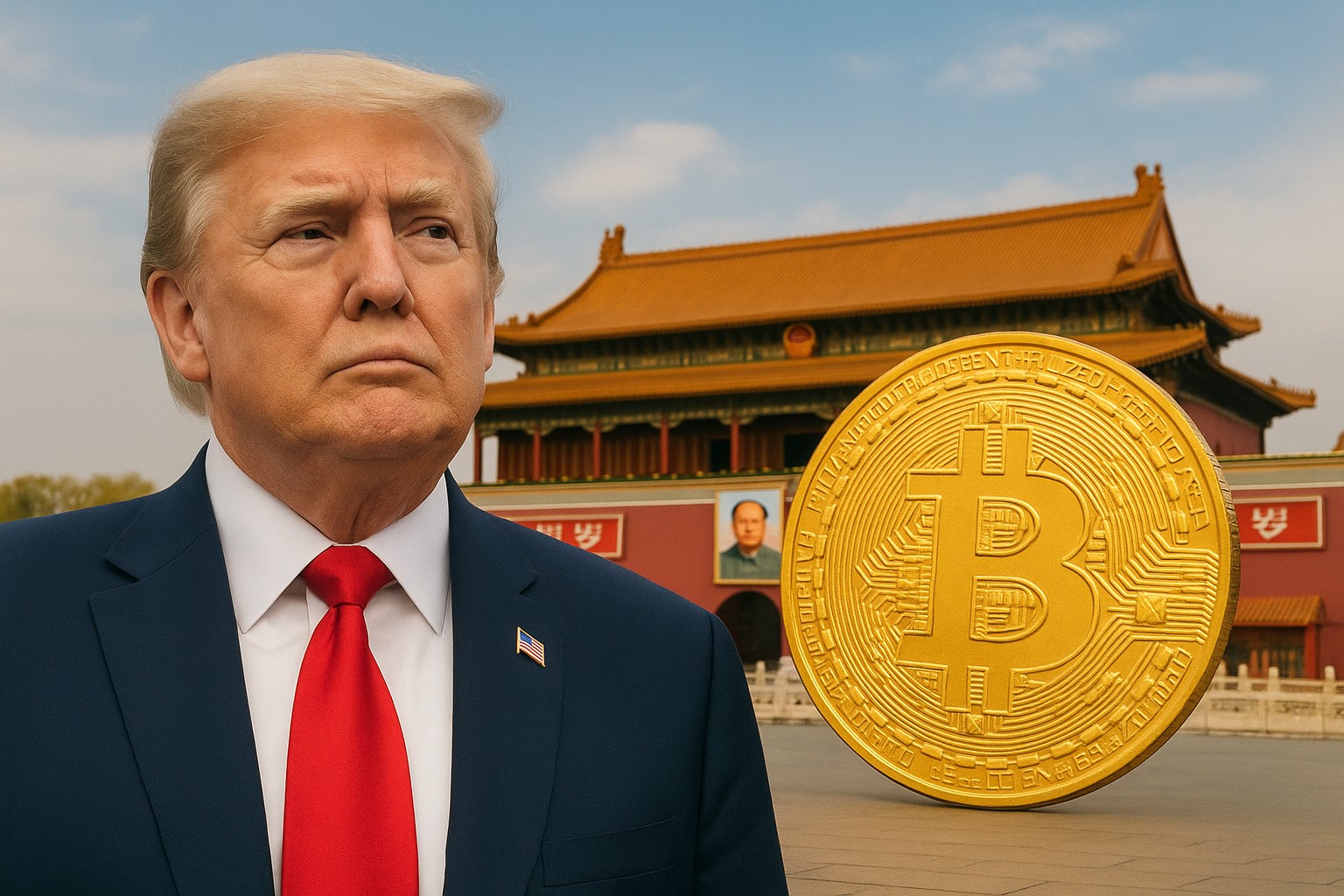
Beijing Welcomes Trump as Crypto Traders Watch Polymarket Probabilities. The optics of a high-level U.S.–China meeting may look purely diplomatic, but in today’s markets it instantly becomes a tradable narrative that bleeds into Bitcoin, altcoins, and prediction platforms.
Why this Beijing visit matters to crypto traders right now
A presidential visit to Beijing is more than a calendar headline: it is a real-time stress test for global risk appetite. Traders treat U.S.–China engagement as a proxy for whether the world is drifting toward cooperation (risk-on) or confrontation (risk-off). That matters because crypto has increasingly behaved like a high-beta macro asset—quick to rally when liquidity is expected to improve, and quick to sell when uncertainty rises.
What’s different this time is the speed at which sentiment gets priced. In prior cycles, markets waited for official communiqués, analyst notes, or delayed polling. Now, the “first draft” of expectations appears on prediction markets and social feeds within minutes, and crypto often reacts before equities or FX fully digest the news.
From my perspective, it’s less about whether any single meeting produces a dramatic announcement and more about whether the tone reduces tail-risk. Even small signals—language around tariffs, export controls, investment rules, or diplomatic channels—can shift how traders size risk across BTC, ETH, and the broader altcoin complex.
Geopolitics meets prediction markets and crypto sentiment
When geopolitics meets prediction markets and crypto sentiment, traders get a new instrument: probabilities that update in real time. Polymarket-style probabilities are not “truth,” but they are a tradable snapshot of collective positioning. If odds swing sharply, it can indicate either fresh information hitting the market or crowded positioning getting unwound.
Crypto traders watch these probabilities because they compress a messy geopolitical situation into a number that can be compared over time. A move from 40% to 60% on a trade de-escalation narrative can influence how aggressively desks deploy capital into high-beta tokens, memecoins, or leveraged perpetuals—especially during low-liquidity hours.
One practical benefit: prediction markets can act like an early-warning system. If probabilities shift before major headlines hit mainstream outlets, it’s a cue to check what’s trending across wire services, regional media, or official government schedules. It’s not foolproof, but it’s often faster than waiting for the next macro strategist note.
Polymarket probabilities: what they capture (and what they miss)
Polymarket probabilities are useful because they are explicit and continuously updated, but they also come with blind spots. They reflect the beliefs and incentives of participants in that specific marketplace—not the full universe of institutional macro investors. Thin liquidity, whale activity, or narrative chasing can distort the signal.
How to interpret prediction-market odds as a trader
Use probabilities as inputs, not commands. A few practical ways to read them:
- Watch the rate of change, not just the level: sudden jumps often matter more than a slow drift.
- Compare odds movement to price action: if odds rise but BTC doesn’t, the market may be skeptical—or already priced in.
- Check liquidity and spread: wide spreads can mean the “probability” is noisy.
- Map each market to an explicit catalyst: tariff adjustments, joint statements, meeting agendas, or scheduled press conferences.
- Treat extreme readings cautiously: very high confidence can be where reversals hurt most if reality disappoints.
For long-term investors, probabilities can help frame scenarios rather than trigger constant trades. I like to translate odds into a personal playbook: if de-escalation odds rise, I’m more willing to hold risk through volatility; if escalation odds rise, I tighten risk limits, reduce leverage, and prefer higher-liquidity assets.
Crypto markets watch macro signals for liquidity direction
Crypto markets watch macro signals for liquidity direction because liquidity is the oxygen for speculative assets. When investors anticipate smoother trade flows, less uncertainty for corporates, and fewer policy shocks, they may expect looser financial conditions or at least reduced pressure on global growth. That expectation can translate into stronger demand for risk assets, including crypto.
Conversely, renewed tensions can tighten financial conditions indirectly—through weaker business confidence, disrupted supply chains, or higher inflation uncertainty that complicates central bank policy. Even if crypto has no direct cash flows, it trades in a world where collateral, leverage, and funding rates depend on broader market confidence.
A concrete way this shows up is in derivatives. Watch perpetual funding rates, options implied volatility, and the term structure around key diplomatic dates. If funding turns euphoric on “good vibes” headlines while implied volatility stays elevated, that can signal fragile optimism. If volatility compresses while open interest rises, traders may be building directional exposure with more confidence.
U.S.–China trade deal probability and tariff narrative: channels into Bitcoin and altcoins
Rivals on page one often frame this as trade deal probability and tariff risk, and that’s not just clickbait—it’s genuinely how macro risk transmits into crypto. Tariffs and export controls can influence inflation expectations, corporate margins, and global growth perceptions. Those, in turn, shape how investors think about interest rates and liquidity, which often dictates whether crypto is treated as “speculative tech beta” or as something closer to a hedge narrative.
In practical terms, crypto tends to react through three channels:
First, risk appetite: if markets sense de-escalation, traders rotate into higher-volatility assets—often altcoins, smaller L2s, and narrative tokens. Second, USD liquidity: if the macro outlook implies tighter conditions, the dollar can strengthen, and crypto can face headwinds. Third, volatility regime: diplomatic uncertainty increases event risk, and that can lift implied volatility and reduce leverage appetite.
If you’re managing a portfolio, consider separating “core” positions from “event trades.” Keep BTC/ETH allocations sized for your time horizon, then treat event-driven bets as smaller, optional overlays. This avoids the common mistake of letting a headline week dictate the entire portfolio’s risk profile.
Practical playbook: positioning, hedging, and what to monitor during the visit
The most useful approach is to define what you’ll do before odds and prices start whipping around. Diplomatic visits can produce headline gaps, conflicting interpretations, and time-zone driven volatility. Planning reduces the temptation to chase.
Start with a monitoring checklist. Track official schedules, press availability, and any joint statements. In markets, watch BTC dominance, ETH/BTC, stablecoin flows, and the reaction of high-beta alt sectors. If the “good news” rally is narrow and led only by a few large caps, it may be more fragile than a broad-based move with improving market breadth.
On hedging, simple beats fancy. If you’re long spot, consider whether a small put spread or reduced leverage achieves the same goal without overcomplicating execution. If you trade perps, define liquidation buffers and maximum funding pain. And if you follow Polymarket, treat rapid probability swings as a cue to reduce position size rather than increase it—noise often peaks when attention is highest.
My personal commentary: the biggest edge isn’t predicting the diplomatic outcome; it’s avoiding emotional overreaction. When everyone is staring at the same odds chart and the same breaking-news feed, discipline and sizing often matter more than being “right.”
Conclusion: diplomacy headlines, tradable probabilities, and a calmer framework
Beijing’s استقبال of Trump is being parsed as a diplomatic signal, but markets translate it into probabilities, liquidity expectations, and risk positioning almost instantly. For crypto traders, Polymarket probabilities can be a helpful dashboard—especially when combined with derivatives data and a clear catalyst calendar.
The key is to treat this week as a scenario exercise: define what odds changes would mean for your portfolio, set risk limits in advance, and remember that the market often prices the narrative faster than the facts. When geopolitics meets prediction markets and crypto sentiment, the winner is usually the trader who stays methodical while everyone else chases the next headline.