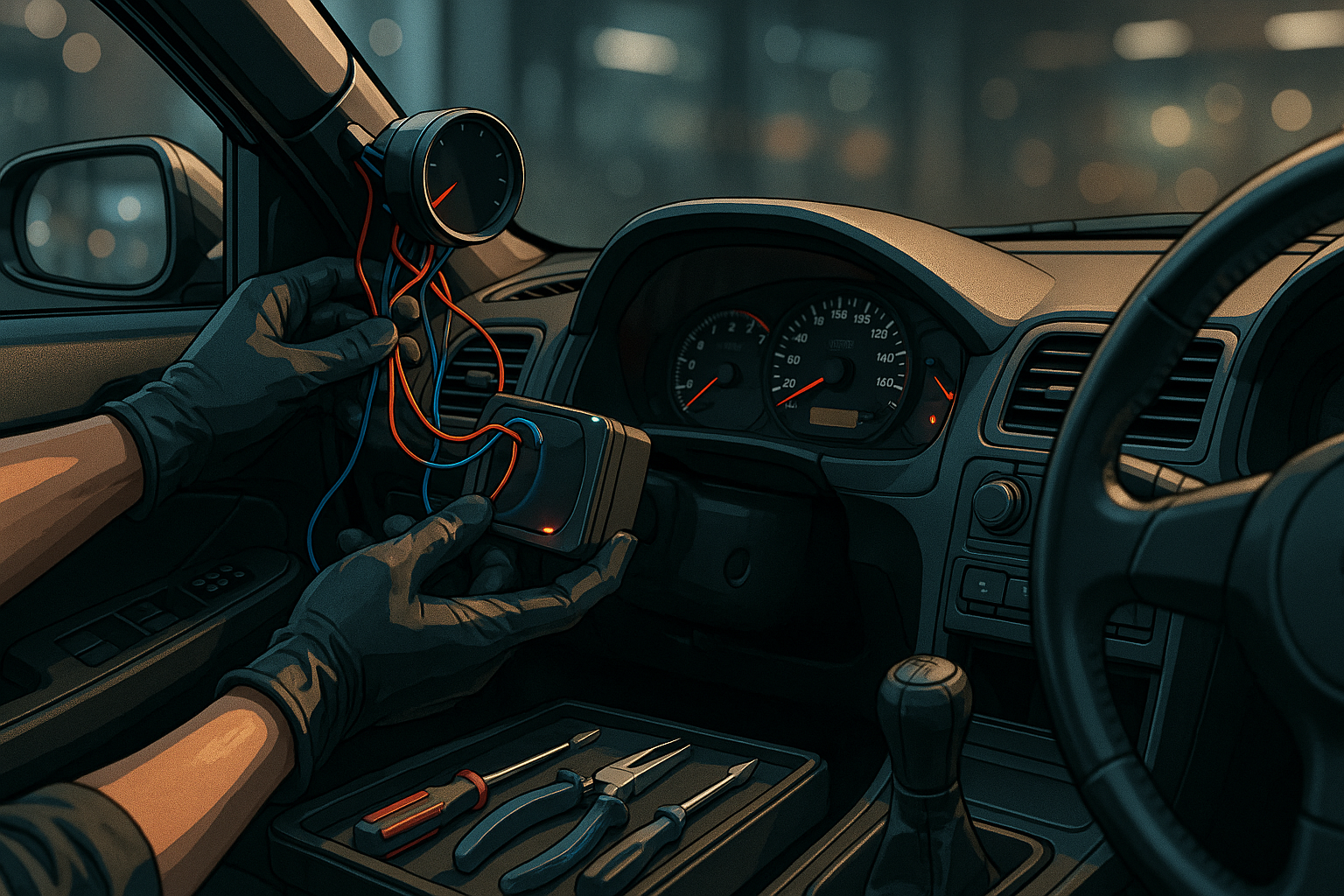
defi アドバンスa1 取り付け is one of the most popular DIY upgrades for drivers who want reliable, easy-to-read vehicle data without turning the cabin into a messy wiring project. Even if you’ve never installed gauges before, you can complete this job cleanly if you plan your sensor layout, understand the wiring flow, and take your time with power and grounding. This guide walks you through the full process in a practical, step-by-step way, focusing on the common mistakes that cause flickering displays, incorrect readings, and blown fuses. By the end, you’ll know how to mount the gauge, route the harness safely, and finish a Defi Advance A1 install that looks factory.
過去にこちらの記事で解説しました。

What you need before starting the install
Tools, parts, and a quick checklist
Before you begin your defi アドバンスa1 取り付け, gather everything in one place. Stopping mid-install to find a crimp tool or fuse tap is where mistakes happen.
Typical items you’ll want:
- Defi Advance A1 gauge (and compatible sensor if required for your measurement)
- Control unit or wiring set required by your specific A1 configuration
- Fuse tap (add-a-fuse), appropriate fuse ratings
- Crimp tool, wire stripper, heat shrink or electrical tape
- Multimeter (for verifying ACC, IGN, illumination, and ground)
- Zip ties, split loom, and grommets for safe routing
- Panel removal tools and basic sockets/screwdrivers
Also check your car’s service manual for firewall grommet locations and safe sensor mounting points. A clean defi アドバンスa1 取り付け starts with knowing where wires will pass through and where heat sources are.
Understanding Defi Advance A1 components and wiring flow
Gauge, sensors, and power lines
A smooth defi アドバンスa1 取り付け depends on understanding what each wire is doing. Most issues come from mixing up switched power, constant power, and illumination.
In general, your wiring will include:
- Power (often IGN/ACC depending on model requirements)
- Ground (chassis ground point)
- Illumination (optional, for dimming with headlights)
- Sensor signal (from pressure/temp sensors to gauge/control)
If your setup uses a control unit, the gauge connects to it and the sensors connect to it, keeping wiring modular. If your A1 is standalone, the sensor may run directly to the gauge. Either way, the principle for defi アドバンスa1 取り付け is the same: keep signal wires away from ignition coils and alternator wiring to reduce noise.
Feature summary table for planning
Use the table below to plan your install priorities and decide where to spend extra time on routing and protection.
| Item | Why it matters | Install focus |
|---|---|---|
| Power source (ACC/IGN) | Prevents battery drain and random resets | Verify with multimeter, fuse tap correctly |
| Ground point | Stable readings and no flicker | Use clean chassis ground, sand paint if needed |
| Illumination wire | Matches OEM dimming behavior | Tap lighting circuit, avoid constant 12V |
| Sensor placement | Accuracy and safety | Avoid heat, vibration, and moving parts |
| Harness routing | Long-term reliability | Use loom, grommets, and zip ties |
Defi Advance A1 gauge mounting that looks factory
Choosing the best location in your cabin
For a clean defi アドバンスa1 取り付け, location is everything. A gauge that blocks your view or reflects sunlight will be annoying no matter how perfect the wiring is.
Common mounting spots:
- A-pillar pod (great visibility, more visible from outside)
- Steering column mount (driver-focused, minimal eye movement)
- Center vent or dash top mount (clean look, watch for heat)
Before drilling or sticking anything down, sit in your normal driving position and confirm you can see the full gauge face without moving your head. This step is often skipped in a rushed defi アドバンスa1 取り付け.
Mounting tips to avoid rattles
Rattles usually come from hard plastic-to-plastic contact. Use foam tape where brackets touch trim. If you use double-sided tape, clean the surface with isopropyl alcohol and allow it to dry fully.
Route the harness immediately behind the mounting point so you don’t create a visible loop of wire. A tidy harness path makes your defi アドバンスa1 取り付け look professional.
Step-by-step defi アドバンスa1 取り付け wiring process
Power and ground done the safe way
Power wiring is where most DIY installs go wrong. For defi アドバンスa1 取り付け, aim for a fused, switched source and a solid chassis ground.
Step-by-step:
- Disconnect the negative battery terminal before touching any wiring.
- Find a switched 12V source at the interior fuse box (ACC or IGN depending on how you want the gauge to behave).
- Use an add-a-fuse and match fuse ratings. Keep the original circuit protected and add the correct fuse for the gauge circuit.
- Choose a real ground point on the chassis, ideally an OEM grounding bolt. Scrape paint if needed for metal contact.
- Test with a multimeter before reconnecting everything. Confirm the gauge powers off when the key is off (unless your model requires constant power for memory).
If your gauge resets every start, your defi アドバンスa1 取り付け may be using the wrong power line. If it stays on after the car is off, you likely tapped constant 12V by mistake.
Illumination and dimming without headaches
Many people skip illumination, but it’s worth doing for a refined defi アドバンスa1 取り付け. The key is tapping a circuit that changes when the headlights turn on, not a constant 12V feed.
Check the vehicle’s illumination wire at the headlight switch harness or fuse box. Verify behavior with a multimeter: you should see voltage change when lights are turned on. If your gauge becomes too dim or too bright, you may be on the wrong dimmer-controlled line versus a simple on/off illumination line.
Routing through the firewall cleanly
For sensor wiring that must reach the engine bay, use an existing grommet whenever possible. Never pass wires through bare metal. This is a critical part of defi アドバンスa1 取り付け longevity.
Best practices:
- Pierce the grommet carefully and seal around the wire with silicone if needed
- Use split loom in the engine bay
- Keep wiring away from turbo/exhaust components and sharp edges
Sensor installation tips for accurate readings
Pressure and temperature sensors placement basics
Your defi アドバンスa1 取り付け is only as accurate as the sensor placement. Poor placement can cause laggy readings or values that don’t match reality.
General guidance:
- Oil pressure sensors should be installed using an appropriate adapter at an oil gallery port. Avoid hanging heavy sensors directly off the block without support.
- Oil temperature is often best measured at the oil pan or a sandwich plate, depending on your setup and goals.
- Water temperature sensors should be placed where coolant flow is consistent, using an adapter in a hose or a dedicated port.
Always check for leaks after the first heat cycle. A leak-free sensor install is a non-negotiable part of defi アドバンスa1 取り付け safety.
Protecting sensors and connectors
Use heat sleeves or route away from radiant heat. Secure connectors so they don’t vibrate loose. Add slack for engine movement, but not so much that the harness can touch belts or fans.
These small details separate a “works today” install from a durable defi アドバンスa1 取り付け that survives years of driving.
Mistakes that cause flicker, noise, or wrong values
Common wiring errors and how to fix them
If something looks off after your defi アドバンスa1 取り付け, don’t guess—test. Here are frequent issues:
- Flickering display: weak ground or ground shared with a noisy device. Move to a better chassis ground.
- Gauge resets on crank: power source drops during start. Try an IGN source that stays stable, or follow Defi’s recommended wiring method.
- Backlight behaves oddly: illumination tapped to the wrong circuit. Re-test the line with headlights on/off.
- Erratic readings: sensor wire routed near ignition or alternator wiring. Re-route and add shielding/loom.
- Blown fuse: incorrect fuse tap orientation or wrong fuse size. Correct orientation and use proper ratings.
Taking 20 minutes to tidy grounds and re-route signal wiring often “magically” fixes a troublesome defi アドバンスa1 取り付け.
Final checks before you button up the panels
Before reinstalling trim:
- Turn the key to ACC and verify the gauge boots normally
- Start the engine and confirm stable readings
- Turn headlights on and confirm illumination behavior
- Wiggle-test harness sections gently to check for intermittent power
- Inspect the engine bay for leaks and verify harness clearance
Only after these checks should you reassemble the interior. This approach prevents repeated disassembly if your defi アドバンスa1 取り付け needs a small correction.
Conclusion
Make your install clean, safe, and reliable
A successful defi アドバンスa1 取り付け is less about speed and more about planning: choose a smart mounting location, use a proper switched power source, ground to clean chassis metal, and route sensor wiring like the factory would. If you follow the steps above and verify each circuit with a multimeter, you’ll avoid the common pitfalls that cause flicker, resets, and inaccurate readings.
Set aside a focused afternoon, prepare your tools, and start your defi アドバンスa1 取り付け with confidence—your car will feel more informative, more engaging, and more dialed-in the moment you turn the key.








Comment