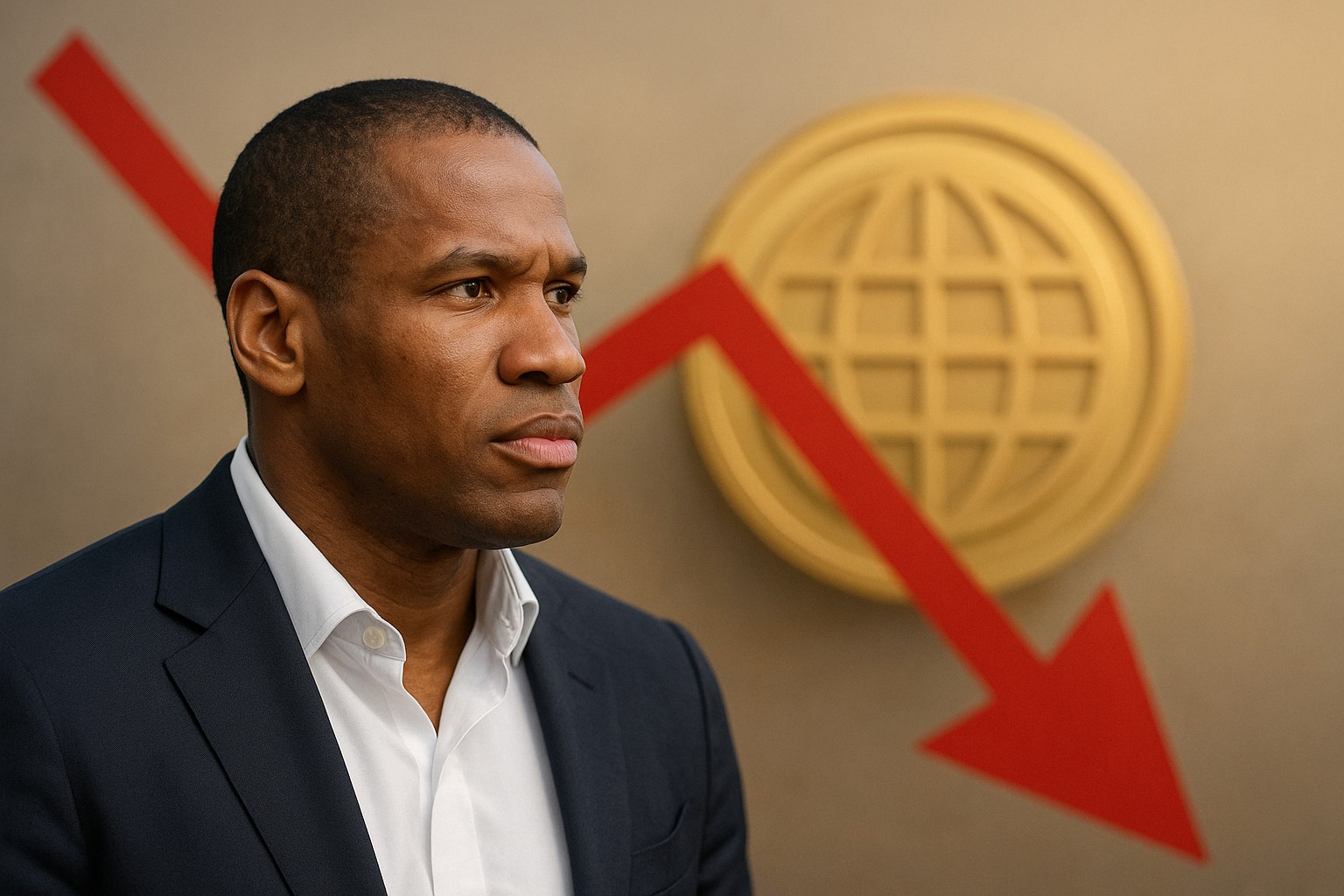
Arthur Hayes departure adds volatility risk to Worldcoin as one of crypto’s most watched macro traders appears to step away from a high-beta thesis at a sensitive moment for AI-linked tokens. The move matters less because of one wallet and more because it can shift sentiment, liquidity, and positioning across WLD’s spot and derivatives markets.
Why Arthur Hayes’ exit matters for Worldcoin holders
Arthur Hayes has become a market signal in his own right: when he rotates, traders often reassess risk across the same cluster of assets. Even if his position size is not large enough to mechanically move the market by itself, the public nature of his entries and exits can amplify the reaction—especially in tokens like Worldcoin (WLD) where narrative, momentum, and derivatives funding can dominate near-term price action.
From a practical standpoint, this kind of “headline flow” increases the probability of whipsaws. WLD participants are often split between long-term believers in proof-of-personhood and short-term traders chasing AI and “next-cycle” narratives. When a high-profile proponent turns cautious, both groups can tighten risk limits at once, causing liquidity to thin out and slippage to increase during spikes.
Personally, I treat these episodes as a reminder that crypto is still a reflexive market: people trade what they think other people will trade. That reflexivity can be useful if you plan for it—but painful if you assume the chart is purely fundamentals-driven.
Hayes Cuts WLD After Rapid Rally: what it signals about market structure
The phrase “rapid rally” is doing a lot of work here. Strong upside moves in mid-cap tokens typically attract leverage, and leverage is what makes the next move feel violent—up or down. When a rally stretches while the broader market cools, WLD can start to look like an isolated momentum pocket. In that environment, a visible exit can act as a pin that deflates crowded positioning.
What’s important is not just that WLD ran; it’s how it ran. If the climb was powered by perpetual swap longs paying elevated funding, then a sentiment reversal can flip funding negative and create a cascade: longs close, price dips, liquidations accelerate, and the dip invites more shorting. The path dependency matters.
For readers managing risk, the takeaway is simple: after a sharp run, exits by prominent traders can convert a “trend trade” into a “mean reversion trade” overnight. If you’re still bullish, you may want to express it with smaller size, wider time horizon, and clearer invalidation levels rather than relying on momentum alone.
HYPE, NEAR, ZEC Sales Came First: contagion risk across high-beta altcoins
Before the WLD sell-down, Hayes had already been reducing exposure in other speculative or thesis-driven positions—names like HYPE, NEAR, and ZEC. Whether you agree with his reasoning or not, the sequencing matters because it looks like a broader risk-off rotation rather than an isolated change of heart about Worldcoin.
When traders see a “basket exit,” they often respond by flattening correlated bets: AI tokens, high-beta L1s, and narrative-heavy alts can get treated as one risk sleeve. Even if each token has distinct fundamentals, the market may trade them as a group for days or weeks. That’s the practical definition of contagion in crypto—correlation rises when everyone is managing exposure at the same time.
Another nuance: ZEC’s situation shows how quickly idiosyncratic risk can hit sentiment. A security or design concern in one project can remind the market that not all “big narratives” are equally resilient. In periods like this, the safest assumption is that traders will pay a premium for simplicity—Bitcoin and sometimes Ether—while demanding a higher risk discount for everything else.
Volatility risk and liquidity: what to watch in WLD now
In the short run, volatility risk is less about a single red candle and more about the conditions that make repeated spikes likely. WLD traders should monitor liquidity depth, derivatives positioning, and unlock-related supply dynamics (where applicable) rather than relying purely on social sentiment. If order books thin out, a modest amount of market selling can cause exaggerated moves.
Funding rates and open interest are especially useful. If open interest rises while price chops sideways, it can signal a leverage build-up waiting for a catalyst. If price drops while open interest drops sharply, that often indicates forced deleveraging—sometimes a healthier reset, sometimes the start of a larger unwind depending on spot demand.
A practical checklist for traders (spot and perps)
- Track perpetual funding: persistent positive funding can mean crowded longs; sudden flips can precede sharp reversals
- Watch open interest vs. price: rising OI with stagnant price can imply leverage stacking
- Check liquidity/market depth: thin books increase slippage and wick risk
- Identify key invalidation levels: prior breakout zones and high-volume nodes often act as magnets
- Size for volatility: smaller size with wider stops can outperform “tight-stop, big-size” approaches in choppy regimes
If you’re a long-term holder, it can also be worth separating your thesis from your entry. A valid long-term belief doesn’t require riding every short-term wave—especially in assets that can move 10–20% on a sentiment shift.
AI narrative, macro catalysts, and why timing matters
Worldcoin sits at the intersection of AI hype, identity infrastructure, and regulatory uncertainty—three forces that don’t move in sync. The “AI-linked token” narrative can heat up quickly when public market AI stories (earnings, IPO talk, major product launches) dominate headlines. But the same narrative can cool just as fast if macro conditions tighten or if policymakers frame AI and data collection as a political liability.
That timing risk is what makes Hayes-style exits impactful. Traders who were positioned for an AI narrative continuation can suddenly face two headwinds: waning narrative momentum and a market-wide shift toward lower beta. When those coincide, even good project updates may struggle to lift price because the marginal buyer has stepped back.
My own view: WLD is the type of token that can do very well when liquidity is expanding and narratives are strong, but it can feel unforgiving when liquidity contracts. That doesn’t make it “bad”—it simply means you should align your time horizon with the regime you think we’re in.
Risk management for WLD: strategies beyond guessing the next candle
The most useful response to a volatility warning is not a prediction—it’s a plan. If you trade WLD actively, define whether you’re trading trend continuation, range mean reversion, or event-driven moves. Each style requires different stop placement, profit targets, and position sizing. Many losses happen when traders mix styles mid-trade.
For spot investors, consider a staged approach: accumulate in tranches, predefine levels where you pause buying, and decide in advance how you’ll react to a deep drawdown. For derivatives traders, prioritize survival: use lower leverage than you think you need, avoid holding large positions through known high-volatility windows, and keep an eye on liquidation clusters if you use perps.
A final practical point: be careful with “influencer mirroring.” High-profile traders can change their mind quickly, but most followers cannot execute with the same speed, tooling, or risk tolerance. Treat public trade commentary as context, not as a signal to copy.
Conclusion: Arthur Hayes departure adds volatility risk to Worldcoin, but not a verdict
Arthur Hayes departure adds volatility risk to Worldcoin mainly because it can accelerate reflexive behavior: liquidity thins, leverage unwinds, and narratives get repriced faster than fundamentals. The earlier exits in HYPE, NEAR, and ZEC reinforce the interpretation that this is a broader de-risking phase rather than a one-off WLD decision.
For WLD participants, the best edge now is preparation—watch funding and open interest, respect liquidity conditions, and match position sizing to the kind of volatility WLD is known for. If your thesis is long term, you can stay constructive while still acknowledging that the path may be noisy, and that timing risk is real in narrative-driven crypto markets.