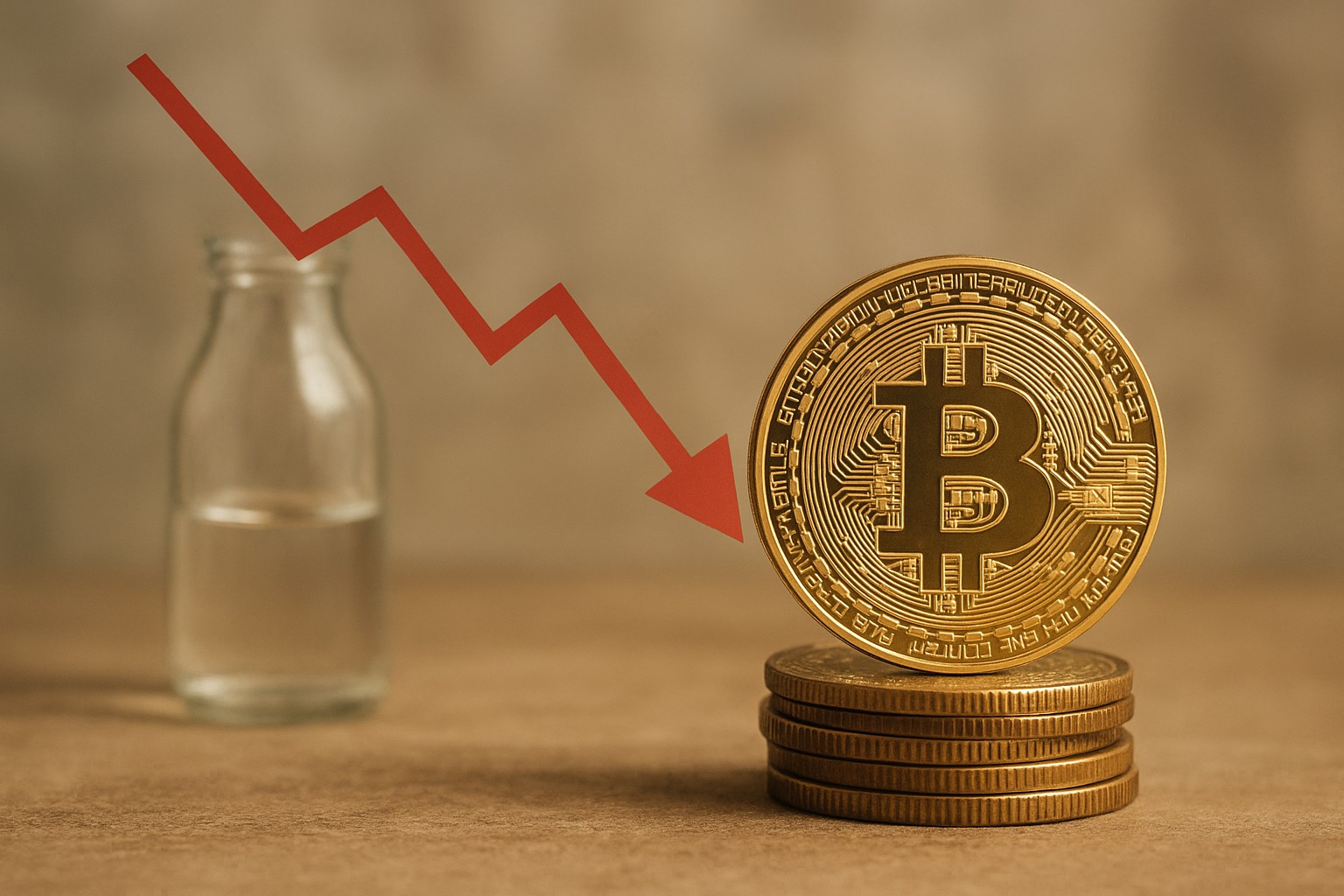
Bitcoin liquidity thins with fewer coins on exchanges and limited whale movement is more than a catchy narrative—it’s an on-chain reality that can reshape price behavior in a hurry. When tradable supply dries up, even modest demand can move the market further than most traders expect.
What “thinning liquidity” really means for Bitcoin markets
Liquidity is the market’s ability to absorb buys and sells without dramatic price changes. In Bitcoin, that often boils down to a simple question: how many coins are readily available on exchanges, and how willing are holders to part with them? When exchange balances fall and large holders don’t distribute, the sell-side becomes sparse.
A thinner order book changes market microstructure. You can see it in sharper wicks, more frequent slippage, and sudden gaps during high-volatility moments. In practice, that means both rallies and drawdowns can become faster and less forgiving—great for momentum, painful for anyone over-leveraged.
From my perspective, “liquidity” is frequently misunderstood as purely a trading concept. On-chain, it’s also behavioral: it reflects how confident (or stubborn) holders are, and whether coins are positioned for immediate sale or long-term storage. That behavioral layer is why the same price level can feel calm one month and explosive the next.
Retail selling contrasts with whale dormancy
One of the most revealing setups is when smaller holders sell while bigger wallets remain quiet. This split matters because retail flows tend to be reactive—driven by fear, boredom, or forced risk reduction—while whale behavior is often slower and more strategic. When the larger cohort is dormant, it can remove a major source of supply that would normally cap rallies.
In recent cycles, retail tends to sell into drawdowns or uncertainty, sometimes even realizing losses. That kind of selling can be self-limiting: once the most anxious coins exit, the market can stabilize because there are simply fewer sellers left who are willing to hit bids. Meanwhile, whale dormancy can be read as conviction or patience, especially when it persists through volatility.
Still, whale inactivity isn’t automatically bullish. Dormant whales might be waiting for better liquidity conditions to distribute, or they could be holding due to custody constraints. The key is context: dormancy paired with falling exchange balances tends to tighten tradable supply, while dormancy paired with rising exchange deposits can be a warning sign.
Exchange reserves decline as coins move off trading platforms
A sustained drop in exchange reserves is one of the clearest signals that immediately sellable Bitcoin is shrinking. Coins moving off exchanges often end up in cold storage, multi-sig custody, long-term treasuries, or simply wallets that historically don’t spend often. Regardless of the destination, the market impact is similar: fewer coins are one click away from becoming market sell orders.
This doesn’t mean “no one can sell.” It means the marginal seller has less inventory sitting on venues designed for fast execution. When sudden demand arrives—ETF inflows, macro risk-on, a narrative shift—the price may need to move higher to entice holders to part with coins. That’s where “supply squeeze” mechanics come from in practice.
It’s also worth noting that reserve trends can be noisy around exchange wallet re-labeling and custody migrations. The practical way to use this data is to look for persistence (multi-week/month directionality) and confirmation across multiple sources, rather than reacting to a single-day change.
Understanding UTXOs, SOPR, and the psychology behind supply
A lot of supply narratives sound abstract until you connect them to profitability and spending behavior. UTXOs (unspent transaction outputs) are essentially chunks of Bitcoin that haven’t moved since they were last received. When a high percentage of UTXOs are in profit, many holders could sell at a gain—but they may choose not to. When a notable minority is underwater, that cohort is more likely to capitulate during stress.
SOPR (Spent Output Profit Ratio) adds another lens: it estimates whether coins being spent are doing so at a profit (>1) or loss (<1). Short-term holder SOPR is particularly useful for spotting when newer participants are giving up. When short-term holders sell at a loss repeatedly, it often marks late-stage fear—markets sometimes recover once that forced selling pressure fades.
Practical ways to track these signals without overcomplicating it
- UTXO profitability: Watch broad profitability and changes over time; rising profit share can indicate resilience, while sudden drops can show stress.
- Short-term holder SOPR: Persistent readings below 1 can signal capitulation; a reclaim of 1 often aligns with trend improvement.
- Dormancy / coin age metrics: Low movement in older coins can imply long-term conviction, especially if exchange balances are also falling.
- Exchange netflows: Net outflows suggest reduced sell-ready supply; spikes in inflows can flag potential distribution or hedging.
- Order book + funding context: Thin liquidity paired with overheated leverage can produce violent squeezes in either direction.
The personal takeaway I’ve learned the hard way: don’t treat any single metric like a magic switch. The power comes from confluence—profitability, spending, reserves, and leverage all telling a similar story.
Is a Bitcoin supply shock brewing? Scenarios traders and investors should plan for
The phrase “Bitcoin supply shock” gets thrown around, but it has a specific feel in real markets: price starts moving on surprisingly small catalysts because there isn’t enough frictionless supply. If demand rises while exchange reserves are low and whales aren’t distributing, you can get abrupt upside expansions—sometimes with minimal pullbacks.
That said, a supply shock is not guaranteed just because coins leave exchanges. Demand must show up, and it must persist. The most common failure mode is when everyone anticipates a squeeze, leverage builds, and then a macro headline or risk-off event triggers liquidation cascades. Thin liquidity amplifies those moves too, so downside can be sharp even in a structurally bullish setup.
To make this actionable, think in scenarios rather than predictions. In a bullish squeeze scenario, you’ll often see steady outflows, improving SOPR, spot-driven bids, and contained leverage. In a bearish liquidity trap, you may see exchange inflows rise, whale movement increase, and derivatives positioning dominate spot—creating fragility.
How to navigate thinning liquidity: risk management and strategy ideas
When liquidity thins, the most important edge is not a perfect entry—it’s survivability. Slippage increases, stop hunts become more common, and the market can travel farther than your usual assumptions. If you trade, you may need to reduce position size and widen your execution tolerance. If you invest, you may want to reduce the pressure to time the exact bottom or top.
For traders, execution matters more than opinions. Limit orders, staged entries, and avoiding crowded liquidation zones can outperform “being right” with poor mechanics. For longer-term investors, thinning liquidity can support the case for disciplined accumulation, but only if it fits your risk profile and time horizon.
A few practical habits help in these conditions: monitor exchange netflows weekly (not hourly), watch whether whale-sized coins are moving to exchanges or away from them, and compare spot volume quality against derivatives activity. When spot leads, moves tend to be healthier; when leverage leads, reversals are more likely to be brutal.
Conclusion: thinner exchange supply changes the game—especially when whales stay quiet
Bitcoin liquidity thins with fewer coins on exchanges and limited whale movement creates a market that can reprice quickly because sell-side inventory is less accessible. The same structure that can fuel explosive rallies can also magnify drawdowns, so the advantage goes to those who plan for volatility rather than react to it.
If you take one thing from this: treat exchange reserves, whale dormancy, and profitability/spending metrics as a combined dashboard. When they align, you’re not guaranteed a supply shock—but you are operating in a regime where supply constraints can matter a lot more than usual.