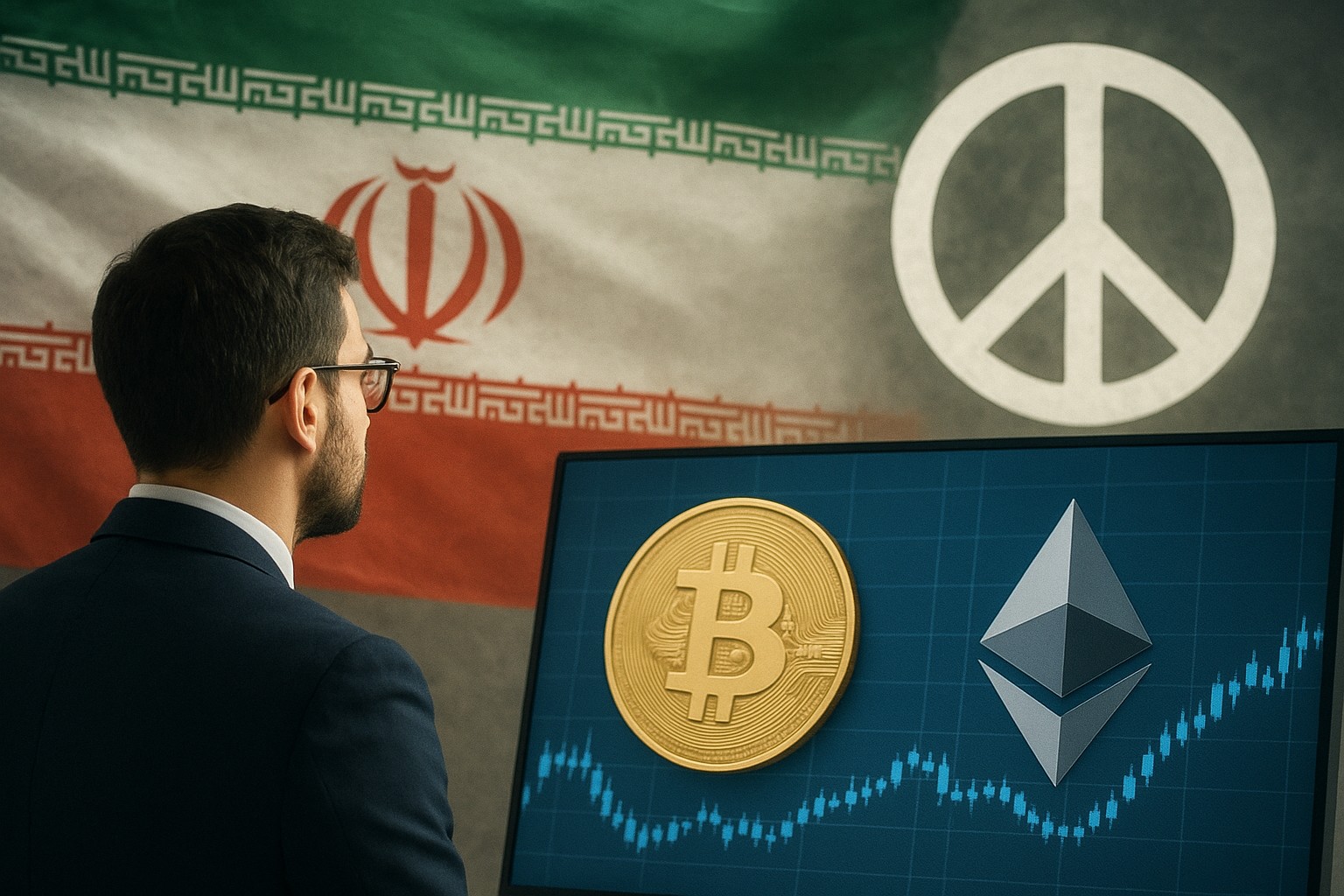
Crypto investors watch Iran peace outreach as risk appetite shifts for bitcoin and ether. When geopolitics cools even slightly, traders often reprice “tail risk” fast—and crypto, with its 24/7 liquidity, tends to react before many traditional markets do.
Why Iran’s peace outreach matters to crypto risk appetite
Geopolitical headlines can look far removed from blockchains, yet they often move the same levers that drive Bitcoin and Ether: energy prices, inflation expectations, the U.S. dollar, and broad risk sentiment. When markets believe tensions may de-escalate, a slice of the “war premium” embedded in oil and volatility can unwind, and that typically improves conditions for high-beta assets.
In practice, crypto frequently behaves like a global risk barometer during macro-driven weeks. I’ve noticed that even investors who claim to be long-term holders still check the headline tape when conflict risk spikes, because sudden liquidity shocks can force selloffs across equities, credit, and digital assets at once.
The key nuance: a peace outreach isn’t the same thing as a signed, verifiable agreement. Traders can bid up BTC and ETH on optimism, then reverse quickly on a single discouraging update. That’s why positioning and risk management matter more than trying to “predict the news.”
Iran peace talks enter critical revision phase
The negotiation process is often iterative: proposals, counterproposals, and revisions that aim to narrow gaps on security guarantees, sanctions, and regional shipping stability. A “revised” proposal usually signals that parties still see value in talking, even if core disagreements remain. Markets interpret that as reduced immediate escalation risk—at least until a new stumbling block emerges.
For crypto investors, the most important takeaway is not the political detail itself, but the probability distribution it implies: fewer near-term extreme outcomes can lower volatility premia and encourage selective risk-taking. That tends to support assets correlated with liquidity conditions, especially when broader markets are already leaning risk-on.
Still, don’t underestimate how quickly sentiment can flip. A promising draft can boost confidence, but unclear timelines, conflicting statements from officials, or unexpected incidents can bring back uncertainty. Crypto’s reflexive nature amplifies this: price moves influence social sentiment, which influences flows, which then influence price again.
War premium, oil markets, and the Strait of Hormuz: the macro transmission to BTC and ETH
A large portion of geopolitical “market math” runs through crude oil. If traders fear disruption in key shipping lanes like the Strait of Hormuz, oil prices can jump, inflation expectations can rise, and central banks may become more cautious. That combination can tighten financial conditions and weigh on speculative assets.
Conversely, if a peace outreach reduces perceived risk of supply shocks, the chain can run in reverse: oil volatility eases, inflation pressure looks less threatening, and risk assets breathe easier. Bitcoin and Ether don’t need oil to fall dramatically—often it’s the volatility compression and reduced tail-risk hedging demand that makes the difference.
This is also where the U.S. dollar enters the picture. A calmer geopolitical backdrop can weaken safe-haven demand for USD at the margin, which historically can be supportive for BTC in certain regimes. It’s not a perfect relationship, but in macro-driven windows, dollar strength and crypto performance often diverge.
What it means for bitcoin and ethereum prices
Bitcoin tends to sit at the intersection of “macro asset” and “alternative store of value.” In periods of acute crisis, it doesn’t always behave like digital gold; forced deleveraging can drag everything down. But in de-escalation phases, BTC can benefit from returning liquidity and a broader willingness to hold volatile assets.
Ethereum often shows higher beta than Bitcoin because of its deeper ties to on-chain activity, DeFi collateral dynamics, and speculative positioning in the altcoin complex. When the market shifts to risk-on, ETH can outperform—especially if leverage rebuilds and traders rotate into higher-volatility exposures. Of course, that cuts both ways if peace hopes fade.
A practical way to think about it is scenario-based rather than prediction-based. If headlines continue improving, the path of least resistance can be upward for BTC and ETH as volatility sellers step in. If talks stall or tensions re-ignite, downside can be sharp because positioning becomes crowded quickly in a 24/7 market.
Practical playbook for headline-driven BTC/ETH weeks
Below are frameworks I personally find more useful than trying to trade every breaking update:
- Define invalidation levels: Pick price zones where your thesis is clearly wrong, so you’re not making decisions mid-panic.
- Reduce leverage, extend time horizon: If your view is macro-driven, consider smaller size and wider stops to survive noise.
- Watch oil + USD together: A dip in oil volatility and a softer dollar often align with better crypto risk appetite.
- Stagger entries and exits: Use tranches to avoid all-in timing around unpredictable headlines.
- Prefer liquid instruments: BTC/ETH spot or major perpetuals typically handle volatility better than smaller-cap alts.
Trading strategy: managing volatility, liquidity, and headlines
Headline risk creates a specific trap: traders confuse movement with information. Crypto can swing hard on partial details, anonymous sources, or misread translations, and later mean-revert when clearer context arrives. The goal is to structure exposure so you can stay rational while the market is not.
Start by separating two timelines: the “news cycle” timeline (minutes to hours) and the “macro repricing” timeline (days to weeks). If you’re not equipped to compete in the first, you can still benefit from the second by focusing on larger trends: falling implied volatility, improving funding stability, and healthier spot bids.
On-chain and derivatives indicators can add guardrails. For example, if funding rates surge while open interest jumps and spot premiums fade, that can be a warning sign that the move is leverage-led and fragile. On the flip side, if BTC rallies with steady spot demand and moderate funding, it may be more durable.
Key indicators crypto investors should monitor next
To translate geopolitics into a portfolio decision, focus on observable metrics rather than narratives. A peace outreach may be bullish, but markets will tell you whether they believe it through cross-asset behavior and positioning data.
Keep an eye on energy-linked signals (front-month oil volatility, crack spreads if you follow them), as well as “fear gauges” like equity volatility. In crypto, look at implied volatility term structure for BTC and ETH, and whether options skew is pricing heavy downside protection or relaxing. When skew normalizes, it often signals reduced crash anxiety.
Finally, remember that correlation regimes change. Sometimes BTC trades like a tech proxy; other times it decouples. The best approach is adaptive: update your playbook as data changes, not as social media conviction changes.
Conclusion
Iran’s peace outreach can shift the market’s risk appetite by reducing the perceived probability of energy shocks and broader financial tightening, which often supports bitcoin and ether in the short run. But until negotiations translate into verifiable outcomes, crypto remains highly sensitive to headlines—meaning the edge is less about guessing the next update and more about managing volatility, leverage, and time horizon.
If you’re positioning around this theme, think in scenarios, watch oil and the dollar alongside crypto-specific derivatives signals, and size trades so you can withstand sudden reversals. In markets like these, discipline is usually more profitable than certainty.