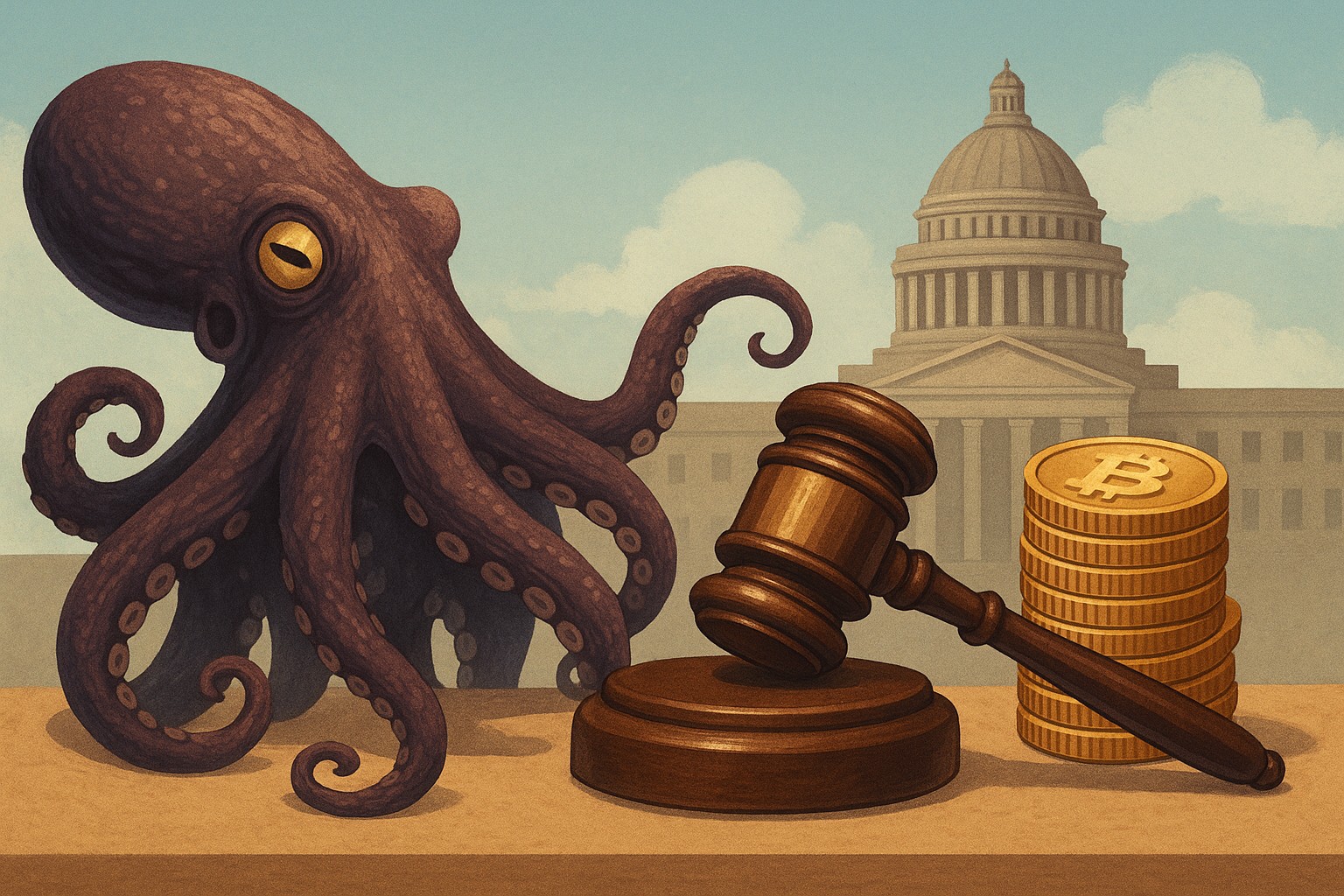
Kraken to lawmakers end the tax burden on small crypto payments and clarify staking legality by pushing for a de minimis exemption and clearer staking tax rules. The debate matters because today’s “tiny transaction” reporting can turn everyday crypto use into a paperwork marathon.
Why Kraken’s message to lawmakers matters right now
Crypto adoption doesn’t fail only because of price volatility; it also stalls when normal people feel they’re one receipt away from a tax headache. Kraken’s appeal to lawmakers is essentially a usability argument: if every low-value payment is treated like a capital markets event, crypto can’t realistically compete with cards, cash, or bank transfers for everyday spending.
From what’s been publicly discussed around recent tax seasons, exchanges are generating an enormous number of informational tax records, and a large share can be associated with very small dollar amounts. That creates a mismatch between the intent of tax enforcement (capturing meaningful taxable activity) and the lived experience of users (tracking minuscule cost basis changes for coffee-level purchases).
There’s also a second layer: staking. Even sophisticated users struggle to understand when a reward is “income,” whether it’s ordinary income or capital gain, and what “control” means in practice when rewards are auto-credited, locked, slashed, or subject to protocol rules. This is where Kraken’s call to clarify staking legality intersects with tax policy and user protection.
Stop taxing every coffee: the case for a de minimis exemption
One of the most common page-one themes in this debate is simple: stop taxing every coffee. A de minimis exemption would let people make small crypto payments without having to calculate gains or losses on each transaction. In practical terms, it’s the difference between crypto being a niche investment vehicle and being a functional medium of exchange.
Under current approaches, a purchase with crypto is often treated like disposing of property: you have to know your cost basis, the fair market value at the time of spend, and the gain or loss. That logic may be defensible for large disposals, but it becomes absurd at micro-payment scale, especially when a wallet may have many lots from different acquisition times and prices.
A well-designed de minimis rule would also need to be durable. Indexing the threshold to inflation is the kind of detail that sounds boring but matters a lot: otherwise, a fixed $50 or $200 line slowly becomes meaningless over time and the system slides back into the same friction.
Crypto tax reporting rules and the real cost of micro-transactions
The compliance burden is not just emotional; it is measurable in time, software subscriptions, accounting fees, and errors. Many users don’t even realize they’ve created taxable events because the activity doesn’t feel like “trading.” Spending, swapping between tokens, paying fees, and interacting with NFTs can all create reportable events depending on jurisdiction and the exact facts.
Even if an exchange issues forms, the user often still needs to reconcile records across multiple venues: on-chain wallets, DeFi protocols, centralized exchanges, and payment apps. The result is a data-integration problem disguised as a tax problem. And data problems scale badly—one active year can produce thousands of lines of activity.
In my view, this is where policymakers can make a high-impact change without lowering tax rates: reduce noise. If lawmakers carve out a sensible exemption for small payments, tax authorities can focus on higher-value, higher-risk activity while ordinary users get a realistic path to compliance.
Staking rewards tax: timing, liquidity, and fair treatment
Staking is where the legal and economic realities collide. Many tax systems treat staking rewards as taxable when received or when the taxpayer has the ability to control them. But staking rewards can be illiquid (locked), volatile (price swings), or even subject to clawback risks in some designs. Taxing at “receipt” can create a situation where someone owes tax on value they never truly realize in cash terms.
This is why Kraken and others argue for an option to defer taxation until sale or disposal—tax when the user actually converts the reward into something else. An elective model could reduce unfair outcomes without eliminating taxation. It also aligns better with how many users think: rewards are part of an investment position, and tax should follow realization.
The policy design challenge is to avoid creating loopholes while respecting economic reality. Deferral should come with clear definitions, anti-abuse safeguards, and consistent rules across custodial staking and protocol-native staking. Otherwise, users will be stuck in a grey zone where “similar” activities are taxed differently just because they are accessed through different interfaces.
Clarify staking legality: what lawmakers should define (and what users should do now)
A recurring page-one heading theme is to “fix staking rules.” But fixing them requires more than one sentence in a bill. Lawmakers should clarify staking legality and tax treatment with definitions that map to how staking actually works: validators, delegators, custodians, liquid staking tokens, restaking, and reward distribution mechanics.
Practical checklist for a clearer staking framework
A workable framework should address at least the following, in plain statutory language and implementable regulations:
- Definitions: staking, delegation, validator services, liquid staking, restaking, and what counts as a reward
- Timing rules: when rewards are recognized (receipt vs. sale election) and how “control” is measured
- Character of income: ordinary income vs. capital gain pathways and how holding periods apply
- Basis tracking standards: default methods, permitted accounting conventions, and documentation expectations
- Reporting alignment: what exchanges, custodians, and protocols must report—and what they are not expected to report
While waiting for clarity, users can still reduce risk with good habits: keep wallet labels, export transaction histories regularly, document staking lockups, and use consistent accounting methods year to year. If you stake across multiple platforms, consolidate records early—don’t wait until the filing deadline when missing cost basis becomes a crisis.
On the industry side, platforms should improve “tax-ready” statements that explain assumptions (valuation sources, timestamps, lot methods) rather than simply dumping raw CSVs. Better UX here is not just customer service; it reduces downstream reporting errors that can trigger audits or amended returns.
What a “better” crypto tax policy could look like in practice
If lawmakers respond to Kraken’s push, the most realistic win is a combination of (1) a de minimis exemption for small crypto payments and (2) an elective approach for staking rewards recognition. Together, these changes would remove the most common compliance pain points without granting a blanket exemption to investment activity.
A sensible de minimis policy could be limited to bona fide payments for goods and services, capped per transaction, and designed to avoid being used as a wash channel for larger disposals. Meanwhile, staking deferral could be conditioned on clear recordkeeping and standardized reporting to prevent “infinite deferral” games.
Importantly, clarity is itself a form of consumer protection. When rules are ambiguous, sophisticated actors can hire experts and navigate edges, while ordinary users either overpay out of fear or underreport out of confusion. Clear rules narrow that gap.
Conclusion: less friction, more compliance, and a clearer path for staking
Kraken to lawmakers end the tax burden on small crypto payments and clarify staking legality is ultimately a push for practicality: crypto can’t become everyday infrastructure if every micro-payment creates a taxable accounting task. A de minimis exemption would reduce noise, and clearer staking rules—especially around timing and elections—would better match taxation to real-world liquidity.
If Congress (and regulators) want higher compliance with less resentment, the path is straightforward: simplify small transactions, define staking precisely, and align reporting duties with what platforms and users can realistically track. That combination makes crypto taxes easier to follow—and harder to accidentally get wrong.