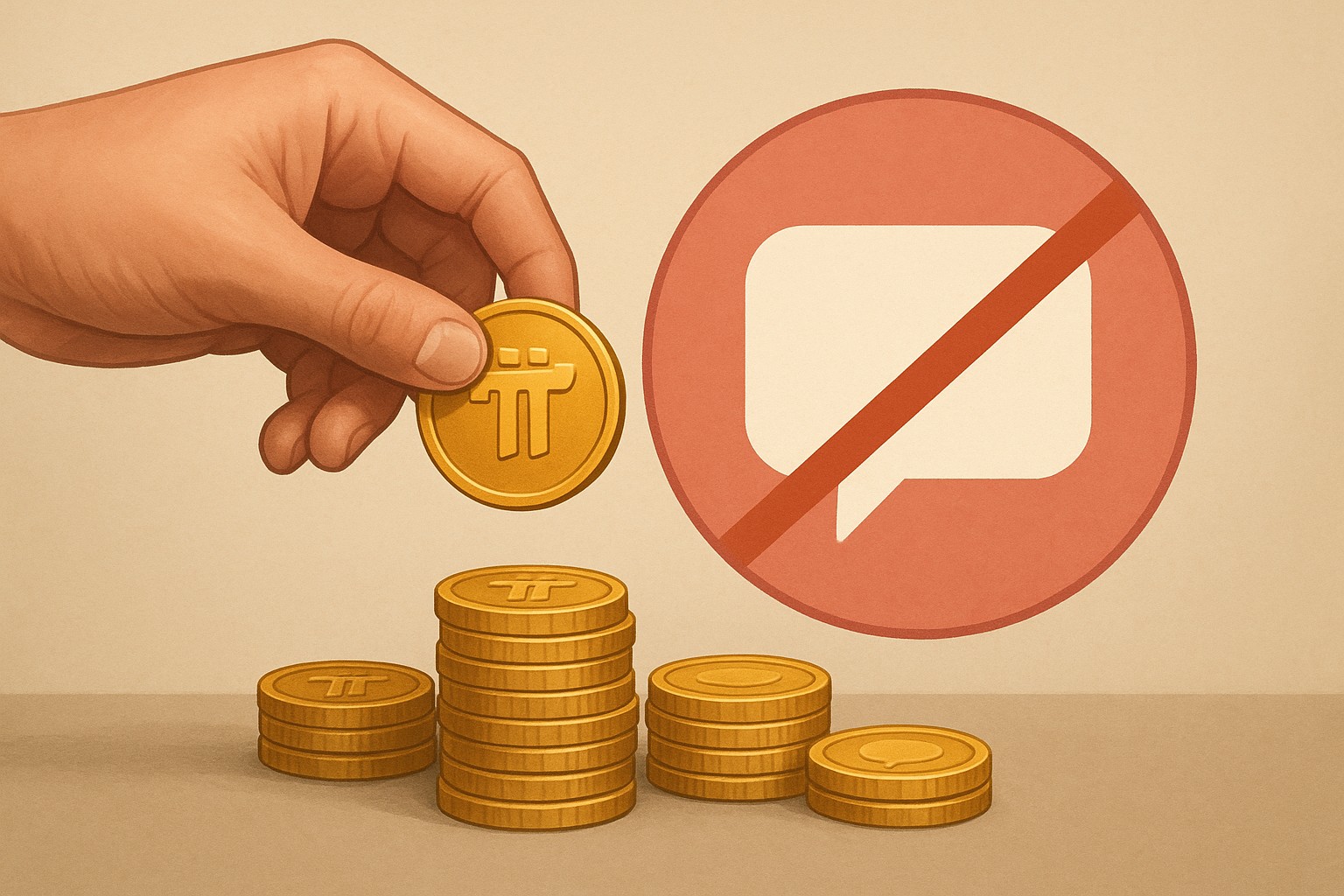
Pi Network Debuts PiRC1 Token Policy with a clear message: new ecosystem tokens should exist because they do something, not because they can. The framework signals a more disciplined approach to token issuance, liquidity, and developer accountability inside the Pi ecosystem.
What PiRC1 Is and Why Pi Network Introduced It
PiRC1 is best understood as a token issuance and design policy meant to raise the minimum bar for launching new tokens in the Pi ecosystem. Instead of allowing anyone to mint a token and hunt for attention later, PiRC1 flips the order: projects are expected to prove utility first, then earn the right to issue a token that serves that utility.
This is a direct response to a familiar crypto problem: ecosystems get flooded with lookalike tokens that promise future value but ship no product, attract no sustained users, and often collapse once early liquidity dries up. By tying token permission to demonstrable app functionality and demand, Pi Network is trying to reduce speculation-driven launches and focus developer energy on real services.
From a practical standpoint, PiRC1 also acts as a signaling mechanism. If a project receives approval under a stricter framework, it can be easier for users to treat that token as part of a genuine app economy rather than a short-lived hype cycle. I like the intent here: it doesn’t guarantee quality, but it nudges teams toward shipping before marketing.
Pi Network PiRC1 Token Issuance Framework Sets a New Standard for Ecosystem Projects
The Pi Network PiRC1 token issuance framework sets a new standard for ecosystem projects by defining eligibility in a way that centers product reality—working apps and real usage—rather than tokenomics decks. In many ecosystems, token issuance is treated as the starting line; PiRC1 frames it as a milestone reached after an app demonstrates traction and a defensible reason for a token to exist.
For developers, that means prioritizing a minimum lovable product, retention, and user workflows inside the Pi environment. For users, it potentially reduces the number of tokens that appear out of nowhere with little explanation beyond price narratives. In a KYC-oriented user base, the social cost of launching low-effort or misleading projects can also be higher, which may complement PiRC1’s rules.
If implemented consistently, PiRC1 could improve overall ecosystem coherence: fewer tokens, but each with clearer roles—payments, access control, rewards, governance, or resource allocation inside a specific application. The best token frameworks make tokens boring in the best way: a tool that quietly supports an app’s operations.
How PiRC1 Fits the Broader Protocol Upgrade Roadmap
PiRC1 doesn’t live in isolation; it lands as part of a broader protocol upgrade roadmap that aims to make the network more developer-ready and app-centric. When networks approach major technical milestones—node upgrades, new tooling, and smart contract capability—there’s often a rush of opportunistic token launches trying to front-run attention. A stricter issuance framework is one way to prevent that rush from diluting user trust.
In practice, “protocol roadmap” matters because it defines what builders can safely rely on: how apps connect, how tokens interact with base assets, and how liquidity and compliance expectations are handled. If the network is moving toward more advanced on-chain functionality, setting guardrails early can reduce future cleanup when questionable tokens inevitably surface.
Practical implications for node operators, developers, and users
- Node operators: track upgrade deadlines and ensure software versions remain compatible so the network stays healthy during policy transitions.
- Developers: plan token issuance as a later-stage deliverable; validate demand with real user flows and measurable engagement before proposing a token.
- Users: treat “Pi ecosystem token” as a category with standards—still evaluate risk, but expect clearer utility and more transparent launch mechanics.
This is where PiRC1 can help long-term: it aligns timing. You don’t want a token economy sprinting ahead while the app layer and the protocol tooling are still catching up.
Permanent Liquidity Pools, Funding Discipline, and Anti-Rug Design Choices
One of the most consequential design directions associated with PiRC1 is how token proceeds and liquidity are handled. Instead of assuming project teams should directly control funds raised at issuance, the framework emphasizes structural controls—such as directing proceeds into more durable liquidity arrangements—so that liquidity is less susceptible to sudden withdrawal.
That matters because many “rug pull” patterns are not about a fancy exploit; they’re about incentives. If a team can pull liquidity quickly, it can be tempting to optimize for short-term extraction rather than long-term product building. By encouraging mechanisms that keep liquidity anchored and harder to abuse, PiRC1 attempts to reduce the damage from projects that fail—or from teams that never intended to ship.
As a reader and long-time observer of token launches, I see this as a “boring but important” improvement. It doesn’t eliminate risk, and it doesn’t automatically make a token valuable. But it changes the default behavior from “trust the team” to “trust the structure,” which is usually healthier for retail-heavy ecosystems.
What PiRC1 Means for PI’s Market Position and Ecosystem Trust
What PiRC1 means for PI’s market position is less about short-term price action and more about narrative credibility: can Pi Network present itself as an ecosystem where apps and users come first, and tokens are secondary tools? If the answer becomes yes, the network may attract builders who are tired of launching into purely speculative environments where real users are scarce.
A stricter token policy can also impact how external observers evaluate the ecosystem. When the market sees dozens of low-utility tokens, it often assumes the base network is permissive or chaotic. Conversely, when token issuance is constrained by meaningful criteria—working apps, proven demand, and disciplined liquidity—participants may begin to interpret new token launches as higher-signal events.
That said, there’s a trade-off: strong standards can slow down experimentation. Some good ideas start as small, weird prototypes. The challenge for PiRC1 will be balancing quality control with a pathway for early-stage teams to prove themselves without excessive bureaucracy. If Pi Network can keep the process transparent, it may gain trust without suffocating creativity.
A Builder’s Checklist: How Projects Can Prove “Real Use Case” Before a Token
If PiRC1 is serious about preventing tokens without use cases, developers will need to think like product teams, not just token designers. A credible “real app” should show that users repeatedly do something valuable—and that a token meaningfully improves that workflow rather than acting as a fundraising shortcut.
Start with measurable traction inside the app. This can be as simple as daily active users who complete core actions, repeat usage over weeks, and a clear reason why users keep returning. Then articulate the token’s job in one sentence: access, payments, staking for resources, rewards tied to measurable contributions, or governance over a defined scope. If you can’t explain the token without referencing price, you likely don’t have utility yet.
Finally, build token mechanics that don’t punish normal users. Many ecosystems fail by designing tokens that require users to speculate just to participate. A more resilient approach is to ensure users can benefit from the app even if they never trade the token, while the token remains useful for power users or specific functions.
Practical evidence a project can prepare before requesting issuance
- Working product: live app with a stable core loop (not just a demo or landing page).
- Demand proof: retention metrics, repeat transactions, and user feedback tied to specific features.
- Token necessity: a clear explanation of what breaks or becomes worse without the token.
- Safety design: launch structure that reduces liquidity abuse and aligns incentives over time.
- Ecosystem fit: integration points that make sense within Pi’s broader economy and user norms.
This checklist won’t guarantee approval, but it will make a project’s case legible—and it forces the most important question early: are we building an app, or are we trying to invent a reason for a token?
Conclusion: PiRC1 Pushes Pi Network Toward Utility-First Web3
PiRC1 is a notable shift toward utility-first standards by making token issuance contingent on real applications and real demand. Combined with ongoing protocol upgrades, it suggests Pi Network wants to transition from a token-centric narrative to a structured app economy where tokens are earned by usefulness.
For users, the best takeaway is cautious optimism: higher standards can reduce noise, but due diligence still matters. For builders, the message is even clearer—ship something people use, design a token that serves the product, and treat trust as an engineering problem, not a marketing goal.