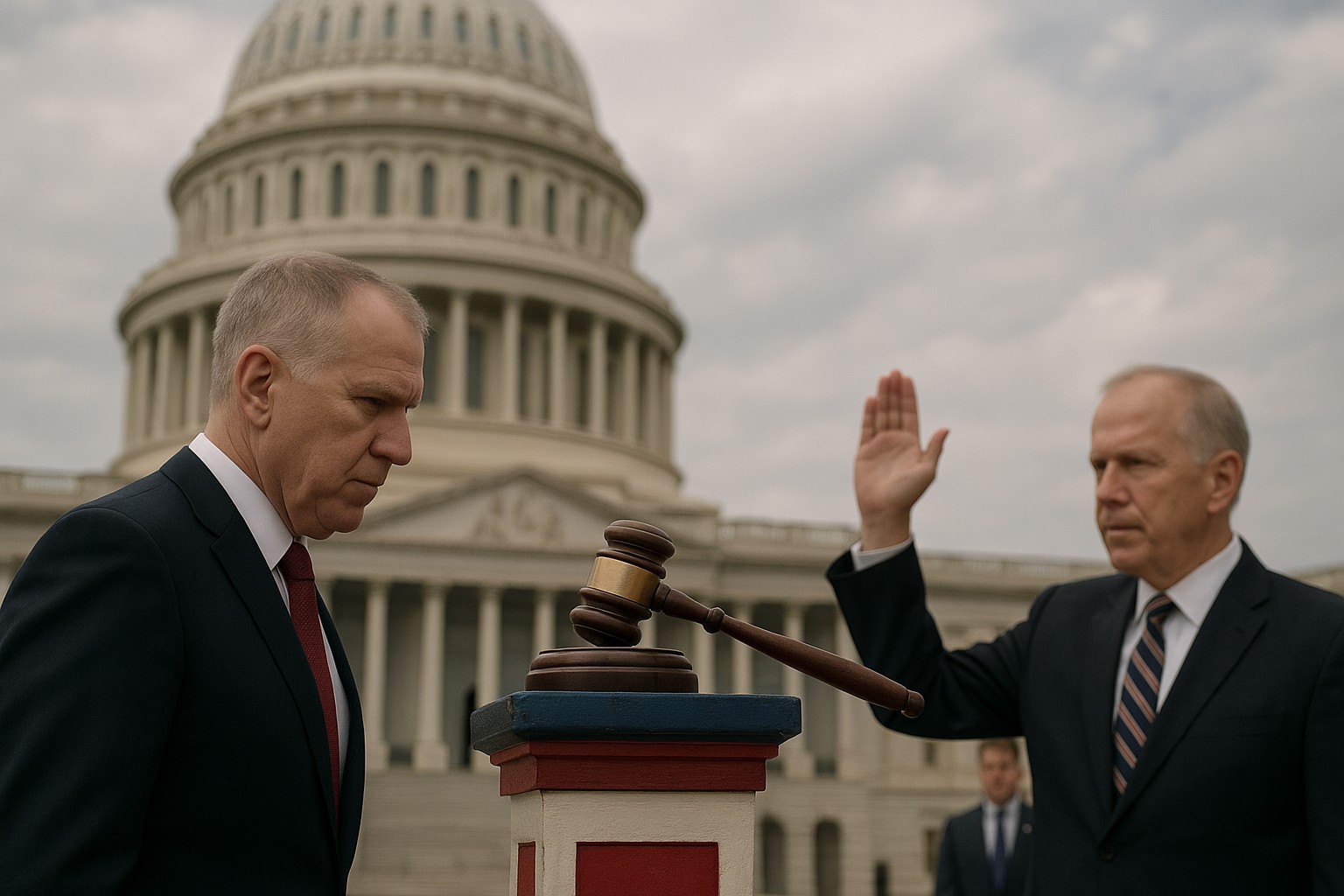
Senate Readies Warsh Vote as Tillis Withdraws His Hold on the Nomination, shifting Washington’s focus from procedural gridlock to a fast-moving confirmation calendar. With the Senate Banking Committee now able to act, markets and policy watchers are parsing what a Warsh-led Fed could mean for rates, regulation, and crypto.
What Changed: Tillis Steps Back and the Calendar Moves Forward
Sen. Thom Tillis’s decision to withdraw his hold effectively resets the nomination process from “stalled” to “scheduled.” In Senate reality, a single senator’s procedural resistance can be enough to slow committee action, freeze floor time, and sap momentum—especially for high-profile posts that sit at the intersection of politics and markets. Once that brake is released, the nomination pipeline often accelerates quickly.
This shift matters because it reduces uncertainty. A nomination caught in procedural limbo can drag on for weeks, inviting speculation about concessions, side-deals, or a potential withdrawal. With the hold lifted, the path tends to look more linear: committee vote, then leadership decides how quickly to bring it to the floor, and finally a full Senate vote.
From a practical standpoint, you can think of the hold as a “time tax” on the Senate’s schedule. Removing it doesn’t guarantee confirmation, but it does make timelines easier to forecast—and timelines are exactly what markets trade on.
Warsh Confirmation Clears Its Last Major Obstacle—But Politics Still Applies
Many observers characterize the withdrawn hold as the last major procedural obstacle, because it removes the most visible bottleneck preventing the Senate Banking Committee from moving. That said, “cleared” doesn’t mean “certain.” Senators can still raise substantive objections, ask for additional disclosures, or slow floor consideration through other tactics.
The bigger point is that the nomination now becomes a standard headcount and messaging exercise rather than a rules-and-timing drama. Committee members will focus on Warsh’s record, how he frames central bank independence, and whether he signals continuity or change on monetary policy and supervision. Any nomination tied to the Federal Reserve triggers heightened sensitivity because the Fed’s credibility relies on avoiding even the appearance of partisan capture.
I also think it’s worth noting how quickly the narrative can shift: yesterday’s story was process; today’s story is policy. That’s a meaningful upgrade for anyone trying to assess likely outcomes rather than just Senate mechanics.
The Race Against Powell’s May 15 Deadline and Why Timing Matters
Even when the vote count looks stable, timing can be decisive. When a leadership transition is bounded by a clear date—like the end of a term or a scheduled handoff—Senate leadership tends to prioritize certainty. A compressed window can concentrate negotiations, reduce the appetite for prolonged delays, and encourage members to make their positions known sooner.
The Race Against Powell’s May 15 Deadline: practical implications
- Committee scheduling pressure: Hearings and markups become less flexible, pushing members to decide with the information already on the table.
- Floor time competition: Confirmation votes compete with must-pass items, which can force leadership to bundle or fast-track.
- Market sensitivity: The closer the deadline, the more markets react to small headlines about vote timing or whip counts.
- Transition planning: Agencies and regulated institutions begin scenario planning earlier to avoid a leadership gap.
A tight timeline also changes how stakeholders behave. Banks, fintech firms, and crypto businesses tend to accelerate outreach, publish policy memos, and clarify their top priorities because they know the decision-makers could change quickly. If you’re a builder or operator, this is when you’ll see the most noise—letters, op-eds, coalition statements—because everyone wants their framing to be the one staffers read first.
Why Warsh’s Confirmation Matters for Crypto Markets and Financial Regulation
Crypto markets often respond less to what the Fed says about crypto specifically and more to the Fed’s broader posture: liquidity conditions, risk appetite, and the tone toward innovation in payments and banking. If Warsh is perceived as more conversant with digital-asset plumbing—stablecoins, custody, market structure—then market participants may expect a clearer regulatory dialogue, even if policy remains strict.
The practical value here is separating two different channels of impact. First is monetary policy, which influences everything from Treasury yields to speculative leverage. Second is supervision and regulatory coordination, where the Fed plays a major role alongside other agencies. A chair who understands the mechanics of tokenized settlement or stablecoin runs may ask different questions, even while pursuing traditional mandates like inflation and employment.
My personal take: “crypto-literate” doesn’t automatically mean “crypto-friendly.” It often means fewer category errors. That can be bullish for serious businesses over the long run because clarity tends to reward compliance and punish wishful thinking.
How to Read the Senate Banking Committee Vote: Signals, Swing Points, and Scenarios
Committee votes are not just formalities; they are information events. The margin, the statements attached to votes, and the topics senators emphasize can telegraph what the full Senate will debate. Watch for whether members focus on inflation credibility, Fed independence, bank supervision, or emerging payment rails—each emphasis hints at the coalition forming around the nomination.
In terms of scenarios, there are a few realistic pathways. A smooth committee vote followed by rapid floor scheduling suggests leadership believes the nomination is secure and wants to minimize drift. A narrow or contentious committee outcome can still lead to confirmation, but it tends to increase headline risk because every subsequent procedural step becomes a potential drama point.
If you’re trying to track this like a pro, don’t just look for “yes/no” tallies. Look for:
– whether undecided senators ask follow-up questions after the committee action
– whether industry groups shift messaging from “process” to “policy priorities”
– whether macro commentators start pricing the nomination into expectations about the Fed’s tone
Those second-order signals often move faster than the official calendar.
What Stakeholders Should Do Next: Practical Takeaways for Investors and Builders
For investors, the most actionable approach is to map outcomes to time horizons. In the near term, the nomination’s biggest impact is volatility around expectations—timing, confirmation odds, and perceived stance on inflation. Over the medium term, the impact comes from how a new chair shapes communication, staffing, and the Fed’s coordination posture with other regulators.
For crypto founders and fintech operators, this is a good moment to get specific. Instead of broad pleas for innovation, emphasize measurable issues: bank access, custody standards, stablecoin reserve expectations, real-time payments integration, and risk management disclosure norms. Policymakers respond better to concrete operational realities than to abstract claims about competitiveness.
Finally, for everyday readers: treat the nomination like a lens on how Washington manages institutional trust. The Fed’s power is unusual—it works best when it’s boring. Any transition that appears rushed or politicized can create ripples well beyond crypto, so watching the tone of the debate is almost as important as watching the vote itself.
Conclusion: A Procedural Shift with Real Policy Consequences
With Tillis withdrawing his hold, the Senate’s attention shifts from blockage to decision, and Senate Readies Warsh Vote as Tillis Withdraws His Hold on the Nomination becomes more than a headline—it becomes a countdown. The next steps in committee and on the floor will reveal not only Warsh’s confirmation odds, but also how senators want to frame Fed independence and regulatory priorities in a moment of heightened market sensitivity.
The useful way to follow this isn’t by refreshing for gossip; it’s by tracking deadlines, reading what senators emphasize, and watching how markets react to incremental scheduling news. If the process continues to accelerate, expect sharper—and more consequential—debates about monetary credibility, financial stability, and how the U.S. approaches digital-asset innovation inside a traditional banking system.