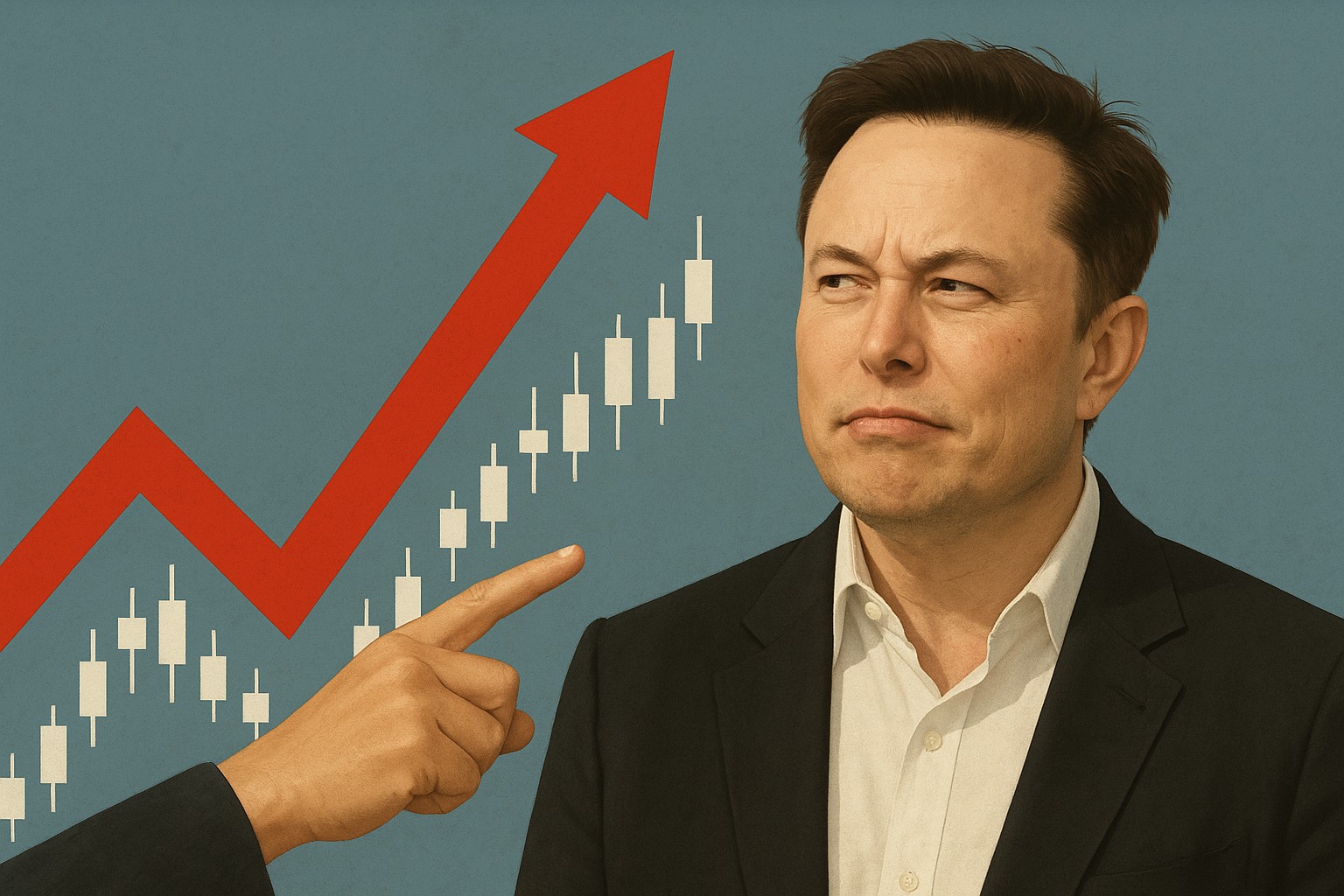
What happens when prediction markets track Elon Musk impulses is that a billionaire’s mood, media cycle, and posting rhythm get converted into a tradable probability stream. In practice, these “tweet markets” turn minutes of attention into price movement—sometimes useful, sometimes chaotic, and always revealing about how online crowds interpret signals.
Introduction: When a personality becomes market infrastructure
Prediction markets used to feel like special-occasion tools—elections, big macro releases, maybe a court ruling. Now they’re increasingly always-on, with contracts that resolve on tiny, objective events such as social activity counts, livestream starts, or product announcements. Elon Musk sits at the center of this shift because his behavior reliably moves narratives, communities, and asset prices.
I find this fascinating and a little unsettling. On one hand, it’s a cleaner way to express uncertainty than hot takes. On the other, when the underlying variable is a single person’s impulse, the market can become less about forecasting and more about reacting—an economy of vibes with a settlement clause.
From tweet counts to a new kind of market data
A key change is the rise of contracts that settle on measurable micro-events: number of posts in a time window, whether a specific account posts again today, or whether a phrase appears. Compared with subjective questions like “Will sentiment improve?”, these are easy to verify. That makes them attractive to platforms, because resolution is crisp and disputes are rare.
This is where “tweet markets” matter beyond novelty. They act like sensors: each trade updates a live probability that can be charted, scraped, and fed into dashboards. Over time, these prices become a new kind of market data—behavioral odds that reflect collective interpretation of a person’s rhythm, schedule, incentives, and current obsessions.
The second-order effect is important: once the probability stream exists, it’s not just humans reading it. Bots and analytics tools can consume these odds in real time, compare them to posting velocity, and trade the spread. The market stops being a once-a-week bet and becomes an always-on signal layer.
How prediction markets work: turning impulses into prices
At a mechanical level, most prediction markets boil down to simple payout structures: a contract pays out if an outcome happens, and doesn’t if it doesn’t. The price—after fees, spreads, and liquidity effects—approximates the crowd’s probability estimate. When the “outcome” is a behavior metric like post counts, the loop between observation and repricing can be very tight.
What makes Elon Musk a unique underlying asset is the blend of visibility and unpredictability. He posts frequently, reacts to news in real time, and often sets the news agenda himself. That means information arrives in bursts: a flurry of posts, a lull, then a sudden pivot. Markets built on this behavior can swing sharply because the underlying variable updates continuously.
There’s also a psychological layer: traders aren’t only estimating how many times he’ll post—they’re estimating his state. Is he bored? Angry? In a product-launch mode? Fighting a public battle? Those narratives become informal models, and when the narrative shifts, prices follow.
Why “impulse tracking” creates intraday volatility
Impulse-driven markets can move fast even without new external facts. Several forces amplify volatility:
- High-frequency updating: every new post (or absence of posting) changes the implied path to the settlement range
- Narrative shocks: a single topic shift can change expectations about continued posting
- Crowd reflexivity: odds move, people interpret the move as information, then pile in
- Bot participation: automated strategies react faster than humans to posting cadence
- Liquidity pockets: micro-markets can be thin, so moderate trades move price more than expected
If you’ve ever watched a probability jump because a notification hit everyone’s phone at once, you’ve seen reflexivity in action.
Trading Elon’s attention: incentives, reflexivity, and the “dopamine loop”
When markets track a person’s online activity, they also create incentives around that activity. Even if the subject never looks at the market, the surrounding ecosystem does: influencers, commentators, and sometimes opportunists. The danger is subtle—people begin to treat posting as a tradable catalyst, which can encourage more aggressive amplification of the very content that triggers posting.
This creates a dopamine loop for traders as well. Short settlement windows and constant feedback make the experience more like day trading than forecasting. There’s always another tick, another post, another probability swing. That can be entertaining, but it can also distort behavior: you stop asking what’s true and start asking what will move the line in the next hour.
Reflexivity becomes the core mechanic. If enough participants believe Elon is likely to post more when he’s being discussed, then discussion increases, which may increase posting, which validates the trade. In that environment, prediction markets look less like neutral measurement tools and more like active participants in attention allocation.
Practical guide: how to analyze tweet markets without fooling yourself
If you want to treat these markets as more than spectacle, you need a framework. The goal is not to predict Elon Musk’s mood in the abstract; it’s to estimate a measurable outcome under constraints: time window, what counts as a post, and how resolution is verified. Read the rules first—micro-markets often define inclusion criteria (main posts vs reposts vs quotes) that materially change expected counts.
Next, separate base rate from story. The base rate is historical posting frequency under comparable conditions (weekday vs weekend, travel days, major product cycles, regulatory disputes, earnings windows). The story is today’s narrative about why posting should accelerate or slow. Stories are seductive; base rates are boring—and usually more reliable.
Finally, be honest about what you can’t know. If the market is pricing in insider-like confidence about a burst of activity, ask whether you’re seeing real information or just momentum. In thin markets, momentum often masquerades as insight.
A simple checklist for traders and observers
Use this checklist to keep the analysis grounded:
- Resolution clarity: what exactly counts as a post and what timestamp standard is used?
- Window risk: how much time remains, and how sensitive is the outcome to one burst of activity?
- Cadence tracking: is posting pace accelerating, stable, or mean-reverting?
- Event calendar: product launches, interviews, legal news, earnings, or platform incidents that correlate with posting
- Liquidity & slippage: can you enter/exit without moving price against yourself?
- Bot risk: are you competing with automated strategies that react instantly?
Even if you never trade, this checklist helps you interpret odds as data rather than entertainment.
Risks and ethics: manipulation, data quality, and platform governance
Because these contracts settle on public metrics, they look manipulation-resistant at first glance. But there are still levers. Market manipulation can occur through trading (pushing odds to create screenshots and narratives) or through attention engineering (nudging the subject’s behavior indirectly by escalating conflicts, tagging, or amplifying controversy). It’s not that one trader controls Elon Musk; it’s that the environment can become more combustible when money is attached to attention.
Data quality is another issue. APIs change, platforms rate-limit, posts get deleted, repost mechanics evolve, and third-party scrapers disagree. If a contract’s resolution depends on a specific counting method, small discrepancies can become big disputes. In my view, the most robust markets are those that specify a single authoritative source and a clear counting procedure—down to whether edits, deletions, or temporary outages matter.
Governance matters too. Platforms running these markets need clear policies on ambiguous edge cases, and they need to resist turning every viral micro-moment into a listed contract. A healthy market ecosystem requires restraint; otherwise, the product becomes an arcade of impulse betting that burns out users and invites regulatory pressure.
Conclusion: a probability feed for personality—useful, but not neutral
Prediction markets that track Elon Musk impulses are more than a quirky sidebar to crypto culture. They represent a shift toward always-on probabilistic data, where human behavior is sliced into measurable units and priced continuously. Done carefully, that can be informative: it’s a real-time consensus indicator with skin in the game, often more honest than punditry.
But it’s not neutral. When attention becomes the underlying asset, incentives leak outward—into discourse, amplification, and sometimes provocation. Treat these markets like instruments: powerful in the right hands, dangerous when used for thrills. If you watch them, do it with a base-rate mindset and a clear understanding that the line you’re seeing is a mix of information, reflex, and the internet’s hunger for the next ping.