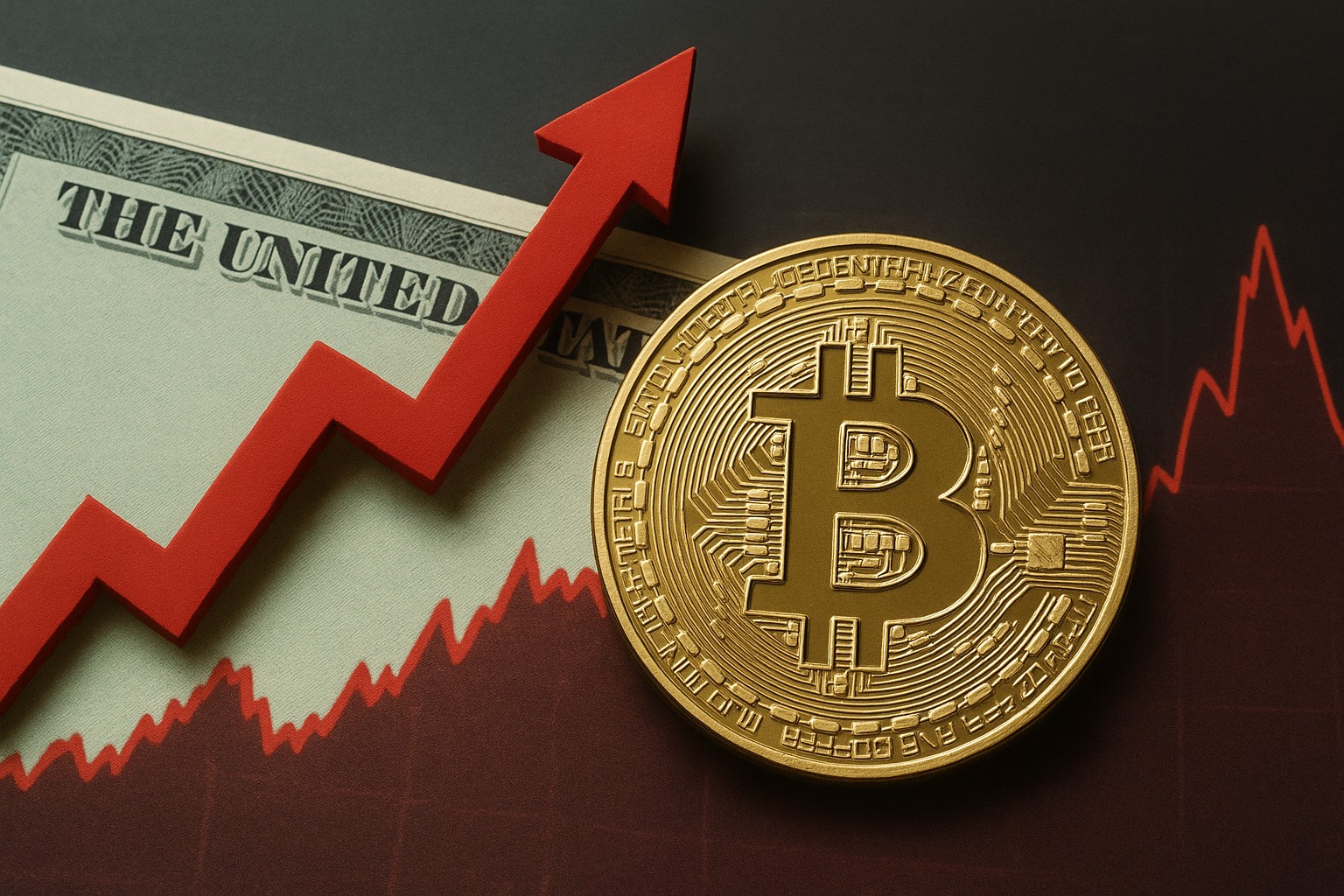
US yields climb sharply as markets tighten and Bitcoin retreats from the 82,000 level. The move is more than a crypto headline—it’s a real-time stress test for liquidity, risk appetite, and how investors price “cash-like” returns versus speculative upside.
What it means when US Treasury yields surge as liquidity tightens
When US Treasury yields jump quickly, the market is effectively raising the price of money. Higher yields increase the discount rate used to value future cash flows, which tends to pressure growth assets and long-duration bets—tech equities, high-beta credit, and often Bitcoin. Even if the macro story is complex, the market’s message is simple: safe yield is suddenly more competitive.
A sharp yield climb can come from multiple forces: stronger-than-expected economic data, sticky inflation, heavy Treasury issuance, or shifting expectations about Federal Reserve policy. In practice, these drivers can overlap, creating a “pile-on” effect where rates rise, volatility increases, and investors reduce leverage at the same time.
In my experience watching these cycles, the important piece isn’t just the level of yields—it’s the speed. Rapid changes tighten financial conditions faster than portfolios can rebalance, which often triggers mechanical selling (risk parity, vol targeting, margin reduction). That’s why a sudden yield spike can hit Bitcoin even without any crypto-specific bad news.
Why markets tighten: rates, the Fed, and the funding backdrop
“Markets tightening” is a catch-all phrase, but it usually shows up in very specific places: short-term funding rates, dollar strength, and the availability of leverage. If traders and institutions can’t fund positions as cheaply, they reduce exposure. That matters for crypto because a meaningful share of demand is liquidity-sensitive—spot buyers, derivatives traders, and ETF flows all respond to financing conditions.
Expectations about the Fed sit at the center of this. If inflation prints come in hot, or labor markets stay strong, traders may price fewer cuts—or even the possibility that rates stay higher for longer. That reprices everything from mortgages to corporate borrowing costs, and it shifts investor preference toward instruments that pay a predictable yield now.
Another underappreciated factor is Treasury supply. When the US government issues lots of bills and bonds, it can pull cash out of other corners of the market. Investors who might otherwise allocate to credit, equities, or crypto can be drawn into Treasurys simply because the risk-free return looks attractive. In a tight liquidity environment, that “safe yield magnet” becomes powerful.
Bitcoin falls from 82,000: key drivers behind the retreat
Bitcoin retreating from the 82,000 area is a textbook example of macro resistance meeting technical resistance. When yields rise sharply, Bitcoin often trades like a high-beta macro asset—sensitive to the dollar, real rates, and broad risk sentiment. The 82,000 level also acts as a psychological zone where profit-taking naturally increases, especially if price approached it quickly.
There’s also a positioning angle. If speculative long exposure builds into a key level, it doesn’t take much—a yield spike, a risk-off equity session, or a stronger dollar—to trigger liquidations in perpetual futures and options hedging flows. That can amplify downside moves even if the longer-term thesis hasn’t changed.
From a practical standpoint, investors should separate “price failed at 82,000” from “Bitcoin is broken.” In tight conditions, markets tend to punish crowded trades and reward patience. The more helpful question is: what would need to change for Bitcoin to reclaim that level sustainably? Usually it’s some combination of calmer yields, improving liquidity, and steady spot demand.
ETF outflows show where the rate pressure is landing
Spot Bitcoin ETFs have become one of the clearest transmission channels between macro conditions and crypto price action. When yields spike, ETFs can see outflows because investors rotate toward cash-like instruments, rebalance risk budgets, or simply reduce volatility in their portfolios. Outflows matter because they can translate into net selling of underlying Bitcoin, especially during sustained redemption periods.
The nuance is that ETF flows are not purely “bullish” or “bearish”—they’re a sentiment and liquidity gauge. During tightening phases, even investors who like Bitcoin long term may step back temporarily. That’s not necessarily a rejection of the asset; it can be an opportunistic pause while the cost of capital resets.
How to read ETF flows without overreacting
- Look at the trend, not a single day: One large outflow can be noise; a multi-day pattern is more informative.
- Compare flows to price behavior: If BTC holds steady despite outflows, underlying spot demand may be stronger than it looks.
- Watch yields and the dollar alongside flows: ETF redemptions often accelerate when real rates rise and the USD strengthens.
- Check liquidity conditions: Wider spreads and thinner order books can turn normal flows into outsized price moves.
If you’re a long-term investor, treat ETF flows like weather reports. They can tell you when conditions are stormy, but they don’t dictate the climate.
Bitcoin’s hedge case remains longer term—here’s how to frame it
The idea that Bitcoin acts as a hedge can be true in certain regimes, but it’s rarely clean in the short run. In the near term, Bitcoin often behaves like a liquidity asset: it can rally when money is easy and retreat when funding becomes expensive. That’s not a failure of the hedge narrative; it’s a reminder that time horizon matters.
Over longer periods, Bitcoin’s hedge case tends to revolve around scarcity, monetary debasement concerns, and the appeal of a bearer asset outside traditional banking rails. But those themes are slow-moving. They don’t always help when markets are repricing rates in real time and traders are de-risking.
A practical way to reconcile this is to separate strategic allocation from tactical positioning. Strategic holders may keep a core position, while tactical exposure gets adjusted based on macro signals like real yields, inflation expectations, and liquidity measures. Personally, I find this framework reduces the emotional whiplash that comes from expecting Bitcoin to “hedge everything” at all times.
Stablecoins and tokenized Treasurys draw cautious capital
When yields rise and uncertainty increases, crypto capital often migrates toward instruments that feel safer: stablecoins, on-chain money markets, and increasingly tokenized Treasurys. This is not just a trend—it’s a direct response to the opportunity cost of holding volatile assets when you can earn an attractive yield with lower perceived risk.
Tokenized Treasury products, in particular, reflect a bridge between TradFi and DeFi. They offer a way to park capital on-chain while still capturing Treasury-like returns. In a tightening environment, that can siphon demand away from speculative tokens and even from Bitcoin at the margin, especially for institutions that prioritize capital preservation.
For everyday investors, the key takeaway is that “crypto” is no longer one risk bucket. In stressful macro periods, the internal rotation within crypto can be as important as flows in or out of crypto overall. Understanding where cautious capital is going—rather than only watching Bitcoin’s price—can help explain why dips feel persistent even without a major negative catalyst.
Conclusion: what to watch next as yields and crypto reprice
US yields climbing sharply as markets tighten and Bitcoin retreats from the 82,000 level is a reminder that macro still sets the tempo. Higher yields raise the bar for risk assets, tighten leverage, and often redirect marginal capital toward safer income—especially when the move happens fast.
In the coming weeks, focus on the direction and volatility of yields, the tone of Fed expectations, and whether spot Bitcoin ETF flows stabilize. If yields cool and liquidity improves, Bitcoin can retest key levels with stronger footing; if not, patience and risk management matter more than predictions. The healthiest approach is to treat this as a regime shift check: adjust position sizes, track liquidity signals, and let the market confirm the next trend.