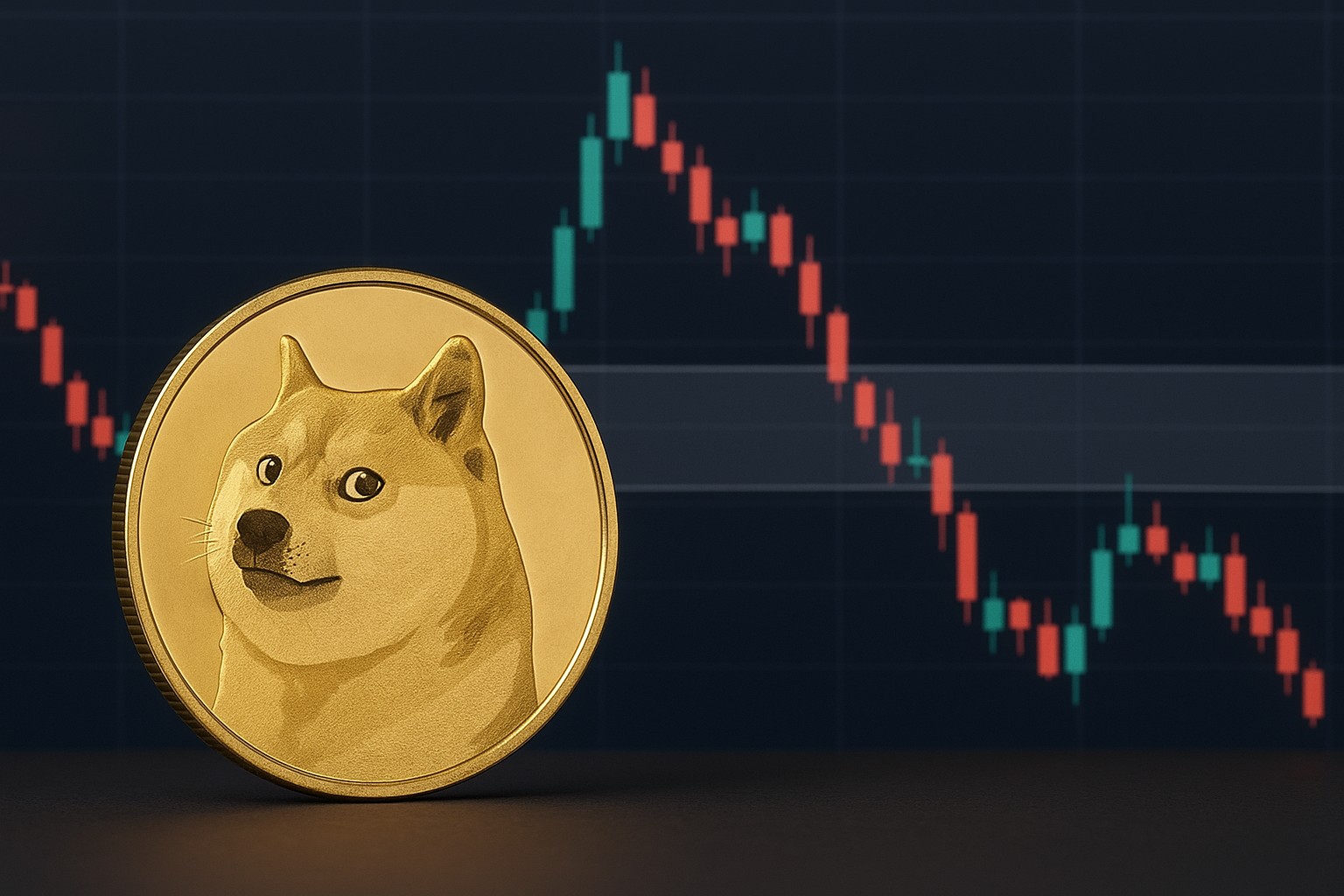
What the $0.12 to $0.14 band could mean for Dogecoin’s next move is less about predicting a single candle and more about reading market intent around a widely watched support zone. When price repeatedly returns to the same area, it often becomes the stage for the next big trend decision—up, down, or sideways.
Why the $0.12–$0.14 zone matters to Dogecoin holders
The $0.12–$0.14 band stands out because it’s a “memory zone” for the market: an area where many traders previously bought, sold, or got trapped. When DOGE revisits it, you typically see a mix of dip-buying, stop-loss clusters, and short sellers pressing weakness—creating high activity and sharp reactions.
From a practical perspective, this range can act like a hinge. If buyers can defend it convincingly, DOGE may build a base that supports a rebound. If it fails, the move is often not gentle; the path below tends to be faster because support levels under a broken floor can turn into empty air pockets where liquidity is thinner.
I also like to think of this area as the place where “belief” gets tested. Long-term meme-coin holders may view it as value, while shorter-term traders see it as a line in the sand. That disagreement is what creates tradable volatility.
Analyst flags channel risk in DOGE: how descending structure shapes expectations
A common technical read on DOGE in recent months has been a descending channel—lower highs pressing down while support repeatedly gets tested. In that structure, rallies can look strong intraday but still fail at predictable boundaries, especially if volume doesn’t expand meaningfully on the way up.
If DOGE is still inside a channel, the $0.12–$0.14 band matters because it often aligns with either the midline or lower boundary area of that pattern. That’s why traders keep calling it a make-or-break region: it’s where the market either respects the channel and bounces, or breaks down and confirms continuation of the bearish structure.
The actionable takeaway: treat a channel as a “map,” not a prophecy. Price can overshoot either side. What matters is how DOGE behaves after the move—does it reclaim levels quickly (often a trap), or does it accept lower prices for days (often a real breakdown)?
The level that has to hold: practical signals to watch (not just a number)
A support band isn’t a single price tag. It’s a zone where buyers must repeatedly prove themselves. The most useful clues are behavioral: how candles close, whether bounces are impulsive, and whether sellers get follow-through after breakdown attempts.
Confirmation checklist around $0.12–$0.14
Use these as a grounded, repeatable way to read the zone:
- Daily closes: Holding the zone on daily closes matters more than intraday wicks. One dramatic wick below support can be noise; multiple closes below often isn’t.
- Retest behavior: A breakdown followed by a weak retest that fails (support becomes resistance) is typically bearish continuation.
- Volume quality: A bounce on rising volume is more convincing than a bounce on low participation.
- Market structure: Look for higher lows forming above $0.12–$0.14; without that, rebounds can be dead-cat bounces.
- Funding and open interest (if you track derivatives): Rising open interest during a drop can hint at crowded shorts or leveraged stress; falling OI can signal de-risking and a healthier base.
Personally, I’ve found that DOGE often “fake breaks” popular levels when leverage is elevated. That’s why I focus on closes and retests rather than reacting emotionally to a single red candle.
Bullish scenario: support holds and Dogecoin builds a base for a bounce
If $0.12–$0.14 holds, the next move often starts as something boring: sideways consolidation. That’s not a bad thing. A stable base can reset momentum indicators, cool down forced selling, and allow spot buyers to accumulate without chasing. In many cases, the first rally attempt may still fail—because overhead supply (people wanting to exit at breakeven) can be thick.
For a more credible bullish reversal, watch for DOGE to reclaim nearby resistance levels and then hold them on a retest. A clean push that immediately collapses back into the range usually signals that sellers are still in control. But if DOGE can step up its structure—higher low, higher high—then the narrative shifts from “bounce” to “trend change.”
This is also where fundamentals and sentiment sneak back in. Dogecoin is heavily influenced by social attention and broader meme-coin appetite. If the market rotates into higher-beta assets (and DOGE catches momentum), a defended $0.12–$0.14 zone can become the springboard for a surprisingly fast run.
Bearish scenario: a clean break lower and what a “sharp flush” can look like
When a well-watched band fails, the market often reacts in two phases: first, the technical breakdown (stops trigger, momentum sells), and second, the psychological phase (late holders capitulate, dip-buyers step aside). This is how a controlled drift becomes a sharper drop—especially if liquidity is thin and leverage is still present.
A key detail is acceptance below the band. If DOGE dips under $0.12 and quickly snaps back, that can be a bear trap. But if it breaks and then spends time below the zone—failing to reclaim it on bounces—that’s when downside targets start to matter. Traders then look left on the chart for prior consolidation areas, psychological round numbers, and high-volume nodes to estimate where demand might return.
Risk management matters more than being right. If you’re trading, decide in advance what invalidates your thesis. If you’re investing, consider whether you’re comfortable with deeper drawdowns and whether your position sizing reflects DOGE’s volatility. Dogecoin can move quickly in both directions; treating it like a slow-moving large-cap can be costly.
Macro tape and major coins: why Bitcoin and Ethereum still control the room
Even if DOGE has its own community-driven catalysts, it still trades inside a broader risk environment. When the macro tape turns risk-off—rates, liquidity, or market-wide deleveraging—capital often rotates into majors first. In those moments, meme coins tend to underperform because traders prioritize depth and liquidity (Bitcoin and Ethereum) over high-beta speculation.
That’s why it’s useful to pair DOGE analysis with a simple checklist: Is BTC trending or chopping? Is ETH stable or bleeding? Are liquidations spiking? If the broader market is under stress, DOGE support zones become more fragile, and rallies may be sold faster.
On the flip side, when majors stabilize and volatility compresses, that can be the setup for meme coins to catch a bid. I’ve seen DOGE behave like a sentiment thermometer: if traders feel confident again, DOGE often reflects it quickly. So even if you’re focused on the $0.12–$0.14 band, keep one eye on BTC/ETH structure and overall market liquidity.
Conclusion: turning the $0.12–$0.14 band into a usable plan
What the $0.12 to $0.14 band could mean for Dogecoin’s next move comes down to whether the market treats it as a foundation or a trapdoor. A defended zone with strong closes, constructive retests, and improving structure can set up a meaningful rebound. A breakdown with acceptance below the range raises the odds of a faster sell-off and a longer recovery path.
The most practical approach is to stop treating the level as a headline and start treating it as a decision point. Define what you need to see for a bullish case, what confirms bearish continuation, and how you’ll manage risk either way. DOGE doesn’t reward certainty—it rewards preparation.