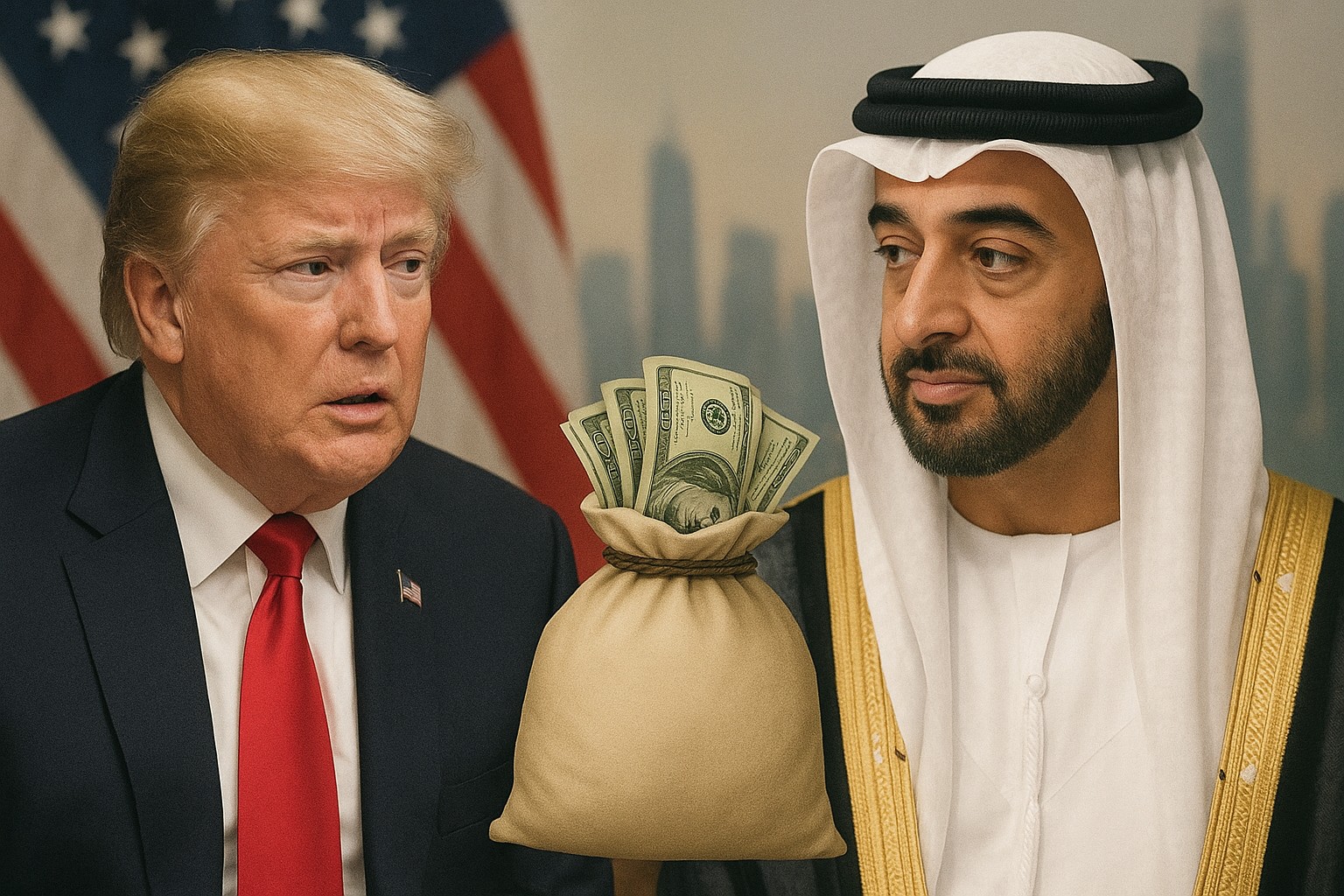
Trump says he was unaware of UAE royal’s reported $500M investment in World Liberty. The claim has reignited questions about foreign influence, transparency, and the governance of politically connected crypto ventures at a moment when regulation and elections are colliding.
What Trump said—and why the denial matters
Reports of a UAE royal-linked entity allegedly committing around $500 million to World Liberty Financial (often shortened to World Liberty or WLFI) drew immediate attention because of the political proximity involved. In public remarks, Donald Trump indicated he did not know about the reported investment, while also suggesting that family members are more directly involved in handling the venture’s business and partnerships.
That distinction—personal knowledge versus family or associates executing deals—may sound like inside baseball, but it matters. Politically connected companies live and die by perceived independence, especially when they touch sensitive sectors like finance and crypto. Even if a president or candidate is not personally negotiating, the public often evaluates the arrangement as a single “Trump ecosystem,” which raises the bar for disclosure and governance safeguards.
From a practical standpoint, the denial also sets expectations for what comes next: if more documents or confirmations surface, the story shifts from speculation to accountability—who signed, who approved, who benefited, and what controls were in place. If nothing is confirmed, the episode still highlights how quickly narratives can form in the absence of clear, proactive transparency.
Background on World Liberty Financial and the reported investment
World Liberty has been described as a Trump-family-backed crypto or DeFi-related project, and it has drawn both supporters and critics largely because of that association. When a venture mixes politics, brand power, and financial products, it naturally attracts intense scrutiny from media, regulators, and market participants who worry about conflicts of interest and reputational risk.
The reported UAE-linked investment is notable not only for its size but for what it implies about capitalization and control. A half-billion-dollar commitment—especially if structured to yield meaningful ownership or preferential rights—can reshape a company’s direction, governance, and incentives overnight. Even without outright control, a large external stakeholder may gain soft power through board influence, advisory roles, side agreements, or future funding leverage.
For everyday readers, the key question is less about the headline number and more about the mechanics: Was it equity, tokens, convertible instruments, or a staged set of tranches? Each structure carries different implications for disclosure, valuation, and the potential for funds to flow to insiders versus the operating company. The controversy persists partly because those details are not yet clearly and publicly reconciled.
Was the timing a coincidence?
The timing issue is doing a lot of work in this story because it shapes how people interpret motives. If a major investment was reportedly finalized close to a major political milestone—such as an inauguration window—critics will frame it as access-buying, while supporters may argue it’s simply when negotiations concluded. In politically sensitive contexts, perception often becomes as consequential as the underlying paperwork.
There are also mundane explanations for “suspicious timing.” Corporate deals can be delayed by legal review, compliance steps, banking rails, or coordination among multiple entities. Still, when the parties involved include high-profile political figures and foreign-linked capital, ordinary deal friction is unlikely to satisfy public curiosity. The burden shifts toward demonstrating process integrity rather than asking observers to assume it.
My own view is that timing controversies are rarely resolved by a single quote or denial. They’re resolved by governance receipts: documented approvals, independent oversight, and disclosures that explain who knew what, when, and under what authority. Without those, the debate becomes tribal—people decide what they believe based on who they already trust.
Practical questions to ask about timing and process
- Who had signing authority, and was it delegated in writing?
- What dates apply to term sheets, definitive agreements, and funding tranches?
- Were compliance checks performed (KYC/AML, sanctions screening, beneficial ownership)?
- Did any party receive compensation or distributions tied to the transaction timing?
- Were there board minutes, investor notices, or internal controls documenting approval?
Foreign influence and transparency: what regulators and investors will focus on
The phrase foreign influence appears repeatedly in coverage of this story for a reason: when capital flows from foreign-linked entities into ventures associated with senior U.S. political leadership, the risk category expands beyond ordinary investor relations. Even if everything is lawful, the optics can trigger calls for oversight—especially if the company seeks banking access, licenses, or regulated status.
Regulators and lawmakers tend to focus on a few predictable fault lines. First is beneficial ownership: who ultimately controls the investing entity, and what affiliations might matter for national security or diplomatic influence? Second is the flow of funds: how much goes into the company for operations versus to insiders or related-party entities. Third is governance: whether the company has independent directors, conflict-of-interest policies, and clear separation between political activities and business decision-making.
For investors (and for the crypto community watching from the sidelines), transparency is also about market integrity. If ownership shifts materially—through equity stakes, token allocations, or revenue-sharing—participants want clarity on dilution, lockups, preferential rights, and exit pathways. In crypto-adjacent projects, ambiguity often becomes a risk premium that depresses long-term credibility.
What this means for crypto markets, DeFi credibility, and political risk
This story lands at an awkward intersection: crypto is simultaneously courting institutional legitimacy and fighting the perception that it’s driven by insider deals and opaque structures. A high-profile project tied to a political dynasty can either accelerate mainstream comfort (through visibility) or amplify skepticism (through conflict-of-interest narratives). Which outcome dominates depends on the project’s willingness to over-communicate and build trust mechanisms that are common in mature finance.
Political risk is also real and often misunderstood by retail participants. When a venture’s brand is intertwined with a political figure, its fortunes can swing on election cycles, investigations, regulatory posture changes, or even the news cycle’s attention. That volatility can be independent of the project’s technology or adoption. If you’re evaluating a token, platform, or equity-like interest connected to such a venture, you’re implicitly underwriting reputational and policy volatility.
In my experience, the most resilient projects treat politics as a risk factor to mitigate, not a marketing engine to maximize. That means clear disclosures, independent audits, robust governance, and conservative communication. If the reported investment is confirmed, the smartest move for long-term credibility would be to publish a plain-English explanation of structure and controls—before opponents define the narrative permanently.
How to evaluate the claims responsibly (without getting whiplash)
Readers don’t need to pick a side to think clearly. The productive approach is to separate confirmed facts, reported claims, and interpretations. Confirmed facts might include public statements, corporate filings (if any), or verifiable ownership changes. Reported claims may rely on documents or unnamed sources. Interpretations include motives, timing implications, and geopolitical theories—often the noisiest part of the discourse.
If you’re tracking this as an investor, analyst, or simply a concerned citizen, focus on evidence that reduces uncertainty:
1) primary documentation (filings, signed agreements if disclosed, cap tables),
2) third-party verification (auditors, reputable legal statements, regulator correspondence),
3) consistency over time (does the story stay coherent as new facts emerge?).
It’s also worth watching for what is not said. Silence from a company can mean legal counsel is limiting commentary, negotiations are ongoing, or leadership is unprepared with a clean explanation. None of those proves wrongdoing—but they do prolong the reputational damage and fuel speculation. In fast-moving crypto narratives, delay itself becomes a multiplier.
Conclusion: where the story goes from here
Trump’s statement that he was unaware of a UAE royal’s reported $500M investment in World Liberty shifts attention toward documentation, governance, and who inside the organization had authority to negotiate and finalize major capital moves. Whether the report is confirmed, denied, or partially clarified, the episode underscores how political proximity raises the disclosure standard for any crypto-related venture.
The next chapter will likely be shaped less by sound bites and more by process evidence: transaction structure, beneficial ownership clarity, compliance controls, and a transparent account of who benefited financially. Until those pieces are addressed, concerns about foreign influence, timing, and conflicts of interest will remain the central lens through which the public evaluates World Liberty—and the broader credibility of politically adjacent crypto projects.