Polymarket opens a complimentary grocery pop up in NYC as a creative advertising play. It’s a rare moment where a crypto-native brand steps fully offline—using free essentials, real foot traffic, and community partners to turn attention into trust.
What Polymarket is doing: a free grocery pop-up that doubles as brand storytelling
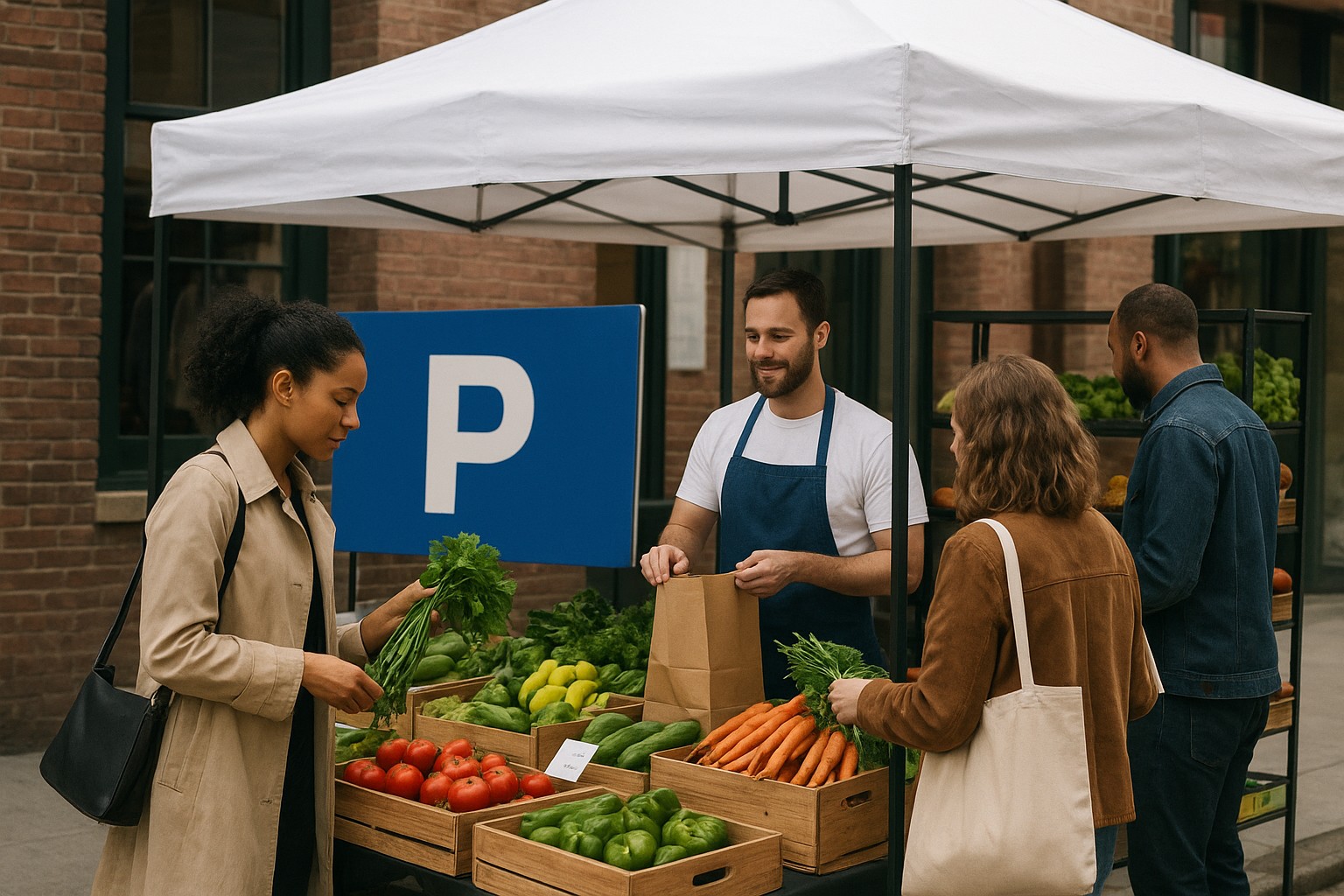
Polymarket is best known as a crypto-based prediction market platform, but this campaign pushes the brand into a place most fintech and Web3 companies rarely go: a physical retail experience. The idea is simple and memorable—set up a limited-time grocery pop-up in New York City where visitors can take home groceries at no cost, with no purchase required.
From an advertising perspective, the execution matters as much as the concept. A grocery store is universally understood, immediately useful, and highly shareable. Unlike a typical branded activation (swag, QR codes, photo walls), groceries feel practical and human. That practicality becomes the message: the brand is willing to invest in something tangible, not just in online attention.
There’s also a timing advantage. New York is loud, crowded, and expensive—meaning any marketing that earns genuine word-of-mouth has to be either extremely entertaining or genuinely helpful. Free groceries land firmly in the second category, which tends to produce more goodwill than spectacle alone.
A physical bet on community impact—and why it resonates in New York
One rival-style framing I’ve seen around this campaign is that it’s a physical bet on community impact, and that’s a useful lens. Physical activations force a company to show operational competence (logistics, staffing, inventory, crowd management), and that competence itself becomes a form of credibility—especially for a platform whose core product is digital and abstract to many people.
In NYC, food insecurity is not theoretical; it’s visible across boroughs, and many residents already interact with food assistance networks. When a brand supports hunger relief—especially alongside an established nonprofit—people can evaluate it on outcomes, not just intent. That doesn’t automatically make it altruism, but it does make it measurable.
Personally, I find campaigns like this most compelling when they avoid moral grandstanding. If the pop-up is easy to access, respectful to visitors, and coordinated with organizations that understand local needs, it can deliver real value while still functioning as advertising. The best brand plays often feel like services first and promotions second.
How the $1 million Food Bank partnership changes the narrative
A pop-up alone could be dismissed as a flashy stunt. Pairing it with a significant donation to a major hunger-relief organization changes the center of gravity of the story. The donation acts as a credibility anchor: even if you’re skeptical of marketing motives, the money still funds food distribution, logistics, and long-term programs.
It also reduces the risk of the pop-up being seen as a one-weekend photo-op. Food banks operate year-round; aligning with them signals the brand understands that food insecurity isn’t solved by a single activation. In practical terms, it suggests the company is trying to plug into an existing system rather than reinvent it.
If you’re analyzing this as a marketer, note the layered benefits:
– The pop-up generates press, social content, and foot traffic.
– The nonprofit partnership provides institutional legitimacy.
– The donation makes the impact legible and repeatable in future messaging without feeling too performative.
Marketing push amid rising competition in prediction markets
Another page-one-results-style angle worth using is marketing push amid rising competition. Prediction markets are getting crowded, and platforms are competing not just on liquidity and user experience, but on mindshare. A physical activation is one way to break out of the same online playbook of referral links, influencer threads, and sponsorship banners.
Competitors have experimented with consumer-facing giveaways and localized promotions, so the “free grocery” concept also reads like an escalation: bigger footprint, broader accessibility, and a clearer public benefit. In competitive markets, the strongest campaigns often do two things at once—differentiate the product category and set a new bar for what “showing up” looks like.
There’s another subtle competitive advantage: offline campaigns can reach people who would never click a crypto ad. Someone can walk into a pop-up out of curiosity or necessity, learn the brand name, and only later connect it to prediction markets. That’s top-of-funnel awareness you can’t easily replicate through Web3-native channels alone.
What this creative advertising play teaches brands about offline activations
This campaign is a strong case study in experiential marketing because it uses a product that’s already emotionally loaded: groceries. Food is personal; it’s also expensive. When you attach your brand to relief—rather than luxury—your message becomes less about aspiration and more about reliability.
Practical takeaways for founders and marketers planning a similar pop-up
- Choose a universally understood value proposition
- Free essentials beat niche perks because they require no explanation.
- Design for flow, not just aesthetics
- The best pop-ups minimize friction: clear entry, clear limits, clear exit.
- Partner with trusted local institutions
- Nonprofits, mutual aid groups, and community orgs can improve both impact and perception.
- Build a content strategy that doesn’t exploit visitors
- Capture the environment and operations; avoid turning recipients into props.
- Make the campaign auditable
- Be transparent about duration, inventory approach, and how donations are used.
One more personal observation: the most effective brand activations feel calm. If the pop-up becomes chaotic—long lines with unclear rules, inconsistent stock, or confusing eligibility—it can flip sentiment fast. The operational details are not background; they are the campaign.
Logistics, ethics, and PR risk: how to do “free” without backlash
“Free groceries for all” sounds straightforward, but execution is where reputations are made or broken. If demand overwhelms supply, disappointed visitors may feel misled. If distribution isn’t managed thoughtfully, it can create safety issues or attract criticism that the campaign is more spectacle than service.
Ethically, the brand also has to navigate a delicate point: when you market through generosity, people will question motives. That scrutiny isn’t inherently unfair—it’s the tradeoff for gaining attention through public benefit. The response is not to argue about intent, but to show strong practices: clear communication, respectful onsite experience, and meaningful support that extends beyond a single weekend.
For readers planning to attend a pop-up like this, a practical checklist helps:
– Look for published hours and any updates on location and capacity.
– Expect limitations (per household, per visit, or per item) even if entry is open.
– Bring a reusable bag and plan for lines if the activation goes viral.
– Follow official channels for real-time changes so you don’t waste a trip.
Brands often underestimate how quickly NYC amplifies both praise and criticism. If the campaign is run well, it can become an iconic local moment. If it’s run poorly, it can become a cautionary tale in a day.
Conclusion: a smart offline move that could redefine how Web3 advertises
Polymarket opens a complimentary grocery pop up in NYC as a creative advertising play because it converts an online brand into a real-world experience with immediate value. The combination of a free-store concept and meaningful charitable support is what makes it more than a gimmick—it’s marketing that can be felt, not just seen.
Whether this becomes a template for other prediction market platforms depends on execution and follow-through. But as a case study, it already shows a clear lesson: in a noisy industry, the fastest route to attention is often usefulness, and the fastest route to trust is showing up in the real world.