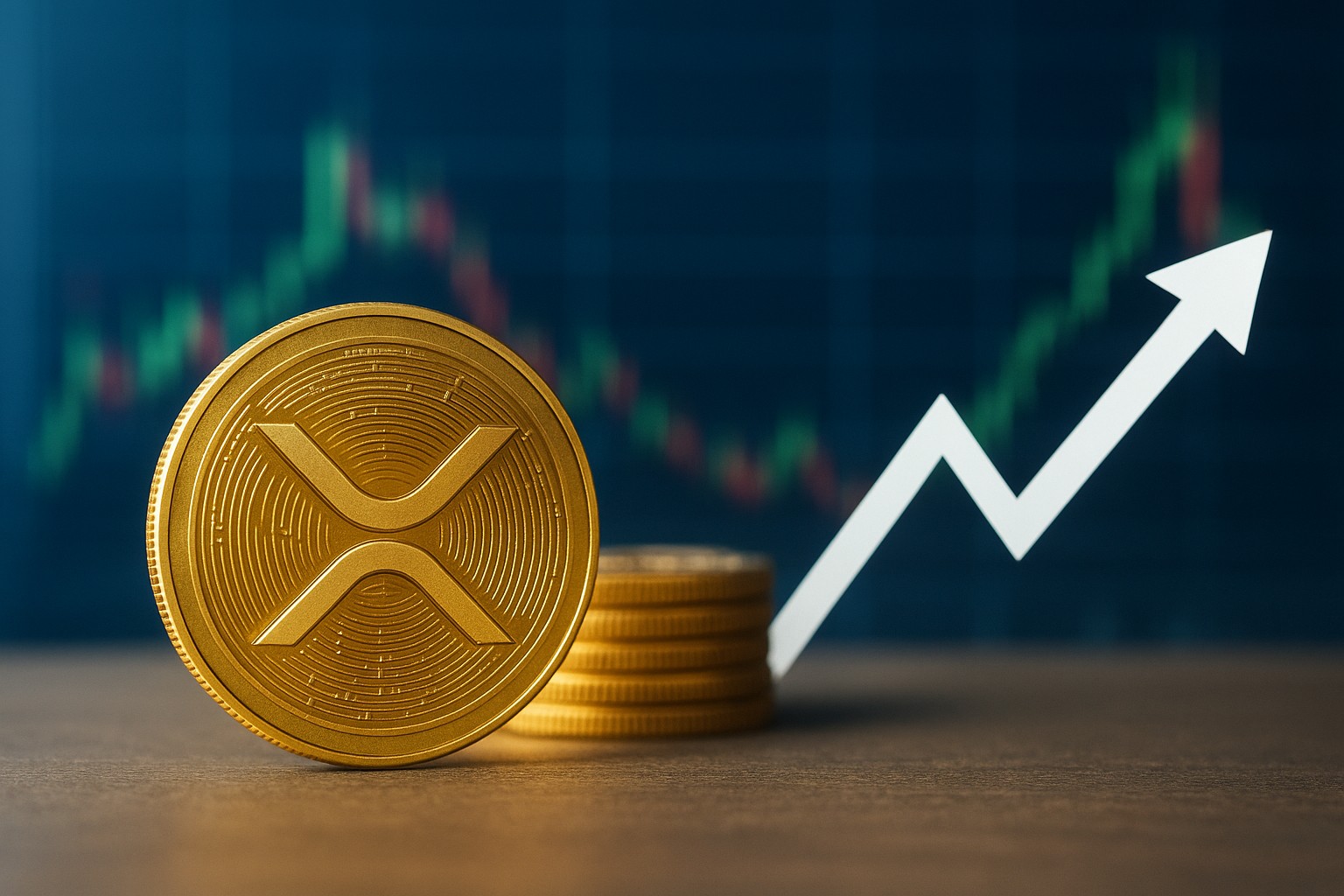
Ripple’s trillion dollar ambition puts XRP back in focus near $2.20, and it’s forcing investors to reassess what’s driving the network beyond daily candles. The bigger story isn’t a single price level—it’s whether Ripple can turn acquisitions, integrations, and real payment utility into durable demand for XRP.
Why Ripple’s $1T ambition is putting XRP back in focus near $2.20
Markets love simple narratives, and a trillion-dollar target is as simple as it gets: big number, long runway, clear scoreboard. But the reason it matters for XRP specifically is that Ripple has repeatedly framed XRP and the XRPL ecosystem as core to its long-term product strategy, not just a treasury asset or marketing symbol. When a company ties its growth thesis to a token, traders naturally start mapping corporate progress to token value.
At around $2.20, XRP sits in a zone that feels both psychological and technical: it’s close enough to $2.00 to attract dip-buyers, yet high enough to trigger profit-taking and skepticism from those who remember prior cycles. In my view, this is where the “story premium” becomes visible—XRP doesn’t need to be perfect, it needs to be plausibly on the right track.
That said, valuation goals are not catalysts on their own. The practical question is what Ripple must execute—product integration, enterprise distribution, liquidity depth, compliance readiness—so that XRP demand becomes structural rather than cyclical.
XRP price prediction: what the $2.00–$2.30 zone really means for traders
The $2.00–$2.30 band is often treated like a battleground because it compresses multiple forces into a tight range: round-number psychology, prior congestion, and the tendency for leveraged traders to cluster stops and entries. If XRP holds above $2.00 with consistent spot demand, momentum traders typically become more comfortable targeting higher liquidity pockets; if it slips below, it can quickly turn into a “sell the bounce” environment.
A useful way to think about this zone is not as prophecy but as a decision point. Price around $2.20 suggests the market is still negotiating whether Ripple’s roadmap can translate into network-level adoption. When adoption is uncertain, XRP tends to trade more like a high-beta asset—fast repricing up and down—rather than a steady, cash-flow-like story.
Practically, anyone trading XRP here should separate time horizons. Short-term traders care about volatility and liquidity; long-term holders should care about whether XRPL usage, payment corridors, and enterprise integrations are compounding. Conflating those two is how people get shaken out of otherwise good theses.
Ripple acquisitions and integrations: building an enterprise stack around XRPL
Ripple’s recent deal-making has a clear pattern: assemble the pieces that institutions require to move serious money—execution, custody, treasury workflows, and stable-value rails—then stitch them into a single enterprise experience. If done well, that reduces friction for corporates and financial institutions that want blockchain benefits without reinventing their back office.
What matters for XRP is whether these components increase throughput and stickiness on XRPL. An acquisition only supports the token if it either (a) directly drives more settlement activity using XRPL/XRP, or (b) makes it easier for enterprises to onboard and stay. Otherwise, the market may reward Ripple’s business expansion without assigning much incremental value to XRP itself.
I also watch timing. Integration work is often slower than headlines imply, and institutional adoption tends to be lumpy. If Ripple’s target timeline concentrates major product unification into 2026, investors should expect stretches of quiet progress followed by sudden step-changes when partnerships flip from pilot to production.
Practical checkpoints to track (not just hype)
- Product unification: one login, unified reporting, consistent compliance tooling across services
- Liquidity depth: tighter spreads and larger executable sizes in key corridors
- Custody and controls: enterprise-grade permissions, audits, and policy enforcement
- Stablecoin rails: predictable settlement value where it’s needed, with XRP as a bridge where it’s efficient
- Partner distribution: integrations inside platforms that institutions already use
XRP Ledger adoption: payments utility, liquidity, and real-world constraints
For XRP to earn sustained attention, XRPL needs measurable activity that can’t be explained away as speculative churn. Payments and settlement are the obvious use case, but the details matter: who is using it, in which corridors, with what compliance posture, and at what cost compared with alternatives.
Liquidity is the underappreciated constraint. Even if a network is fast and cheap, large institutions won’t touch it if they can’t reliably source or offload exposure without moving the market. So when you evaluate XRPL adoption, look beyond transaction counts. Consider whether market makers, exchanges, and institutional venues are deepening liquidity in a way that supports larger settlement flows.
There’s also an “enterprise reality” angle. Corporations don’t adopt networks because they’re novel—they adopt because they reduce risk, cost, or time. XRPL’s pitch must show consistent operational advantages: fewer intermediaries, faster settlement finality, and a governance/compliance story that procurement teams can sign off on.
Market outlook: catalysts, risks, and scenarios for XRP holders
Near $2.20, XRP is sensitive to both crypto-wide sentiment and XRP-specific developments. In a risk-on market, narratives amplify; in risk-off periods, tokens tied to ambitious roadmaps can retrace sharply if milestones aren’t visible. This is why scenario planning beats single-number forecasting.
On the upside, a credible path to a unified enterprise stack—paired with expanding real-world payment usage—can re-rate XRP because it strengthens the argument that XRP demand is not purely speculative. On the downside, delays in integration, weaker-than-expected institutional uptake, or regulatory friction can keep XRP range-bound even if the broader market rallies.
If you’re holding long term, consider how you’d respond to three broad scenarios:
1) Execution beats expectations: integrations land, partners scale, liquidity improves—XRP can trend rather than spike.
2) Execution is mixed: good announcements but slow adoption—expect choppy ranges and headline-driven pumps.
3) Execution disappoints: partnerships stagnate or compliance hurdles rise—XRP likely underperforms peers.
From a personal standpoint, the healthiest mindset here is to treat XRP like a business-backed network asset: track progress metrics quarterly, not hourly, and avoid letting social-media urgency substitute for evidence.
Conclusion: XRP near $2.20 is a referendum on execution, not slogans
Ripple’s trillion-dollar ambition has undeniably put XRP back in focus near $2.20, but price alone won’t validate the thesis. The deciding factor is execution: whether acquisitions translate into seamless enterprise products, whether XRPL adoption grows in meaningful corridors, and whether liquidity and compliance maturity keep pace with institutional standards.
For readers weighing XRP today, the most practical edge is clarity—know your time horizon, watch integration milestones, and follow liquidity/usage signals more than viral predictions. If Ripple turns its roadmap into measurable network demand, the $2.00–$2.30 zone may look like a staging area rather than a ceiling.