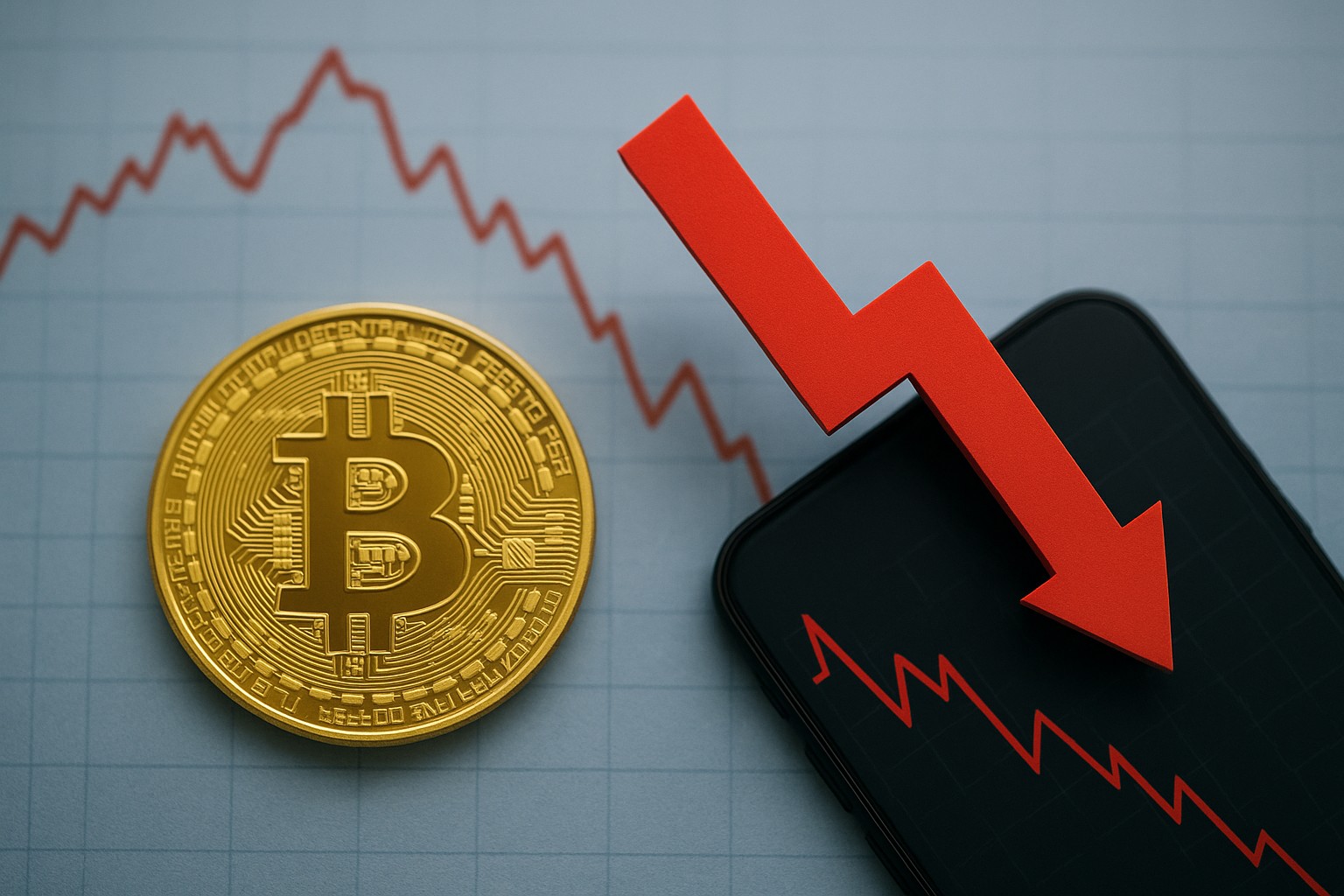
Bithumb promo scam sparks sudden Bitcoin selloff and a 17% plunge. A single promotional mishap can move prices faster than any macro headline, and this incident is a sharp reminder that operational errors on centralized venues still matter—even in a blockchain world.
What happened: a “free Bitcoin” promo trap that turned into a flash crash
The story is deceptively simple: users believed they’d been credited with a large Bitcoin balance tied to a promotion, and a rush to monetize that unexpected windfall quickly created a localized cascade of sell orders. Whether you label it a promo error, a bait-like trap, or a scammy-looking incident, the market impact felt very real in the moment—especially for anyone watching Bithumb’s order book.
What makes this episode notable isn’t just the size of the intraday move. It’s how quickly a venue-specific issue can spill into broader sentiment. Even if the price drop is concentrated on one exchange at first, traders and bots often react cross-venue: arbitrageurs race to buy cheap BTC where it’s falling and sell where it’s stable, while momentum strategies amplify the shock.
I’ve seen plenty of crypto volatility driven by macro releases and liquidation hunts, but operational chaos has a different signature: it’s abrupt, confusing, and hard to price in. When traders can’t tell whether a move is “real,” they tend to reduce risk first and ask questions later.
The weakest link is the controls: why exchange operations still move markets
Blockchains are designed to be resilient, but centralized exchanges still rely on internal ledgers, back-office workflows, and permissioned systems that can fail in very human ways. When the “source of truth” for user balances inside an exchange is wrong—even briefly—the trading layer reacts instantly because it treats credited balances as spendable.
A mature financial stack expects mistakes: wrong units, extra zeros, misconfigured payout rules, or an internal admin tool used with insufficient guardrails. The fix is not a stronger marketing team or better customer support; it’s controls that assume humans will eventually misclick or mis-enter a denomination and prevent that input from ever reaching production.
In practical terms, the controls that matter most are boring: role-based permissions, payout validation, reconciliation, anomaly detection, and circuit breakers that pause activity when something wildly out-of-band occurs. If those layers are weak, a promotional credit can morph into a market event—exactly what “Bithumb promo scam sparks sudden Bitcoin selloff and a 17% plunge” captures in one headline.
A local glitch, a global lesson: how venue shocks spread through crypto plumbing
It’s tempting to dismiss this as a South Korea-only issue, but the structure of crypto markets makes local dislocations globally relevant. Price discovery is fragmented across venues, and liquidity is often thinner than it looks—especially when volatility spikes. If one major exchange shows a sudden discount, arbitrageurs and market makers react immediately, sometimes pulling quotes elsewhere to manage risk.
Even when the broader market doesn’t print the same extreme wick, the psychological effect can travel. Traders see the headline, worry about exchange solvency or internal fraud, and reposition across Binance, Coinbase, Bybit, or OTC desks. This can widen spreads, reduce depth, and create a general risk-off posture that outlasts the original glitch.
The other global lesson is about narratives. Crypto already fights a credibility battle with regulators and institutions. A promo incident that resembles a “free Bitcoin” trap reinforces the worst stereotypes: sloppy operations, weak governance, and users left guessing what is real and what will be clawed back.
The Market Maker’s Exchange Checklist: Liquidity, Latency, and Risk Controls
When a venue-specific shock hits, professionals evaluate exchanges differently than retail traders do. They don’t ask whether the exchange has a sleek app; they ask whether the market structure can survive stress without creating fake prices or trapping users in broken workflows.
Practical due diligence for traders and teams
Use this checklist to reduce the odds you’re caught in the next promo-driven disorderly move:
- Liquidity
- Check order book depth at multiple price bands (not just the top of book)
- Compare volume quality across venues; wash-heavy volume collapses in stress
- Watch stablecoin and fiat rails—liquidity is useless if you can’t settle
- Latency
- Monitor API delays and rejected orders during spikes
- Confirm whether mark price/index price diverges from last trade in turbulence
- Prefer venues with transparent incident dashboards and status pages
- Risk Controls
- Look for clear policies on clawbacks, promotional credits, and error reversals
- Confirm withdrawal risk rules: are they predictable or arbitrary?
- Favor exchanges that publish security and operations attestations, not just marketing claims
From a trader’s standpoint, this is not paranoia—it’s positioning. The market punishes uncertainty, and operational uncertainty is one of the fastest ways to create forced selling.
Was this a scam, a mistake, or something in between? How to interpret “promo scam” headlines
The phrase “promo scam” spreads quickly because it matches how the experience feels to users: you see a surprising balance, you act on it, and then the rules change. But intention matters, and the more important distinction is operational capability. A platform can create scam-like outcomes even without scam-like intent if its internal processes allow bad credits to appear as tradable balances.
For users, the real risk isn’t only losing money—it’s being pulled into a compliance mess. If you trade or withdraw funds that later get flagged as erroneous credits, you may face account restrictions, reversal attempts, or requests for repayment. In extreme cases, disputes can turn legal, especially when jurisdictions and KYC identities are involved.
My personal take: traders should assume that any “too good to be true” credit is provisional until confirmed by official exchange communications and consistent on-chain or settlement behavior. Crypto rewards programs are common; accidental windfalls are not a strategy.
What to do during a sudden Bitcoin selloff: risk steps that actually help
When Bitcoin sells off sharply—especially on a single venue—most people either freeze or overtrade. A better approach is to run a simple playbook that prioritizes safety, then opportunity. The goal is to avoid turning a temporary pricing dislocation into a permanent loss.
First, separate price risk from platform risk. If the selloff is driven by a venue event, your biggest danger might be being stuck during withdrawal halts, order failures, or surprise margin rule changes. Reducing exposure on that venue—even if you keep market exposure elsewhere—can be the cleanest move.
Second, keep records. Take screenshots of balances, trade confirmations, and timestamps. If an exchange later reverses trades or adjusts balances, documentation helps you reconstruct what happened for support tickets, tax reporting, and (if needed) legal advice.
Finally, treat rebounds cautiously. Flash drops often retrace, but that doesn’t mean the microstructure is healthy. If spreads remain wide and depth is thin, chasing the bounce can be more dangerous than missing it.
Conclusion: why this 17% plunge matters beyond one exchange
The headline “Bithumb promo scam sparks sudden Bitcoin selloff and a 17% plunge” is more than click-worthy drama—it’s a case study in how operational controls can become market structure. Bitcoin didn’t fail, and the blockchain didn’t misbehave; the weak point was the centralized layer where balances, permissions, and promotions intersect.
The broader takeaway is straightforward: as crypto grows up, the industry’s biggest risks aren’t always hacks or protocol bugs. Sometimes they’re mundane internal processes moving at internet speed. If you trade actively, do the unglamorous work—spread your venue risk, understand clawback policies, and evaluate exchanges with the same seriousness you evaluate charts.