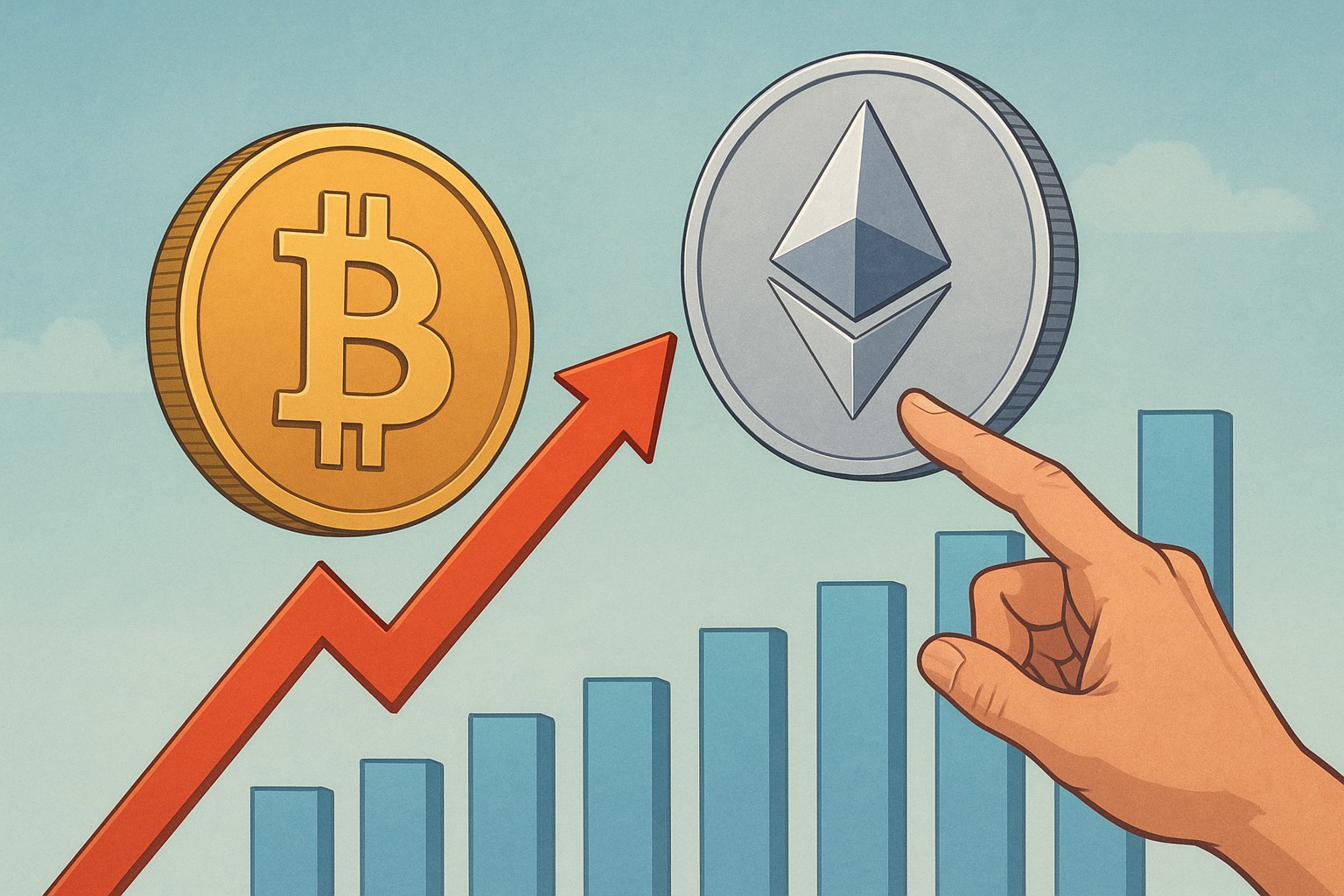
What’s different about altseason today is that it’s increasingly happening inside Ethereum’s on-chain portfolios rather than only on price charts. Capital has been rotating into stablecoins, DeFi positions, and protocol-controlled smart contracts, changing how “dominance,” risk, and opportunity should be read.
What to know: Altseason isn’t only a chart event anymore
Altseason used to be a simple narrative: Bitcoin cools off, capital leaks into Ethereum, then flows down the risk curve into mid- and small-cap alts. That still happens sometimes, but the market structure has matured. Today, a lot of “alt exposure” is held as positions (LP tokens, lending receipts, staking derivatives) or token baskets that don’t always show up as a clean pump in a single ticker.
The bigger difference is where the money sits between rotations. In prior cycles, capital often went back to ETH or BTC as a base asset. Now, many participants park in stablecoins on Ethereum, earn yield, post collateral, or keep funds inside protocols waiting for the next trade. That means altseason can be active under the surface even when ETH dominance or classic alt indices look unimpressive.
Personally, I’ve found that the easiest way to get misled is to treat “altseason” as a single switch. In practice, it’s a sequence of reallocations across wallets, smart contracts, and liquidity venues—and Ethereum is the plumbing.
About Ethplorer.io report: Why aggregated holdings matter for reading the cycle
A key insight from recent analytics is that measuring only ETH balances can understate how much economic weight sits at the top of Ethereum. When you look at addresses by total USD value—ETH plus ERC-20 tokens plus stablecoins—the leaderboard often changes dramatically. The result is a different picture of who “controls” capital and what they’re actually holding.
This matters for altseason because ETH-only metrics can imply that whales are sitting in ETH, waiting to rotate. But aggregated views can show that large addresses may already be positioned in stablecoins, governance tokens, liquid staking tokens, or protocol exposures. In other words, the rotation might already be underway—just not visible in the simplified lens.
For practical readers, the takeaway is straightforward: if your altseason thesis depends on a dominance chart alone, you’re likely late. You need to monitor composition (stables vs volatile, protocol positions vs spot) rather than just market caps.
Altseason already happened: Just not on the price charts
It’s increasingly common for “altseason energy” to express itself through on-chain behavior: stablecoin inflows, DEX volumes, lending utilization, and higher demand for collateral types. Those shifts can precede price by weeks, because capital first moves into venues where it can deploy quickly—then it takes directional risk.
Another reason altseason can look muted is that many participants hedge. They might buy an alt, short perpetuals, farm an incentive, or run delta-neutral strategies. This creates activity and fee generation without the same explosive spot price impact that earlier cycles had, especially in large caps where liquidity is deeper.
Practical signals that often front-run price
- Stablecoin supply and distribution: rising on-chain stablecoin balances (especially on Ethereum L1/L2) can indicate dry powder preparing to rotate.
- DEX share vs CEX share: increasing DEX volume share can signal earlier risk-taking in long-tail assets.
- Lending market utilization: higher borrow demand (especially for stables) can indicate leverage building.
- Bridge flows to L2s: rotations often occur where fees are lower and liquidity is improving.
- ETH/BTC stagnation with rising on-chain activity: can imply positioning without immediate headline price moves.
If you’re tracking only altcoin market cap charts, you can miss these early regime changes. Watching the plumbing is less exciting—but it’s usually more predictive.
In Ethereum’s aggregated rating, ETH no longer dominates portfolios
A structural shift is that many of the largest Ethereum addresses are not simply “ETH whales.” When you evaluate holdings in aggregated USD terms, portfolios often contain substantial stablecoin allocations and ERC-20 exposures—sometimes outweighing ETH itself. This changes how you should interpret “Ethereum funds are going now”: in many cases, they are going into tokenized claims and protocol positions rather than pure ETH spot.
This also reframes ETH’s role. ETH remains the base collateral, the gas asset, and a key reserve asset in DeFi. But the portfolio layer on top of it has diversified: stables for optionality, LSTs for yield, and protocol tokens for governance or fee capture. The market can therefore be “risk-on” even if ETH’s price action looks range-bound.
From a strategy standpoint, this suggests you should separate “ETH thesis” from “Ethereum ecosystem thesis.” You can be bullish on Ethereum’s economic activity while acknowledging that capital may be sitting in stables, L2 tokens, DeFi governance tokens, or synthetic exposures during parts of the cycle.
Smart contracts vs. HODLers: When risk moves from holders to mechanisms
A growing share of meaningful balances sits inside smart contracts—DEX pools, lending vaults, bridges, staking systems, and treasuries. This is bullish for composability and liquidity, but it also shifts risk from individual decision-making to automated rules. When markets move fast, liquidations, pool rebalancing, and collateral constraints can create reflexive feedback loops.
That’s why reading altseason now requires understanding mechanism risk: oracle dependencies, liquidation parameters, incentive cliffs, and governance actions. In earlier cycles, the biggest risk was often retail capitulation. In the current structure, a meaningful risk is that a protocol’s design amplifies moves—especially when collateral types are correlated.
In plain terms: more capital in contracts can mean more efficient markets in calm periods and more abrupt cascades in stressed periods. If Ethereum funds are “going” into contracts, then your due diligence must include smart contract security, economic design, and liquidity exit routes—not just token narratives.
When size stops signaling strength: concentration, liquidity, and the new whale map
In a world of aggregated holdings, the “largest addresses” list is not automatically a list of the most influential discretionary actors. Some large balances belong to contracts, treasuries, custodial systems, or pooled vehicles where many users share exposure. That makes classic whale-watching less reliable as a sentiment indicator.
It also complicates concentration analysis. A token can appear widely distributed, but its effective liquidity might be thin if much of it sits as collateral, locked in staking, paired in LPs, or held by treasuries that rarely sell. Conversely, an address that looks huge in ETH terms might be smaller in USD terms if it lacks stablecoin and ERC-20 exposure.
For readers trying to navigate altseason, the actionable idea is to evaluate liquidity-adjusted reality:
– How much supply is actually liquid on venues you can exit?
– How much is locked, staked, collateralized, or inside LP positions?
– Who can sell quickly: EOAs, DAOs, market makers, or automated vaults?
When size stops signaling strength, you win by focusing on flow and liquidity rather than leaderboard snapshots.
The Printing-Press Index: Measuring self-minted wealth and wrong-way risk
As DeFi grows, some balance sheets include tokens that are effectively “self-referential”—minted within the same ecosystem they support (think protocol tokens used as collateral to borrow, farm, or bootstrap liquidity). A framework like a Printing-Press Index is useful because it tries to separate externally sourced value from value that is circularly created within a protocol’s own token economy.
Why it matters for altseason: these structures can perform extremely well in uptrends because they amplify demand and incentives. But in downtrends, they can create wrong-way risk: collateral falls, borrowing capacity shrinks, liquidations increase, and the protocol token can face accelerated selling pressure. The unwind can be faster than many traders expect, especially when liquidity is fragmented across DEX pools.
My personal rule of thumb is to treat “in-protocol collateral loops” as leverage in disguise. They can be profitable, but only if you plan exits and monitor liquidity. A good altseason is not just about catching upside—it’s also about surviving the inevitable rotations.
Conclusion: What the new structure of Ethereum actually means for altseason
Altseason has not disappeared; it has evolved. A significant amount of Ethereum capital now lives in stablecoins, ERC-20 baskets, and smart-contract mechanisms, so the cycle can progress even when traditional price-only indicators look quiet. Measuring aggregated holdings and watching on-chain positioning gives a clearer view of where Ethereum funds are going now.
The practical playbook is to track composition (stables vs volatile), venue shifts (CEX to DEX/L2), and mechanism risk (liquidations, collateral loops, protocol incentives). If you adapt your lens from charts-only to portfolio-and-plumbing, you’ll spot rotations earlier—and you’ll be better prepared when the same mechanisms that fuel upside start to accelerate the downside.