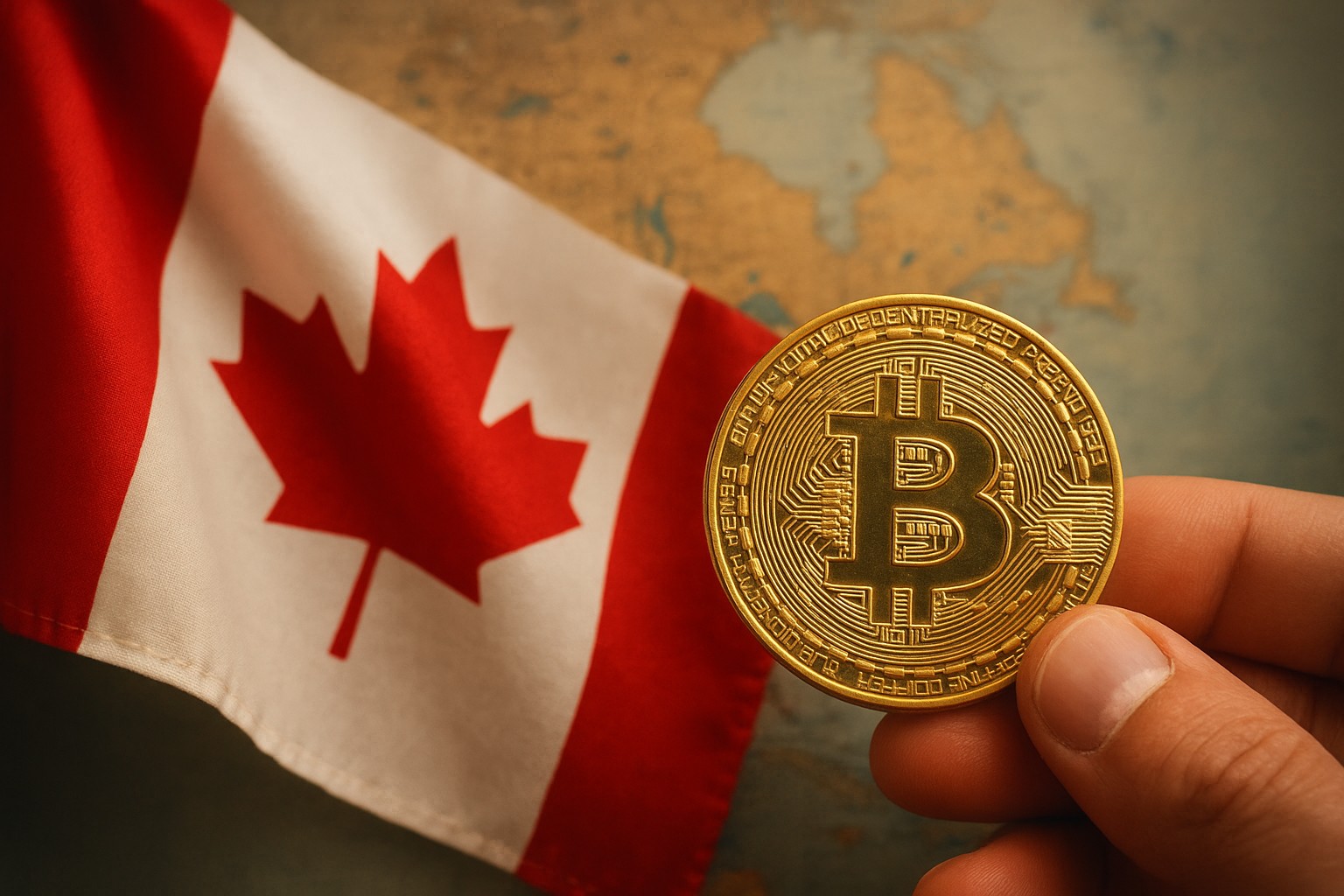
Why some Canadians are turning to Bitcoin as faith in the global system fades is less about hype and more about a growing desire for financial autonomy. When people start to feel that access, rules, and even money itself can change overnight, an asset designed to be neutral and hard to censor starts to look like a practical backup plan.
The Canadian mood shift: from trust in institutions to planning for “rupture”
For decades, many Canadians treated the global rules-based order as the background music of modern life: imperfect, but stable enough that you could plan around it. Lately, that confidence has been shaken by overlapping pressures—sticky inflation, higher rates, housing unaffordability, political polarization, and a sense that international trade and alliances are becoming more transactional.
This isn’t only about Canada’s domestic issues. It’s the feeling that the system is fragmenting: tariffs return as tools of leverage, sanctions expand, and payment networks increasingly reflect geopolitical priorities. When global finance starts to look like a set of gates rather than a public road, everyday savers naturally ask a pointed question: what happens if the rules change quickly, or if my access becomes conditional?
As someone who’s watched friends move from casual curiosity to serious ownership, I’ve noticed a pattern: the Bitcoin conversation usually begins not with price, but with contingency planning. People aren’t necessarily predicting collapse; they’re reacting to a world where resilience matters more than efficiency—and that changes what “safe” means.
The human part of this story: the moment you realize access can be conditional
The turning point is often personal. It might be a delayed transfer, a frozen account story in the news, a de-platformed fundraiser, or simply watching banks tighten compliance and “de-risk” certain customers. Most Canadians never expect to experience anything like that directly—but the lesson lands anyway: modern money is permissioned, and permissions can be revised.
Canadians also live next door to the world’s dominant reserve currency issuer. That brings benefits, but it also ties everyday outcomes—rates, markets, even business confidence—to decisions made far from Ottawa or Edmonton. When international tensions rise, and when policy tools like sanctions or trade restrictions become more common, people see that money and infrastructure are no longer neutral. They are instruments.
Bitcoin’s pitch in this context is not that it’s perfect or that it replaces banking. It’s that it reduces dependence on any single institution’s approval. You can hold it directly. You can move it without asking. And while that comes with responsibility, for some Canadians it feels like a fair trade: self-custody in exchange for fewer gatekeepers.
Two Bitcoins show up in markets: the insurance one, and the liquidity one
In practice, Canadians encounter “two Bitcoins,” even though the asset is the same. One version behaves like a high-volatility risk asset that trades with market liquidity, sentiment, and leverage. The other behaves like insurance: something you hold not because you expect it to outperform next week, but because you want an option outside the traditional rails.
The liquidity Bitcoin is what you see on trading apps, in headlines, and in chart debates. It can drop hard when global risk-off hits, when leverage gets unwound, or when macro surprises push investors into cash. This is why Bitcoin sometimes disappoints newcomers: it doesn’t always act like a crisis hedge in the short run.
The insurance Bitcoin is different. It’s held with longer time horizons, often in cold storage, and sized like a form of financial redundancy. Canadians who think this way are usually less obsessed with timing tops and bottoms. They’re focused on properties: fixed supply, portability, settlement without intermediaries, and global recognizability. In a world where rules can shift, those properties can matter even if the price is choppy.
Tariffs as leverage: why the first wave can hurt Bitcoin, then help its story
Tariffs as leverage matter for Bitcoin in an indirect but important way. In the early phase of tariff shocks, markets often get nervous: growth expectations weaken, liquidity tightens, and investors sell what they can. Because Bitcoin trades globally and is easy to sell instantly, it can get pulled into that first wave of de-risking—alongside tech stocks and other high-beta assets.
But the longer-term effect can point the other way. If tariffs become a recurring tool and global trade feels less predictable, businesses and households start valuing flexibility and optionality. The “then help its story” part is psychological and structural: persistent fragmentation can make neutral, borderless assets look more relevant—especially to people who don’t want all their savings tied to a single country’s policy decisions.
For Canadians, tariffs and supply-chain disputes are not abstract. Canada is deeply integrated with the U.S. economy, and Canadian jobs, prices, and investment flows can be impacted by shifts in U.S. policy. When trade becomes more politicized, it reinforces the idea that the financial environment is not purely economic—it’s strategic. That alone nudges some people toward diversifying their “system exposure,” and Bitcoin is one way to do it.
Financial infrastructure as coercion: stablecoins live on the rails, Bitcoin sits outside them
A key distinction that serious Canadian buyers learn quickly: stablecoins and Bitcoin solve different problems. Stablecoins are incredibly useful for fast transfers and dollar access, but they still ride on financial infrastructure that can be restricted—issuers, exchanges, banking partners, compliance layers, and sometimes blacklist controls. In other words, stablecoins live on the rails.
Bitcoin sits outside them. It doesn’t rely on an issuer’s promise, and it doesn’t require a bank to validate your right to hold it. That doesn’t mean it’s invisible to regulation (it isn’t), and it doesn’t mean you can ignore taxes or laws (you can’t). It means the asset can be held and transferred with fewer points of centralized failure.
Practical ways Canadians can use Bitcoin without becoming reckless
If you’re exploring Bitcoin as resilience rather than a casino chip, the “how” matters as much as the “why.” A few grounded practices I wish more people followed:
- Start with a small allocation: treat it like insurance, not a personality change
- Learn self-custody gradually: try a small wallet first before moving larger amounts
- Use reputable on-ramps: prioritize transparency, fees, and regulatory compliance in Canada
- Plan for volatility: assume drawdowns happen; avoid borrowing to buy Bitcoin
- Document for taxes and estate planning: keep records and a recovery plan your family can execute
This approach won’t satisfy maximalists or day traders, but it fits the mindset of Canadians who are buying because they want options—not adrenaline.
Middle powers, “third paths,” and why Bitcoin’s biggest impact might be psychological
Canada is often described as a middle power—closely tied to the U.S., but still exposed to global crosswinds. In a world where major blocs compete and smaller countries look for “third paths,” individuals mirror that behavior: they try to reduce single-point dependence. Some Canadians are not abandoning the Canadian dollar or the banking system; they are adding a parallel asset that doesn’t require anyone’s permission to exist.
This is where Bitcoin’s biggest impact may be psychological. When you know you can store value in something globally liquid, bearer-like, and not tied to one institution’s liabilities, you feel less trapped by policy swings. That sense of optionality can change behavior: people may tolerate uncertainty better, negotiate harder, move more freely, or take entrepreneurial risks because they don’t feel entirely at the mercy of the local system.
To be clear, Bitcoin is not a magic shield. It won’t fix housing policy, it won’t make groceries cheaper, and it won’t immunize anyone from recession. But it can shift the perceived balance of power between individuals and the financial plumbing they depend on. For a subset of Canadians, that’s the entire point.
What to watch next: five signals that the rupture thesis is becoming investable
If you’re trying to separate a passing narrative from a durable trend, it helps to watch for signals that go beyond Twitter sentiment. The following markers can indicate whether the broader shift—from trust-in-the-system to hedge-against-the-system—is accelerating in Canada and globally.
First, pay attention to institutional posture. Not just whether firms buy Bitcoin, but whether they build products that assume long-term demand for self-custody, proof-of-reserves, and transparent settlement. Second, watch regulatory clarity: clear rules can paradoxically increase adoption by reducing career risk for professionals and businesses.
Third, track payment and banking friction. When cross-border transfers get slower, more expensive, or more restricted, Canadians look for alternatives—even if they don’t fully exit the system. Fourth, monitor geopolitical escalation and the normalization of economic tools like sanctions and tariffs. Fifth, observe household behavior: are people actually learning hardware wallets, diversifying custody, and holding through cycles, or are they only speculating during bull runs?
When these indicators move together, Bitcoin stops being just a trade and starts looking like a structural hedge—especially for people who feel the “rules” are increasingly political.
Conclusion: Bitcoin as a Canadian hedge against uncertainty, not a replacement for society
Why some Canadians are turning to Bitcoin as faith in the global system fades comes down to a pragmatic impulse: build redundancy. In a world where finance, trade, and technology can be used as leverage, many people want at least one asset they can hold directly and move without asking.
Bitcoin won’t solve every problem, and it demands responsibility—especially around security, scams, and volatility. Still, as global confidence becomes harder to sustain and the idea of uninterrupted access feels less guaranteed, Bitcoin’s role as an outside option becomes easier to understand. My take: even if most Canadians never become full believers, a growing minority will keep a small allocation simply because it helps them sleep better in a less predictable world.