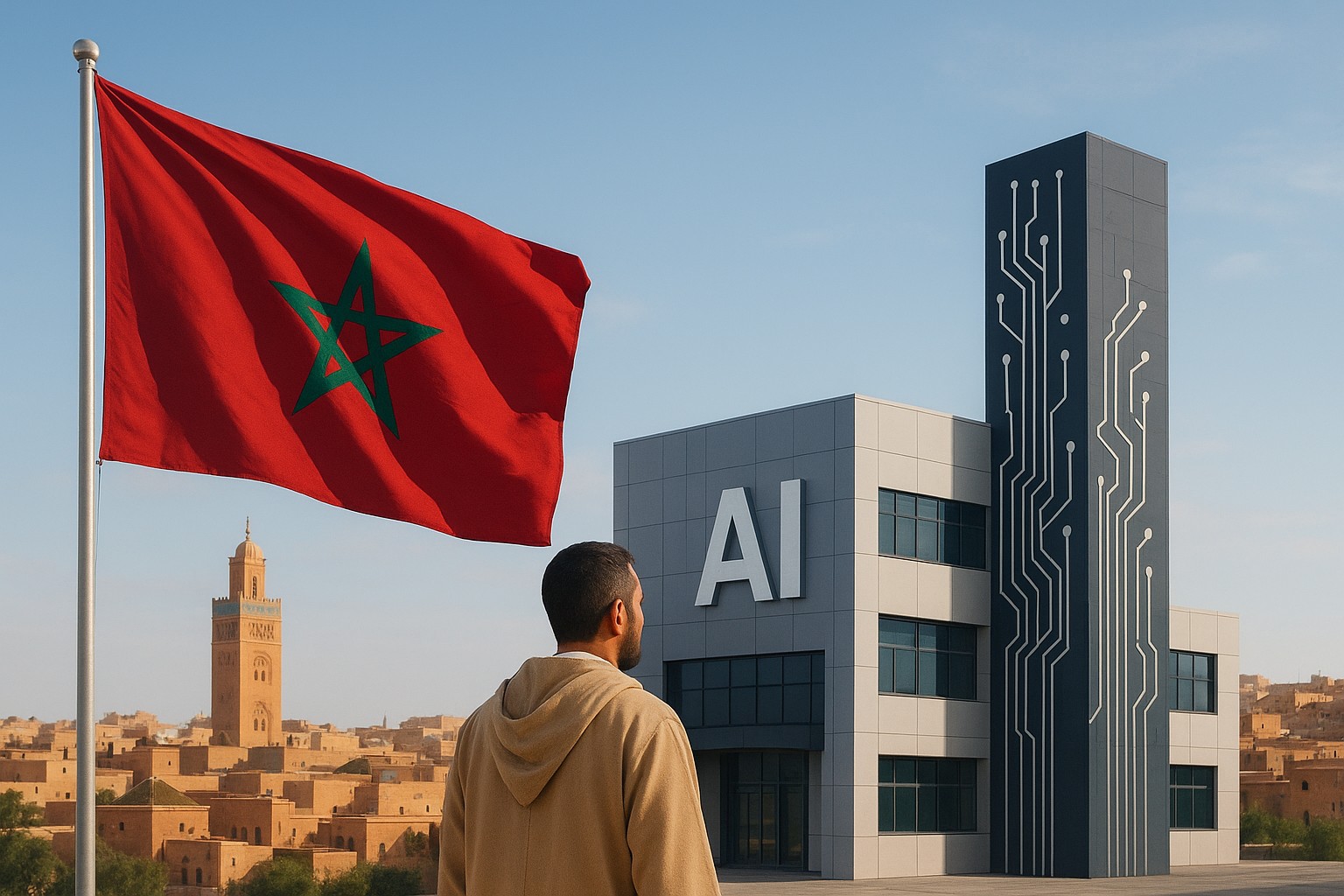
Morocco bets on Nexus AI Factory to grow its AI ecosystem and regional influence. The initiative signals a shift from scattered pilots to a platform approach: compute, talent, and commercialization designed to position the country as a serious AI hub for Africa and the Mediterranean.
Why Morocco is betting big on an AI Factory now
Morocco’s timing is not accidental. Across Africa and Southern Europe, demand for AI-ready compute is outpacing supply, and many organizations still rely on distant cloud regions that add latency, compliance friction, and cost uncertainty. By backing a dedicated AI factory model, Morocco is trying to anchor strategic infrastructure locally—then use it to attract startups, R&D teams, and enterprise deployments that previously would have defaulted to hubs outside the region.
There’s also a geopolitical and economic development logic. AI is becoming a core input for productivity, public services, cybersecurity, and industrial upgrading. Countries that can provide dependable compute and modern data governance tend to win the next wave of investment. In my view, Morocco is reading this correctly: “AI leadership” is less about press releases and more about who can reliably run training, fine-tuning, and inference at scale.
Finally, Morocco has an advantage that’s easy to overlook: proximity to European markets, increasing renewable energy capacity, and growing experience hosting multinational operations. If the AI factory is executed with strong uptime, pricing discipline, and developer-friendly onboarding, it can become a regional default—especially for workloads that need local data residency.
Phased rollout and investment structure: what it means in practice
The project is structured as a staged build-out—an approach that matters because AI infrastructure is capital-intensive and often overbuilt too early. With a phased rollout and investment structure, Morocco can bring capacity online, validate demand, and then expand based on utilization rather than hype. This reduces the risk of stranded assets while keeping a credible growth path for larger models and more customers.
A phased plan also helps with ecosystem sequencing. Early capacity can serve public-sector modernization, local universities, and early enterprise adopters; later phases can focus on export-oriented services like multilingual model fine-tuning, contact-center automation, or industry-specific copilots. The result is a “learn-and-scale” pattern that is healthier than a single massive launch where success depends on immediate, large-volume customers.
For businesses evaluating Morocco as a base, the key question is not only megawatts or headline investment—it’s practical availability: timelines, contract terms, service tiers, security certifications, and cross-border connectivity. If Morocco pairs the build-out with transparent SLAs and predictable pricing, it becomes easier for startups and corporates to commit long-term.
Building blocks: HPC data center, Center of Excellence, and innovation hub
An AI factory is only as valuable as its ability to convert compute into outcomes. The proposed mix—HPC data center capacity plus training and skills transfer and an innovation hub—suggests Morocco is aiming to deliver a full pipeline: run workloads, develop talent, and turn prototypes into deployable products. This is important because many “AI strategies” fail by focusing only on one layer, usually infrastructure or training, without connecting them to commercialization.
The HPC layer matters for workloads that go beyond ordinary cloud usage: large-scale training, multimodal model development, simulation, or batch inference for millions of users. But the Center of Excellence concept is equally critical: it’s where best practices around MLOps, model evaluation, safety, and data engineering can become standardized across ministries, universities, and the private sector.
What a successful Center of Excellence should deliver
To create real value, a Center of Excellence needs measurable outputs, not just workshops. I’d look for it to prioritize:
– Role-based training tracks (data engineers, ML engineers, product managers, AI auditors) aligned to hiring needs
– Shared MLOps tooling (model registries, experiment tracking, evaluation harnesses, secure feature stores)
– Reference architectures for common use cases (Arabic/French customer support, document intelligence, fraud detection, predictive maintenance)
– Governance playbooks (data labeling standards, model risk management, procurement templates, audit trails)
– Startup and SME enablement through credits, mentorship, and pathways to enterprise pilots
When these elements are in place, the innovation hub becomes more than a showroom. It becomes a pipeline of deployable solutions where teams can access compute, guidance, and early customers in one ecosystem.
Digital 2030 strategy: turning infrastructure into jobs and startups
Morocco’s broader Digital 2030 strategy frames this investment as part of economic transformation: digitizing public services, growing the digital economy’s contribution to GDP, and enabling job creation and startups. The AI factory fits neatly into that agenda—but only if the country treats it as a national platform rather than a standalone facility.
To translate infrastructure into jobs, Morocco will need a talent ladder that starts with foundations (data literacy, cloud basics), moves into applied ML (NLP, computer vision, time-series), and culminates in production-grade skills (security, compliance, scalability, reliability engineering). The biggest bottleneck I see in many markets is not the lack of enthusiasm—it’s the shortage of people who can operationalize models, maintain them, and prove ROI.
On the startup side, compute access is necessary but insufficient. Startups also need procurement pathways, sandboxed datasets, and predictable commercialization channels. If public agencies and large enterprises commit to structured pilot programs—clear problem statements, success metrics, and realistic budgets—Morocco can accelerate a flywheel where local companies win contracts, build references, and expand regionally.
Officials highlight strategic and economic impact—here’s how to measure it
It’s easy for officials to emphasize strategic sovereignty, competitiveness, and attractiveness to investors. The harder part is defining the scorecard. If Morocco wants the AI factory to strengthen regional influence, it must show that the platform improves service quality, reduces cost, and enables exports—not merely that it exists.
A practical measurement approach could include: utilization rates of the compute platform, number of models deployed into production, number of agencies adopting common AI standards, private-sector revenue generated by AI-enabled services, and the number of startups graduating from pilots to recurring contracts. These indicators reveal whether the ecosystem is compounding—or just hosting demos.
I’d also watch for a less-discussed dimension: trust. Regional customers will choose Morocco if the platform offers credible security controls, robust incident response, and clear data-handling policies. Influence follows reliability. If Morocco becomes known as the place where AI workloads run securely, predictably, and close to end-users, demand will grow across North Africa and West Africa—especially for multilingual and regulated workloads.
Practical opportunities for businesses, developers, and researchers
For companies already operating in Morocco, an AI factory platform can shorten time-to-value. Instead of building bespoke GPU clusters or negotiating fragmented vendor contracts, teams can focus on data readiness and deployment. That said, organizations should prepare internally: AI success depends heavily on data quality, process ownership, and change management.
Developers and startups should look for early openings where local advantages matter: Arabic and French language workflows, document-heavy sectors (banking, insurance, government), logistics and port operations, energy optimization, and tourism personalization. These domains benefit from local context and data proximity, making them strong candidates for local compute and localized models.
Researchers and universities can benefit if the platform supports shared datasets, compute grants, and reproducibility standards. A particularly high-impact move would be national benchmarks for Moroccan Arabic and French-Arabic code-switching, plus evaluation suites for public-sector document understanding. Those assets would anchor Morocco as a reference point for the region’s most in-demand language and document tasks.
Conclusion: Morocco’s AI Factory bet can pay off—if execution stays ecosystem-first
Morocco bets on Nexus AI Factory to grow its AI ecosystem and regional influence, and the direction makes strategic sense: pair compute with skills, standards, and an innovation pipeline. The most important determinant now is execution—transparent access, dependable operations, strong governance, and a real route from pilot to production.
If the phased rollout and investment structure stays disciplined, and if officials highlight strategic and economic impact using measurable outcomes—not slogans—Morocco can become a practical AI base for Africa and a bridge to European markets. The opportunity is real, but the win will come from boring fundamentals: uptime, talent, trust, and repeatable delivery.