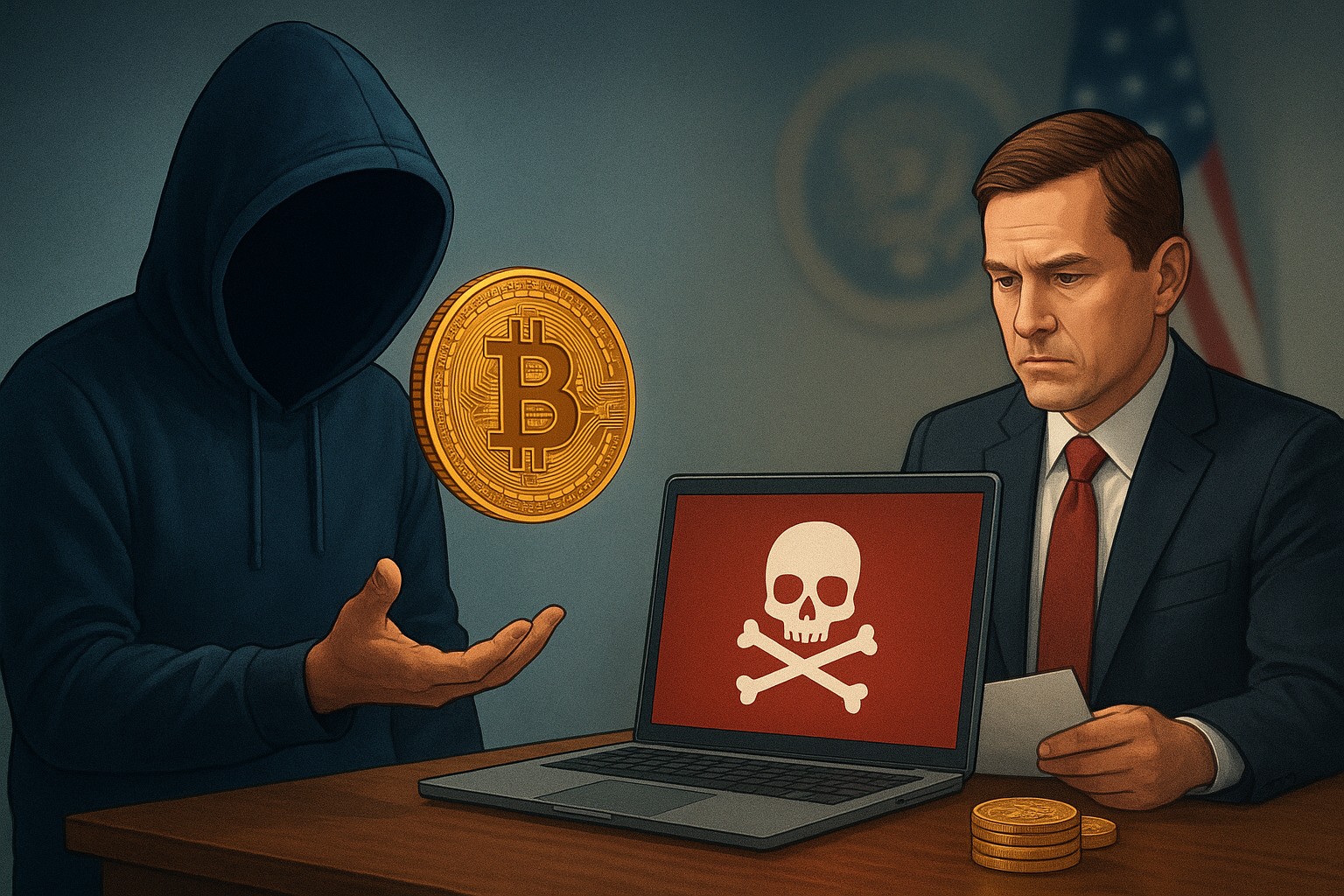
Congressional review highlights transnational cyber extortion and cryptocurrency scams as lawmakers scrutinize how global criminal networks monetize trust, fear, and speed. The hearing-style spotlight matters because it connects everyday victim stories to the infrastructure—exchanges, payment rails, and laundering hubs—that keeps these schemes profitable.
Why Congress Is Focusing on Transnational Cyber Extortion and Crypto Scams Now
Congressional attention has shifted from treating online fraud as isolated incidents to viewing it as a cross-border industry that blends romance manipulation, fake investments, data theft, and ransomware-style pressure. The biggest change is scale: losses are no longer measured in “a few bad actors,” but in billions, with repeatable playbooks and supply chains that mirror legitimate businesses.
From my perspective, the most helpful outcome of a congressional review isn’t a sound bite about banning something—it’s the forced clarity on who has responsibility at each stage. Victims often blame themselves, but modern scams are engineered systems: lead generation, social engineering, transaction routing, cash-out, and concealment. When policymakers map that system, they can push targeted reforms instead of vague warnings.
The Scale of the Criminal Infrastructure Being Examined
The phrase “criminal infrastructure” is not rhetorical. Today’s scam networks often operate with specialized teams: one group runs ads and messaging, another handles persuasion scripts, another manages wallets and “customer support” for fake platforms, and another handles laundering and off-ramps. This division of labor makes takedowns harder because removing one node doesn’t collapse the entire operation.
What’s being examined in congressional settings is the way infrastructure persists even when specific scam brands disappear. A fraudulent crypto platform can vanish overnight, yet the payment addresses, OTC brokers, mule networks, and shell entities can be reused. This is why measuring success solely by the number of websites seized can be misleading; the resilient parts live behind the scenes.
A practical takeaway for readers: treat “professionalism” as a warning sign, not reassurance. Clean UI, prompt replies, and detailed dashboards are cheap to fake. The expensive part—moving and cleaning money—is where networks invest, and that’s exactly the layer policymakers are trying to expose.
How Cryptocurrency Enables Faster Cash-Out and Harder Recovery
Crypto is not the root cause of fraud, but it can reduce friction for criminals in ways that matter: instant settlement, cross-border transfers without traditional bank paperwork, and the ability to fragment funds across many wallets. In extortion scenarios, it also provides a standardized payment method that works globally, which lowers operational complexity for criminals targeting victims in different countries.
For victims, the defining problem is recovery time. With bank transfers, there is sometimes a window for recalls or holds. With crypto, once assets move through multiple hops, swaps, bridges, or mixing-style obfuscation, recovery becomes a race against automation. That doesn’t mean crypto is untraceable—blockchains are public—but tracing does not automatically equal freezing, especially when funds move into jurisdictions or services that don’t cooperate quickly.
If you invest or transact in crypto, one of the most useful habits is to separate “investment activity” from “payment requests.” Any scenario that combines emotional urgency (romance, fear, shame) with a directive to buy and send crypto should be treated as a high-risk event, even if the person seems credible.
What Enforcement Has Achieved and What Remains
Law enforcement has improved at tracing funds, coordinating across agencies, and sanctioning enabling entities. We’ve seen more wallet clustering, better attribution, and more public-private partnerships that share indicators quickly. Those steps can disrupt cash-out routes and make certain service providers too risky for laundering at scale.
However, the gap remains large because enforcement tends to be reactive while scammers iterate fast. They rotate domains, swap social accounts, change wallet deposit addresses, and move to new communications channels. Meanwhile, victims may not report quickly due to embarrassment or confusion, and delays reduce the chance of freezing funds before they scatter.
Practical steps victims and organizations can take immediately
- Report fast and in parallel: file with local police, national cybercrime reporting portals, and the relevant exchange or wallet provider at once. Speed matters more than perfect documentation.
- Preserve evidence: keep chat logs, transaction hashes, screenshots, domain names, and any KYC details the scam platform collected.
- Assume secondary scams: after reporting, watch for “recovery agents” who promise to retrieve funds for an upfront fee—this is often a follow-on fraud.
- Harden business workflows: require out-of-band approval for any payment change requests and add delays or dual control for high-value transfers.
- Use allowlists: for companies, maintain approved wallet addresses and vendors; treat new addresses like new bank accounts—verify independently.
Personally, I think the most underrated lever is consistent reporting. Even when recovery is unlikely, reports help authorities identify repeat infrastructure, correlate victims, and pressure chokepoints like off-ramps and OTC desks.
What the Hearing Signals for Crypto Regulation
Congressional hearings often serve as a preview of where regulation may tighten: identity verification expectations, reporting obligations, and standards for preventing facilitation. The direction is less about outlawing crypto and more about applying rules that already exist in finance—knowing who is transacting, monitoring suspicious flows, and responding quickly to lawful requests.
For crypto businesses, the likely trend is stronger compliance requirements and clearer liability boundaries. That may include enhanced customer verification in higher-risk contexts, better fraud pattern detection, and more robust recordkeeping around cross-border activity. For consumers, it could mean more warnings, more friction for certain transfers, and more standardized disclosures around irreversible payments.
There’s also an emerging consensus that “regulation” must include cooperation: exchanges, stablecoin issuers, wallet providers, domain registrars, and even social platforms all touch the funnel. If policymakers focus only on one segment, criminals will simply route around it. A balanced approach targets the points where criminals must interact with the real world: cash-out, infrastructure hosting, and identity.
Understanding Common Schemes: Pig Butchering, Ransomware, and Impersonation
The modern scam portfolio is diversified. “Pig butchering” (long-con trust-building followed by a fake investment platform) thrives because it turns psychological manipulation into predictable cash flows. Cyber extortion, including ransomware-style threats, thrives because it monetizes urgency and operational downtime. Impersonation scams thrive because they hijack existing trust—bank brands, government agencies, even family members.
What ties these together is the victim journey: a believable story, a controlled communication channel, and a push toward irreversible payment. Criminals increasingly use templates, scripted dialogues, and automation to manage many victims at once. AI has added speed—faster personalization, better language matching, and more convincing “support” interactions—so victims can feel like they’re dealing with a legitimate institution.
To protect yourself or your organization, focus on decision points rather than scam types. Ask: Who initiated contact? Can I verify identity independently? Why is the payment method unusual? Why is there urgency? Those questions cut through polished interfaces and persuasive narratives.
Conclusion: Turning Congressional Attention into Real-World Risk Reduction
Congressional review highlights transnational cyber extortion and cryptocurrency scams not just as financial crimes, but as organized systems with durable infrastructure. That framing is useful because it points toward durable solutions: faster reporting pipelines, stronger cross-border cooperation, and targeted pressure on cash-out routes and enabling services.
For readers, the most actionable takeaway is simple: treat unsolicited trust and urgent crypto payment requests as red flags, report quickly, and preserve evidence. If policymakers follow through with measured, infrastructure-focused reforms—and if platforms improve detection and response—then the spotlight from these hearings can translate into fewer victims and faster disruption of the networks behind the scams.