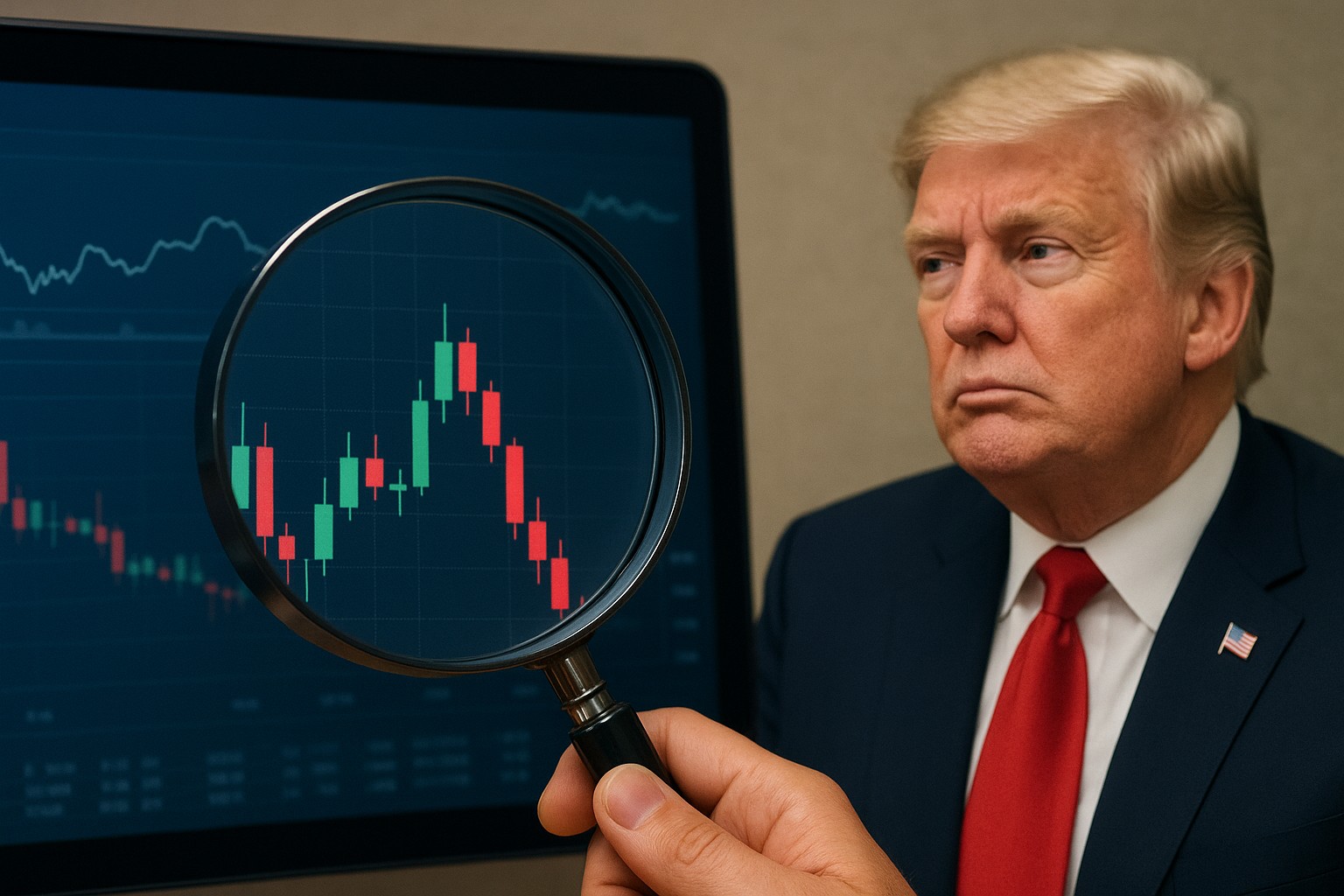
On-chain data raises questions about trades made ahead of Trump remarks. Patterns spotted in wallet activity can look uncanny in hindsight, but interpreting blockchain breadcrumbs requires discipline, context, and a clear idea of what would actually constitute wrongdoing.
Why this story is resurfacing now: timing, wallets, and market sensitivity
A recurring theme in crypto is the claim that certain wallets seem to “know” what’s coming before headline moments. When political remarks reliably move markets, the temptation is to connect profitable trades right before a speech to insider coordination. The issue is that blockchains are transparent about transactions, but not transparent about intent.
Trump-related comments have become a catalyst for sharp intraday moves in majors like BTC and ETH—and, at times, in politically themed tokens. That creates a fertile environment for both legitimate speculation and suspicious-looking activity. A well-capitalized trader can position ahead of a scheduled appearance, manage risk tightly, and still appear prophetic if the market reacts strongly.
From my perspective, the uncomfortable truth is that markets often reward being early, not necessarily being informed. That said, repeated, precisely timed wins across multiple events is exactly the sort of pattern that deserves scrutiny—especially when it shows consistent behavior across wallets, exchanges, and derivatives venues.
On-chain analysis basics: what blockchain data can (and can’t) prove
On-chain analysis is powerful because it can reveal transfers, clustering behavior, exchange interactions, and sometimes links between wallets. But the chain does not show private communications, off-chain order books, or whether someone acted on material non-public information. This gap matters because accusations like insider trading require more than profitable timing.
A typical on-chain workflow starts with identifying wallets involved in large transfers or exchange deposits ahead of a market move. Analysts then check if the same wallets (or linked clusters) repeatedly fund positions shortly before similar catalysts. They also look for “trade completion signals,” such as moving funds back to stablecoins, withdrawing from exchanges after gains, or rotating into correlated assets.
However, even strong on-chain signals remain circumstantial without off-chain corroboration. Many of the most important actions—placing a leveraged perp order, executing via an OTC desk, or trading through a centralized exchange—occur outside the blockchain’s direct visibility. The on-chain layer often shows funding and settlement, not the full trade lifecycle.
Wallets with a “100% win rate”: signal, selection bias, and alternative explanations
Headlines about a wallet with a perfect record are attention-grabbing, but they can be misleading if the sample is small or the framing is selective. A wallet might look flawless if the analyst only tracks a subset of trades, ignores losing positions that never moved on-chain, or focuses on a period where volatility favored a particular strategy.
There are also plausible, non-conspiratorial explanations for repeated pre-event positioning. Sophisticated traders may run “calendar trades,” systematically buying volatility ahead of scheduled speeches and selling immediately after. Others may react to early public cues—agenda postings, venue logistics, social media hints, journalist chatter, or shifts in prediction markets—none of which require insider access.
Still, it’s reasonable to ask harder questions when patterns show:
– Large position sizing that’s hard to justify as routine speculation
– Consistent entries minutes to hours before remarks, across many events
– Fast profit-taking after the market reacts, repeated with minimal drawdowns
– Coordinated movement among multiple wallets (possible clustering)
If you’re trying to evaluate a supposed “100% win rate” claim, the key is to demand a full trade ledger, clear methodology, and an accounting of unfavorable outcomes—rather than a highlight reel of wins.
Analyst alleges ‘on-chain insider’ front-runs Trump speeches: what to verify before believing it
The phrase “on-chain insider” tends to travel faster than the evidence. That doesn’t mean the suspicion is wrong; it means the bar for public claims should be higher because reputational damage and misinformation both scale quickly in crypto. When an analyst alleges someone front-runs speeches, the first step is to separate what is observed (timestamps, transfers, exchange interactions) from what is inferred (insider coordination, government ties).
A practical verification checklist includes: the exact wallet addresses, the time window definition (e.g., within 30 minutes, 2 hours, 24 hours), the assets involved, and whether the analysis accounts for false positives. For example, if a trader enters positions before every major macro event—not just political remarks—the pattern may reflect a broad catalyst strategy rather than privileged access.
It’s also worth testing whether the trades were actually placed ahead of the market-moving information or merely ahead of the public speech. Markets often price expectations in advance; if the remark was anticipated, the “front-run” may be the market’s own positioning rather than an illicit leak. As a reader, I’d treat any viral thread as a starting point for questions, not an endpoint for conclusions.
Market manipulation vs insider trading: what regulators would care about
Two concepts get blended in crypto discourse: market manipulation and insider trading. Manipulation might involve wash trading, spoofing, coordinated pumps, or deceptive liquidity tactics. Insider trading generally refers to trading on material, non-public information in violation of a duty or regulation. The legal frameworks differ by jurisdiction and, in crypto, by whether an asset is classified as a security, commodity, or something else entirely.
Even if a wallet trades ahead of remarks, regulators would ask: What information did they have, was it non-public, and did they have a duty not to use it? Proving that chain of custody is far more difficult than showing a profitable chart. Investigations typically require exchange records, KYC data, communication logs, and sometimes subpoenaed device evidence—none of which appear on-chain.
This is why “on-chain evidence” is best seen as triage: it can flag anomalies worth investigating, but it rarely closes the case by itself. In practice, the strongest cases come from aligning on-chain timing with off-chain identity linkage and documented access to the information source.
How to do your own on-chain check (without becoming your own conspiracy engine)
If you want to evaluate claims responsibly, you don’t need to be a forensic expert—but you do need repeatable steps. Start by recreating the timeline: when the speech was announced, when it occurred, and when the market moved. Then map wallet activity relative to that timeline, not relative to the peak of the chart.
Practical steps for wallet-level due diligence
- Identify the wallet(s) and copy addresses from a primary source (not screenshots)
- Check transaction timestamps on multiple explorers to avoid display quirks
- Tag key interactions: exchange deposits/withdrawals, stablecoin swaps, bridge usage
- Look for clustering clues: repeated counterparties, shared funding sources, peel chains
- Compare against a control period (random weeks with no speeches) to estimate baseline activity
- Track outcomes: did the wallet exit profitably, partially hedge, or hold through drawdowns?
Do not skip the control period. Many “suspicious” patterns disappear when you realize the wallet trades like this all the time. Also, remember that a large exchange deposit does not automatically equal a leveraged bet—people deposit for collateral, lending, market making, or simple rebalancing.
On a personal note, I find it helpful to write down, in advance, what evidence would change my mind. If the answer is nothing, then the exercise isn’t analysis; it’s narrative-building. Crypto already has enough of that.
Conclusion: transparency invites questions, but answers require proof
On-chain data raises questions about trades made ahead of Trump remarks because blockchain timestamps can line up uncomfortably well with market-moving events. Yet transparency is not the same as certainty: the chain can suggest patterns, not motives, and it can’t on its own establish insider access or illegal coordination.
The most productive takeaway is to treat these claims as prompts for better methodology. Demand complete datasets, clear windows, and falsifiable tests—not just charts that look compelling. If there is real misconduct, rigorous on-chain work can help point investigators in the right direction. If there isn’t, the same rigor helps the community avoid turning coincidence and strategy into certainty.