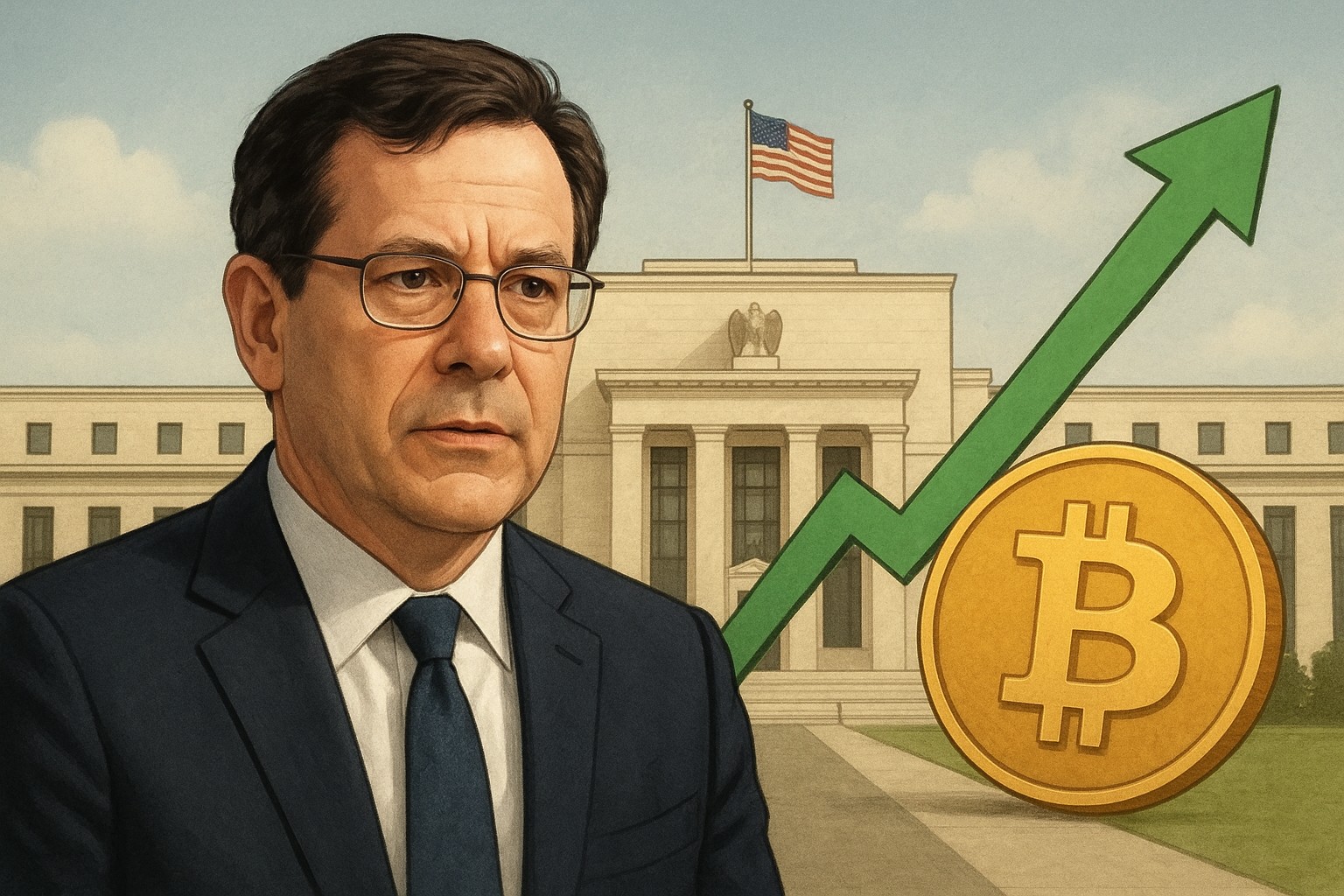
Polymarket odds rise for Rick Rieder to lead the Federal Reserve amid pro crypto buzz. Prediction markets are suddenly treating a typically slow-moving Fed succession story like a fast-priced trade, and crypto investors are paying close attention.
Why Polymarket odds are moving: prediction markets meet Fed succession
Polymarket has turned political and policy speculation into a real-time dashboard of sentiment, and that matters because a Fed Chair narrative can shift liquidity expectations in minutes. When bettors push a candidate higher, it doesn’t prove an outcome—but it does reveal what a motivated crowd thinks is most plausible right now, based on interviews, headlines, and perceived White House preferences.
The surge in attention around Rick Rieder reflects more than name recognition. Markets are trying to map personalities to future monetary policy: whether the next chair leans dovish (more willing to cut rates) or hawkish (more willing to hold them high). In my experience reading these cycles, it’s rarely just one comment that moves odds; it’s the combination of access, timing, and a storyline that feels coherent to traders.
Importantly, prediction markets can overshoot. Liquidity can be thin, and narratives can become self-reinforcing—especially when a “front-runner” label itself becomes news. Treat Polymarket as a signal of crowd conviction, not a guaranteed forecast.
Who is Rick Rieder and why he’s being called a “crypto ally”
Rick Rieder is widely known as a senior investment executive associated with managing large pools of capital and communicating macro views clearly—two traits that naturally attract attention when people speculate about who could credibly steer the Federal Reserve. The current pro-crypto buzz largely stems from public remarks that normalize Bitcoin as an investable asset class within diversified portfolios, rather than treating it as a fringe instrument.
That framing resonates with digital-asset investors because it suggests familiarity with how modern portfolios are actually constructed: a mix of risk assets, inflation hedges, and liquidity buffers. Still, it’s worth separating “crypto-friendly tone” from “crypto policy power.” Even if a Fed Chair is personally open-minded, their formal mandate is about inflation, employment, and financial stability—not writing crypto market rules.
From a practical standpoint, Rieder’s appeal to bettors seems to come from a blend of macro credibility and a message that doesn’t antagonize innovation. In a political environment where “anti-crypto” can become a campaign label, being perceived as pragmatic can be a valuable trait.
Federal Reserve Chair: what the job can (and can’t) do for crypto markets
A common misconception is that a new Fed Chair can directly reshape the crypto industry. The Fed’s indirect influence can be huge, but it’s mostly transmitted through financial conditions: interest rates, liquidity expectations, and risk appetite. If markets anticipate easier monetary policy, speculative assets—including crypto—often benefit as capital becomes cheaper and investors reach for returns.
What the Fed Chair generally cannot do is set the rules on token listings, exchange registration, or enforcement boundaries. Those levers tend to sit with market regulators and legislators. That’s why “pro crypto” narratives around Fed leadership should be interpreted through a macro lens: will they be more dovish, more tolerant of market volatility, or more willing to support liquidity backstops during stress?
Where crypto regulation actually happens (and why it matters more than a single Fed pick)
For investors trying to translate headlines into actionable expectations, it helps to map responsibilities:
- SEC (Securities and Exchange Commission): registration frameworks, enforcement posture, and whether certain tokens are treated like securities
- CFTC (Commodity Futures Trading Commission): oversight of derivatives markets and, potentially, spot market authority if expanded by Congress
- Congress: statutory clarity on market structure, stablecoins, and custody rules
- Federal Reserve: payments rails, bank supervision for certain activities, and macro conditions that affect overall liquidity
If you’re trading crypto on “Fed Chair optimism,” pair that thesis with a parallel watchlist of regulatory milestones. In many cycles, regulation moves the floor and ceiling of adoption, while Fed policy changes the speed.
Interest rate cuts and the “dovish vs hawkish” storyline traders are betting on
One reason Polymarket-style odds can jump around Fed leadership chatter is that traders immediately translate personalities into policy biases. A candidate seen as more growth-supportive may be assumed to tolerate earlier or larger rate cuts, or to be more attentive to financial conditions like credit spreads and market functioning. Whether that assumption is fair is another question—but it’s how markets work in real time.
For crypto investors, the link is straightforward: lower real yields often improve the relative appeal of non-yielding or volatility-heavy assets, including Bitcoin. Meanwhile, liquidity-sensitive sectors (altcoins, venture funding, on-chain leverage) tend to react even more sharply to perceived shifts in the cost of capital.
That said, the Fed doesn’t cut rates to help crypto. It cuts (or holds) based on inflation dynamics, labor conditions, and risk management. So the more durable approach is to monitor the actual macro inputs—core inflation trends, wage growth, and financial stress indicators—rather than treating leadership speculation as the whole story.
Pro crypto buzz vs portfolio reality: how investors can interpret “Bitcoin in portfolios”
When a high-profile macro figure suggests Bitcoin can sit alongside stocks and gold, the most useful takeaway isn’t a price target—it’s a portfolio construction lens. Bitcoin’s role is often framed as a potential long-horizon diversifier or a convex bet on monetary debasement narratives, though its correlation to risk assets can spike during stress. That nuance gets lost in headline battles.
If you’re an investor (not just a trader), consider how “pro crypto” commentary changes institutional comfort more than it changes immediate fundamentals. Institutions typically move in stages: research coverage, approved custody, risk limits, then small allocations. A more accepting tone from prominent policymakers and macro leaders can reduce reputational friction, which matters over years, not days.
My personal view: the most bullish aspect of mainstreaming Bitcoin in portfolios is not that everyone buys tomorrow, but that the conversation becomes less binary. When Bitcoin is discussed like other risk assets—with position sizing, drawdown planning, and liquidity assumptions—it becomes easier to allocate responsibly.
How to use Polymarket odds responsibly: a checklist for readers and traders
Prediction markets can be useful, but only if you treat them like one input among many. Odds can reflect genuine information, but they can also reflect a crowded narrative, small liquidity pools, and headline-chasing. If you’re incorporating them into a strategy, you want a process that avoids emotional whipsaws.
A practical way to read these odds is to separate three layers: (1) the political probability of an appointment, (2) the economic probability of a policy shift, and (3) the market probability of an asset reaction. Those layers often get conflated, and that’s where people overtrade.
Also consider time horizon. A near-term “odds spike” can fade quickly if a competing name gains visibility, if an interview is mischaracterized, or if macro data forces the Fed into a different posture regardless of who is chair. The cleanest approach is to define what would make you change your mind—specific data releases, official shortlists, or confirmed signals from decision-makers—before you place a bet or a leveraged trade.
Conclusion: what rising odds for Rick Rieder could mean—and what it doesn’t
Polymarket odds rising for Rick Rieder to lead the Federal Reserve amid pro crypto buzz reflects a market craving a simple narrative: a credible macro operator, a potentially dovish tilt, and a tone that doesn’t treat digital assets as taboo. That combination is enough to move sentiment, especially in a cycle where liquidity expectations drive so much of crypto pricing.
But the bigger picture remains: the Fed Chair’s main impact on crypto is indirect through rates and financial conditions, while the hardest regulatory questions are largely shaped elsewhere. Use prediction markets as a sentiment lens, track the macro data that actually forces policy decisions, and keep position sizing grounded in the reality that odds are not outcomes.
If the buzz does anything lasting, it may be this: it nudges Bitcoin further into the realm of normal portfolio debate—less culture war, more risk management—which is ultimately where long-term adoption tends to grow.