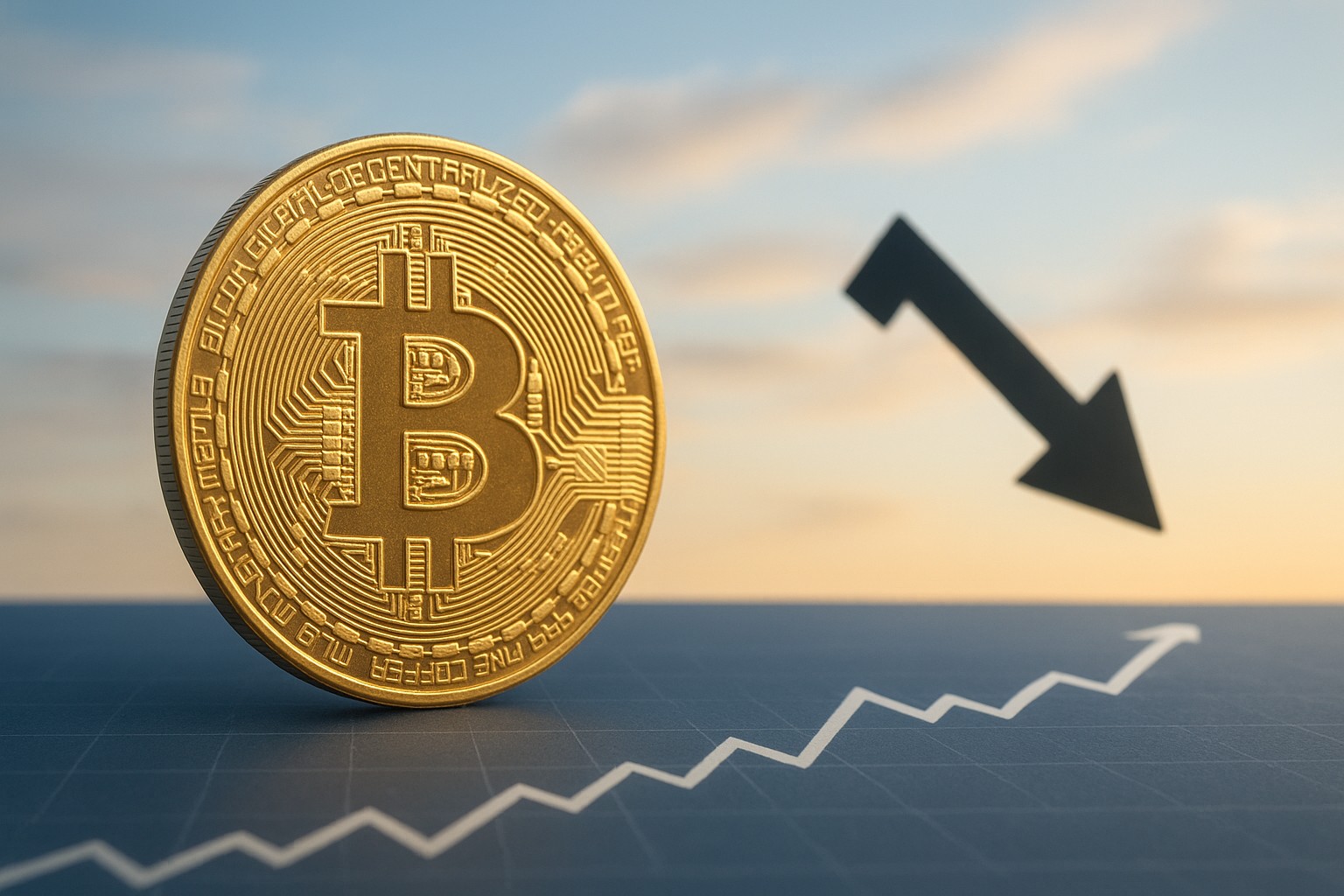
Bitcoin’s momentum remains positive with calmer weekends and a falling dollar. When the U.S. dollar weakens and weekend volatility cools, Bitcoin’s price action often looks less like chaos and more like a durable trend—one that long-term investors can actually plan around.
The macro setup: a falling dollar quietly changes the scoreboard
A softer U.S. dollar tends to lift assets priced globally, and Bitcoin is increasingly treated as part of that anti-dollar basket—alongside gold, commodities, and certain equity exposures. When DXY drifts lower, international buyers effectively get more purchasing power, and risk appetite often improves at the margin. That doesn’t guarantee a straight line up, but it does tilt the playing field.
The practical takeaway is that Bitcoin’s momentum can stay constructive even when headlines feel mixed. In my experience, many traders overreact to single-day prints and underweight the slow grind of currency effects. A weaker dollar also influences liquidity conditions, which can ripple into crypto through leverage, stablecoin flows, and cross-asset positioning.
What’s different lately is not just direction, but rhythm: the market appears to be rewarding calm. If weekends stop acting like recurring stress tests, Bitcoin’s trend becomes easier to hold through—especially for investors who don’t want to babysit positions 24/7.
Bitcoin’s 2026 problem is the weekend—why calmer Saturdays matter
The phrase “Bitcoin’s 2026 problem is the weekend” captures a real structural issue: liquidity is often thinner on Saturdays and Sundays, while crypto still trades nonstop. That combination can amplify moves, trigger stop cascades, and distort what the week’s “true” performance looks like when viewed from a traditional market lens.
When weekends are violent, they can erase incremental weekday gains and leave investors with the feeling that nothing works. But when weekends calm down—fewer sudden liquidations, less frantic de-risking—Bitcoin’s trend can express itself in a more orderly way. That matters because orderliness is what brings in larger, more patient capital.
A useful mental model is to treat weekends as stress calibration. If Bitcoin holds key levels during low-liquidity hours, it often signals genuine demand rather than purely mechanical bidding. Calm weekends don’t just reduce anxiety; they improve the quality of the price signal.
The scoreboard everyone is staring at—and how to read it correctly
Most people check Bitcoin’s performance the way they check stocks: zoom out, look at the YTD line, and compare it to gold, the S&P 500, or the dollar. “The scoreboard everyone is staring at” is usually a simple return chart. The problem is that simple charts can be misleading when one asset trades 24/7 and others effectively don’t.
Bitcoin can look unimpressive if the bulk of its drawdowns happen on weekends and the bulk of its recoveries happen during overlap hours with traditional markets. In other words, the timing of gains and losses matters. If you only look at end-of-day closes or weekly candles without context, you may misread momentum.
A more accurate approach is to separate:
– Weekend behavior (liquidity, leverage flushes, gap-like moves)
– Weekday behavior (macro correlation, ETF/institutional flows, higher participation)
– Overlap windows where multiple markets are active and reacting to the same news
Personally, I’ve found that “Bitcoin is flat” narratives often collapse once you examine when the volatility occurred. Momentum is not only a number; it’s the path the number took to get there.
Bitcoin trades all the time, the others don’t: the “fair” comparison problem
“Bitcoin trades all the time, the others don’t” sounds like a feature—until you compare it against assets that pause. Traditional markets have natural circuit breakers: weekends, settlement cycles, and limited hours that dampen reflexive trading. Bitcoin has none of that. It absorbs every headline in real time, including the ones that would normally wait for Monday.
This is why “The ‘fair’ comparison makes Bitcoin look worse” is a surprisingly important idea. When analysts force all assets onto the same timestamps—only comparing periods when every market is active—Bitcoin’s relative behavior can look very different. It may show that the apparent underperformance came largely from off-hours turbulence rather than a lack of demand.
For investors, the actionable lesson is to choose your benchmark method before you choose your thesis. If you’re comparing Bitcoin to gold or equities, decide whether you’re measuring:
1) as-traded (24/7 reality), or
2) overlap-only (synchronized market hours)
Neither method is “right” for all purposes. But if your goal is understanding momentum drivers—especially those tied to a falling dollar—overlap windows often reveal clearer correlations and cleaner signals.
Bitcoin is trading like equity beta, not a metal—what that means for “digital gold”
The “digital gold” narrative is powerful, but Bitcoin frequently behaves more like high-duration risk: it can track liquidity conditions, real yields, and equity sentiment more closely than it tracks gold’s safe-haven bid. When people say “Bitcoin is trading like equity beta, not a metal,” they’re pointing to correlation regimes that shift with macro stress.
That doesn’t invalidate the long-term scarcity thesis; it just reframes the timeline. Gold is largely owned as a defensive reserve asset. Bitcoin is still transitioning—part store of value, part growth asset, part monetary hedge, part network adoption trade. In a falling dollar environment, both can benefit, but for different reasons and with different volatility profiles.
Practical signals to monitor (without getting lost in noise)
- Weekend drawdown depth vs. weekday recovery strength (is selling getting absorbed?)
- DXY trend and real yields (macro tailwind or headwind for risk assets)
- Spot vs. perp funding and open interest (are moves driven by leverage?)
- ETF or institutional flow proxies (when available) and major on-chain inflows/outflows
- Key levels around prior weekend lows (do they hold on retests?)
My own bias is that Bitcoin’s “digital gold” behavior tends to show up most clearly when leverage is low and liquidity is scarce—but fear is high. Calm weekends reduce leverage-driven distortion, which ironically can make Bitcoin look more like a maturing macro asset.
What to watch next: momentum catalysts and risk points going forward
If weekends remain calmer while the dollar continues to fall, Bitcoin’s upside can express itself more cleanly—through higher lows, steadier breakouts, and fewer abrupt liquidation cascades. But momentum isn’t just about price; it’s about market structure. A constructive trend needs participation that doesn’t vanish the moment liquidity thins.
Going forward, watch for two broad catalyst zones. First, macro catalysts: inflation surprises, central bank messaging, and currency moves that keep pressure on the dollar. Second, microstructure catalysts: changes in trading access and liquidity that reduce weekend fragility. For example, broader around-the-clock derivatives access in traditional venues can tighten spreads and reduce the “two-day vacuum” effect that currently magnifies weekend moves.
Risk still matters. Even in a bullish regime, Bitcoin can punish complacency—especially if leverage rebuilds quickly. If open interest climbs while spot demand stalls, calm weekends can turn into sudden air pockets again. The goal isn’t to predict every swing; it’s to recognize when conditions are supportive of trend-following versus mean-reversion chop.
Conclusion: a calmer tape can keep Bitcoin’s bull case intact
Bitcoin’s momentum remains positive with calmer weekends and a falling dollar because the market is getting two things it needs at the same time: a macro tailwind and a cleaner volatility profile. The dollar’s weakness supports anti-fiat narratives and global liquidity appetite, while quieter weekends reduce the structural turbulence that can obscure genuine demand.
For investors, the edge is in reading the tape with context. Don’t rely on a single “scoreboard” chart—separate weekend behavior from weekday participation, and compare assets on a clock that matches your thesis. If the current pattern holds, Bitcoin’s trend may look less like a series of weekend ambushes and more like a sustained, tradable move that rewards patience.