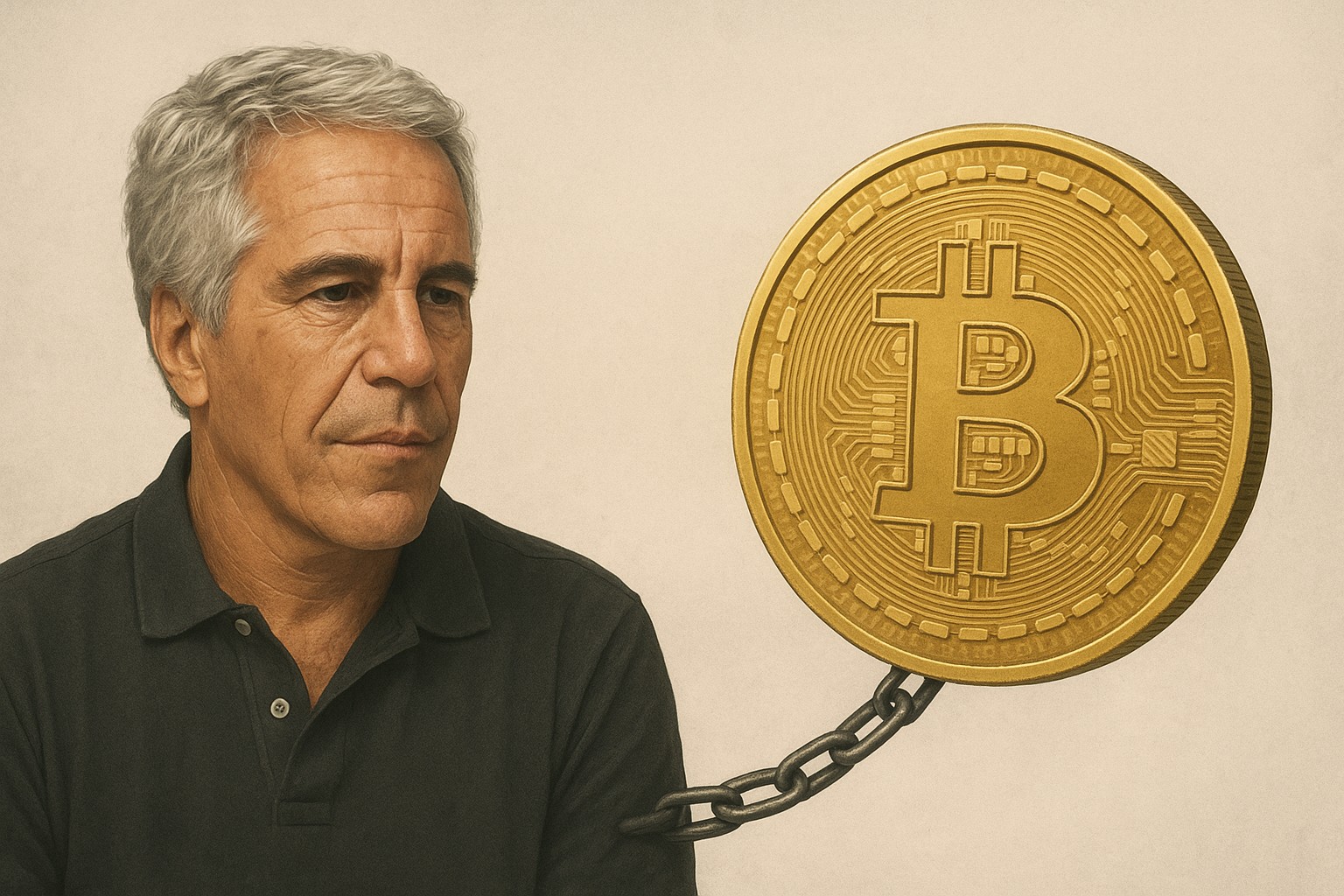
Report revisits Epstein’s alleged links to the people behind Bitcoin, raising uncomfortable questions about how early crypto ideas circulated among elite networks. The latest document-based discussion is less a verdict than a reminder: provenance matters, and speculation spreads faster than verification.
What the new report is actually revisiting—and what it is not
The phrase “alleged links” does a lot of work here. The story being revisited is not that Jeffrey Epstein built Bitcoin, funded it, or definitively knew Satoshi Nakamoto. Instead, the fresh attention centers on document snippets and communications that suggest he claimed contact with people he described as Bitcoin’s founders, alongside various crypto-adjacent conversations.
That distinction is crucial for readers trying to separate investigative value from viral intrigue. Bitcoin’s origin remains pseudonymous by design, and the lack of a confirmed identity for Satoshi creates a vacuum that many narratives try to fill. A report can legitimately revisit claims, timelines, and who talked to whom—without being able to prove the underlying assertion.
From a practical standpoint, treat this as a case study in information hygiene in the crypto era: documents can be authentic while claims within documents remain unverified. If you’re scanning headlines, look for the verbs: said, claimed, suggested, proposed. Those words are signals that the “link” is still an allegation.
DOJ files show: why document dumps change the conversation (and why they don’t)
Large-scale releases—often described as DOJ files or similar document troves—can shift the public conversation because they provide primary-source material: emails, attachments, and dated correspondence. Even when nothing is “new” in a legal sense, the availability of raw documents enables independent review, fact-checking, and timeline reconstruction.
At the same time, document dumps rarely provide neat conclusions. They give fragments. A single email can show intent, interest, or self-presentation, but it cannot confirm whether a meeting occurred, whether the recipient was who the sender implied, or whether a claim was embellished to impress an audience. That’s especially true in the crypto world, where name-dropping has long been a social currency.
If you want to read these developments responsibly, focus on three concrete questions rather than the most sensational interpretation:
1) What is the date and context of the communication?
2) Who are the recipients and what is their relationship to the sender?
3) Is there corroboration—another email thread, a calendar invite, a follow-up, or an external record?
Epstein’s crypto network stretched across tech and finance: why that detail matters
One reason this topic persists is that early crypto wasn’t confined to anonymous forums; it also circulated in familiar elite lanes—venture capital, tech leadership circles, academic institutions, and finance. When a report notes that Epstein’s crypto network stretched across tech and finance, the takeaway is not that those circles are inherently compromised. It’s that cryptocurrency, even in its earlier years, was already part of high-level conversations.
In practical terms, “network proximity” can mean many things: being cc’d on an email, receiving a forwarded analysis, attending the same conference, or sharing mutual contacts. None of those equals wrongdoing, and none of those automatically imply access to Bitcoin’s creators. But they do help explain how crypto ideas—payments, token issuance, cross-border settlement—moved through influential circles well before mainstream adoption.
My own view is that this is the most educational angle for everyday readers: it shows how narratives form. People assume the early Bitcoin community was isolated and purely cypherpunk. In reality, as Bitcoin’s potential became clearer, it attracted a mix of technologists, investors, and opportunists. That mixture is a feature of disruptive tech cycles, and it’s also why reputational risk travels quickly.
Sharia currency proposal remains unverified: understanding the claim, the motivation, and the limits
A recurring detail in the revisited reporting is a proposed concept sometimes described as a Sharia-compliant digital currency. The key phrase that should remain front-of-mind is that the Sharia currency proposal remains unverified—not only in whether it was technically pursued, but also in whether any claimed Bitcoin-founder involvement was real.
Conceptually, “Sharia-compliant finance” typically emphasizes constraints such as avoidance of interest (riba), uncertainty (gharar), and certain prohibited industries. A digital currency pitched for that context could be framed as an ethical or religiously compatible payment system. That’s plausible as an idea; many fintech initiatives have explored compliant structures. The more controversial and unproven leap is the alleged proximity to Bitcoin’s creators.
Here’s the practical lens: proposals are often used as networking tools. In elite settings, a pitch can be a way to gain access, credibility, or introductions. Crypto adds a special twist—because the creator mythos is so powerful—so invoking Bitcoin’s founders can function like social proof even when it’s not substantiated.
How to evaluate unverified crypto-origin claims (a reader’s checklist)
- Separate the medium from the message: an authentic email can still contain exaggerations.
- Look for corroboration: replies, follow-ups, attachments, or parallel threads that confirm actions taken.
- Check technical specificity: genuine collaboration usually includes technical details, not just broad excitement.
- Assess incentives: ask who benefits from claiming proximity to founders or influential figures.
- Beware identity ambiguity: “founders” can mean developers, early contributors, or simply well-connected enthusiasts.
Bitcoin founders and the Satoshi problem: why “contact” is hard to prove
To understand why a report revisits Epstein’s alleged links to the people behind Bitcoin without closing the case, you have to understand Bitcoin’s authorship problem. Satoshi Nakamoto is a pseudonym; there is no official registry, no public corporate entity, and no verified spokesperson. That means anyone claiming “contact with the founders” is making a statement that is inherently hard to validate.
Also, language matters: Bitcoin is open-source, and early development involved multiple contributors discussing improvements. So even if someone communicated with an early developer, that might feel like “contact with founders” in casual speech, even if it does not connect to Satoshi at all. In other words, a claim can be simultaneously plausible (they spoke to early Bitcoin people) and misleading (implying Satoshi-level access).
For investors and readers, the bigger takeaway is not about a single individual’s claim, but about how origin myths can be exploited. In crypto, narratives can influence legitimacy, and legitimacy can influence capital flows. That’s why skepticism isn’t cynicism—it’s risk management.
Practical implications for crypto readers: misinformation, reputational risk, and due diligence
Even if you have no interest in Epstein-related news, this episode offers a useful framework for navigating modern crypto information environments. Document-based stories create a strong emotional pull: primary sources feel definitive. Yet without verification, they can become the raw material for misinformation—especially on social platforms where nuance is penalized.
If you participate in crypto—whether as an investor, builder, or analyst—consider the reputational dimension. Associations (real or alleged) can become talking points that shape how outsiders perceive a project, an institution, or an individual. This is not fair, but it is real. And because crypto communities often overlap with tech and finance circles, reputational contagion can travel quickly.
Actionable habits that help:
– Keep a timeline: date every claim and connect it to verifiable events.
– Don’t share screenshots without context: link to source repositories when possible.
– Treat “founder proximity” as marketing until proven otherwise.
– When evaluating a project pitch, demand artifacts: specs, commits, audits, or formal partnerships.
Conclusion: what to take away from the revisit
Report revisits Epstein’s alleged links to the people behind Bitcoin because ambiguity still draws attention—and because document releases keep reintroducing fragments into the public sphere. The most responsible reading is neither dismissal nor sensationalism: the materials may show what was claimed and who was connected, but they don’t magically solve the Satoshi identity question.
The durable value in this story is the reminder that crypto history is messy, socially networked, and easy to mythologize. When you see claims about Bitcoin founders, treat them as hypotheses that require corroboration, not as conclusions—and you’ll be ahead of most of the internet.