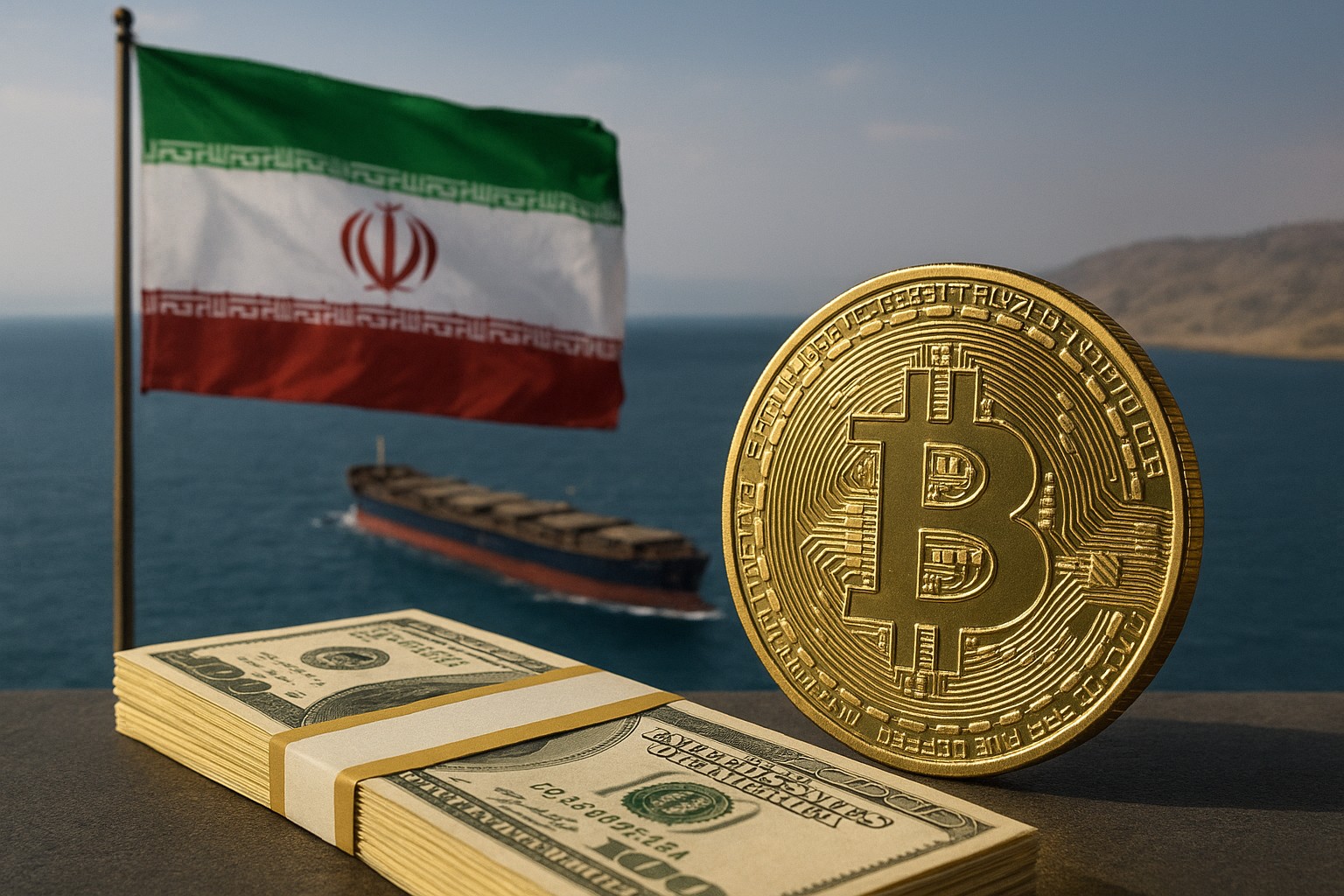
Stablecoin transit fees in Hormuz put Iran in focus as Bitcoin faces fresh doubts as a crisis hedge. What looks like a niche crypto headline is actually a blueprint for how digital dollars can be operationalized in geopolitics—while Bitcoin’s safe-haven narrative gets stress-tested in real time.
Why the Hormuz stablecoin toll matters to markets
The Strait of Hormuz is not just another shipping lane; it is the oil chokepoint that can quickly spill into inflation expectations, energy equities, sovereign risk, and FX volatility. When any actor formalizes “rules of passage” there—especially in a way that bypasses traditional banking rails—investors should treat it as macro signal, not gossip.
What makes the story uniquely modern is the payment instrument. Stablecoins function like a dollar-denominated settlement layer without the operational friction of correspondent banking, and without the same exposure to conventional payment gatekeeping. That combination is valuable when timing matters, documentation is sensitive, and counterparties want finality fast.
From a practical market lens, the Hormuz toll narrative has three immediate implications. First, stablecoin adoption is increasingly driven by utility under constraint, not retail hype. Second, digital-asset flows can become entangled with sanctions risk and compliance expectations. Third, Bitcoin’s role in crisis portfolios is being re-evaluated against alternatives that behave more like cash or like gold, depending on the shock.
Iran’s Crypto Infrastructure Is Not New
Iran did not wake up yesterday and discover crypto. For years, the country has had strong incentives to experiment with alternative settlement methods, especially in cross-border contexts where access to the global dollar system can be restricted, delayed, or expensive. That background matters because it means “stablecoin fees” are less a one-off gimmick and more a continuation of a broader playbook.
This also helps explain why stablecoins—rather than a volatile asset like Bitcoin—are the preferred tool for transactional use. If you are pricing a service fee connected to commodity logistics, you want predictable accounting and fewer disputes over exchange rates between invoice issuance and settlement. Stablecoins, for all their controversies, are engineered to deliver that predictability.
My personal takeaway: the crypto market often frames adoption as a consumer story (apps, UX, retail trading). But some of the most durable adoption shows up where the incentives are harsh and immediate—trade settlement, capital controls, and cross-border payments where “good enough” technology wins because the alternative is operational failure.
How stablecoin transit fees could work in practice
A “transit fee” system has to solve messy real-world constraints: counterparties must be verified, payment has to be reconciled, and operators need a simple way to confirm authorization on the water. You don’t need perfect on-chain sophistication to do that; you need a workflow that combines identity checks, clear pricing, and a confirmable receipt.
A plausible implementation uses stablecoins because they can settle quickly, are easily divisible for per-barrel or per-voyage pricing, and can be moved across wallets with fewer intermediaries. That does not automatically mean anonymity—stablecoin issuers and analytics firms can trace flows in many cases—but it can reduce reliance on traditional bank messaging and clearing.
Operational checklist for ship operators and counterparties
- Pre-clearance documentation: ownership chain, flag details, cargo information, and crew manifests, to reduce disputes and speed approvals
- Payment rails: stablecoin transfer instructions, wallet whitelisting, and network selection to avoid failed or delayed settlement
- Verification loop: an authorization code or reference ID that can be validated during transit
- Reconciliation & receipts: matching on-chain transaction IDs to off-chain invoices for audit readiness
- Contingency planning: what happens if networks congest, wallets are sanctioned, or funds are frozen by an issuer
For businesses touching logistics, energy, or insurance, the practical value here is not ideological. It’s about understanding that stablecoins can be slotted into fee collection systems with minimal infrastructure, which is precisely why regulators and compliance teams increasingly care about stablecoin governance, issuer controls, and traceability.
Sanctions, compliance, and the hidden risk in stablecoin settlement
Stablecoins are often marketed as frictionless, but in geopolitical contexts the friction doesn’t disappear—it shifts. If an issuer can freeze tokens, the settlement layer includes embedded policy decisions. If an address is flagged, downstream counterparties may inherit risk. And if a transaction chain touches sanctioned entities, even incidental exposure can become a compliance headache.
This is where stablecoins differ from both bank wires and from bearer-like assets. With bank wires, compliance is explicit and front-loaded; with stablecoins, compliance can be retroactive via blacklists, exchange controls, or deplatforming at the on/off-ramps. In other words, you can move quickly—until you can’t.
For investors, the key is to separate two questions: (1) will stablecoin usage expand in constrained environments, and (2) will the investable parts of that ecosystem benefit? Transaction volumes can rise even while certain tokens, bridges, or venues face increasing scrutiny. The winners may be the most compliant issuers and the best-regulated rails—not necessarily the highest-yielding or most permissive options.
Is Bitcoin a War Hedge? The Data Says Not Here
Bitcoin’s crisis-hedge narrative tends to peak when headlines are alarming and liquidity is plentiful. But in many real-world shocks, markets do what they usually do: they sell volatile risk assets first, then rotate into what feels most defensible—often cash equivalents and, historically, gold. In that framework, Bitcoin can behave less like an insurance policy and more like a high-beta macro asset.
That does not make Bitcoin “bad” or “failed.” It means its hedge properties are conditional. If the crisis triggers broad deleveraging, margin reduction, or a dash for dollars, Bitcoin can dip alongside equities. If the crisis is about long-term currency debasement and real yields are falling, Bitcoin may regain its narrative power. The timing matters.
A more useful way to frame it: Bitcoin is not a universal hedge; it’s a hedge against specific failure modes—most notably long-duration monetary distrust. In short, the data often supports Bitcoin as a structural bet on monetary evolution, but it can disappoint investors who expect it to act like gold during acute geopolitical stress.
Stablecoins vs Bitcoin vs gold: choosing the right “crisis tool”
It’s tempting to lump all crypto together, but stablecoins and Bitcoin sit on opposite ends of the spectrum. Stablecoins are designed to behave like money; Bitcoin is designed to be a scarce asset with monetary properties. Gold is an ancient reference point that markets repeatedly return to when uncertainty rises and trust becomes the scarce resource.
In a Hormuz-style scenario, stablecoins win on transaction utility: invoicing, settlement, and operational speed. Gold wins on perceived neutrality and long-standing safe-haven positioning. Bitcoin sits in the middle—portable and censorship-resistant in theory, but still subject to market structure, liquidity cycles, and the fact that many holders treat it as an investment, not a settlement tool.
If you’re building a practical “crisis playbook,” consider aligning the instrument with the job:
– Need to pay or receive quickly across borders: stablecoins (with strong issuer and compliance awareness)
– Need a portfolio hedge that markets already recognize: gold (or gold proxies, depending on your access)
– Need long-horizon protection against monetary regime shifts: Bitcoin (sized appropriately, with volatility expectations)
My own view: the mistake isn’t holding Bitcoin; it’s expecting one asset to cover every crisis shape. The Hormuz headline is a reminder that stablecoins and Bitcoin solve different problems, and markets will reward them differently under stress.
What to watch next: signals investors can track
If stablecoin transit fees become more than a rumor cycle, there will be measurable footprints—some on-chain, others in policy, shipping, and insurance markets. Tracking only price action misses the deeper story: operational adoption often shows up first in behavior and logistics, not in charts.
Watch for changes in stablecoin supply dynamics, issuer policy moves (freezes, blacklists, enhanced monitoring), and shifts in liquidity on major exchanges that serve regions with higher geopolitical sensitivity. Separately, watch shipping and energy indicators: route changes, war-risk premiums, and insurance pricing often lead broader inflation narratives.
Finally, pay attention to the second-order effects. If stablecoins become a default tool for “pay-to-pass” systems anywhere, regulators will respond, and compliant stablecoin infrastructure may consolidate. That could be bullish for regulated rails, while increasing uncertainty for gray-market venues and tokens that rely on permissive access.
Conclusion
Stablecoin transit fees in Hormuz put Iran in focus not because they are flashy, but because they show how digital dollars can be slotted into real-world power systems with speed and practical advantages. At the same time, the episode sharpens a truth investors sometimes forget: Bitcoin is not guaranteed to behave like a crisis hedge in every conflict-driven drawdown.
The most useful takeaway is to match the asset to the purpose. Stablecoins excel at settlement under constraints, gold often absorbs classic flight-to-safety flows, and Bitcoin remains a volatile but potentially powerful long-term hedge against monetary distrust—just not always the first refuge when headlines turn dark.