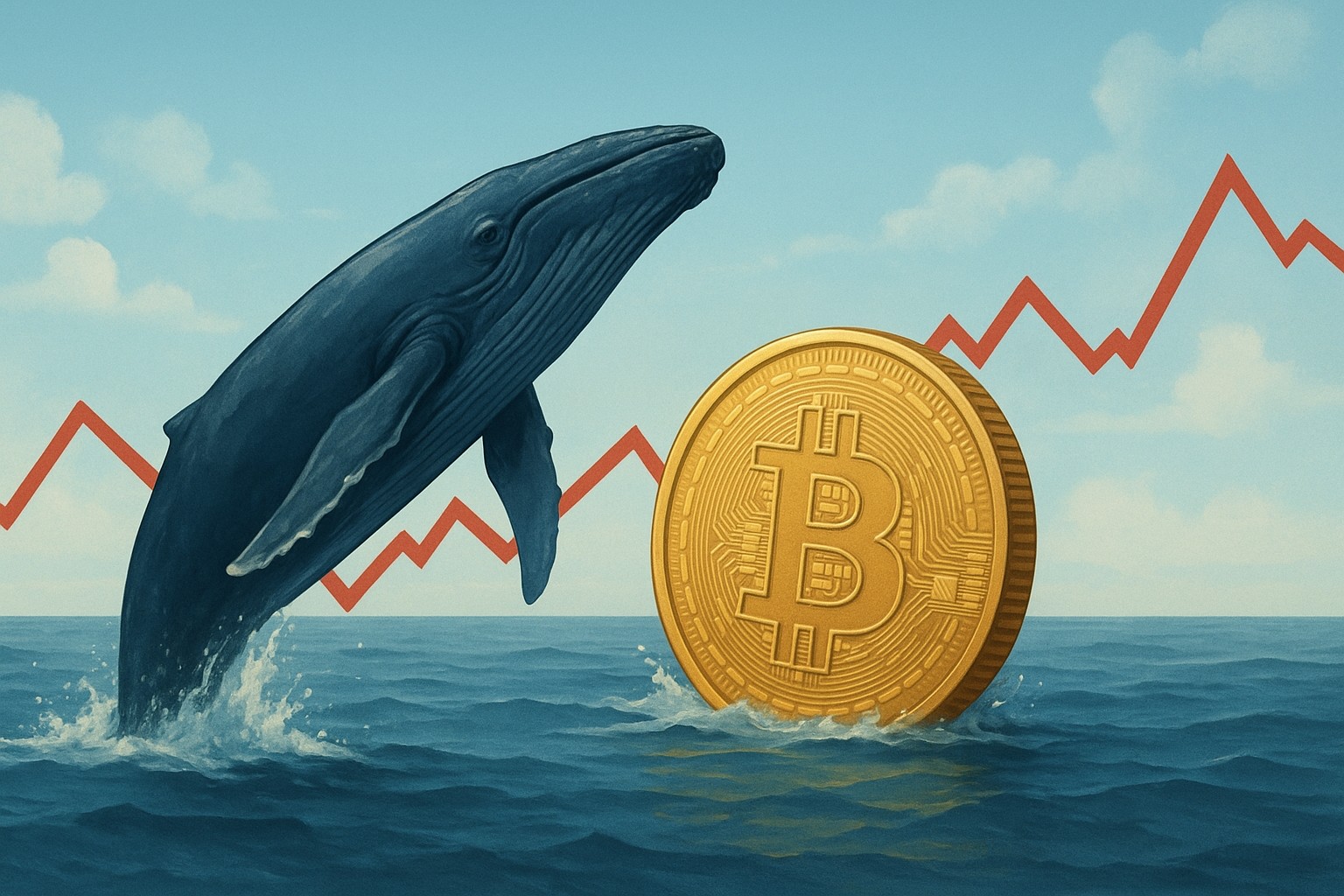
Despite major whale buys Bitcoin remains rangebound under $80,000. Large holders keep accumulating and exchange balances keep thinning, yet price action looks stubbornly flat—proof that spot supply is only one piece of the puzzle.
Bitcoin’s tug-of-war right now sits at the intersection of whale behavior, ETF flows, macro pressure, and market structure. Below is a practical breakdown of why big buys don’t automatically translate into an immediate breakout—and what to watch if you’re positioning for the next move.
News: Whale accumulation is real, but timing the impact is tricky
Whale accumulation has clearly intensified, and it’s tempting to assume that aggressive buying should immediately lift the spot price. In reality, whales can buy in ways that minimize slippage—using OTC desks, passive limit orders, and strategic execution across venues. When the market senses steady bids but not panic demand, price can drift sideways even as coins move into strong hands.
Another reason accumulation can coexist with rangebound trading is that not all whales are “directional” investors. Some are market makers, funds rotating exposure, or entities hedging elsewhere (for example, using futures). Their purchases can be part of a neutral strategy that removes supply from exchanges but doesn’t necessarily create the kind of urgent spot demand that forces price discovery upward.
From a practical perspective, “whales are buying” is a useful context signal, not a stand-alone trading trigger. The more helpful question is whether the buying is paired with rising marginal demand—new inflows chasing a thinner order book.
Markets: Why Bitcoin remains rangebound under $80,000 despite big buys
A market can stay pinned under a round number like $80,000 for longer than most traders expect because those levels attract systematic behavior. Large sell orders cluster there, options dealers hedge around it, and short-term traders repeatedly fade the move until something overwhelms the ceiling. This creates a familiar loop: rally into resistance, rejection, drift, repeat.
There’s also a mechanical element. When price approaches a highly watched level, liquidity tends to improve because more participants place orders. Ironically, that extra liquidity can absorb whale demand without moving price much. You can think of it as a pressure valve—more sellers appear at the obvious line in the sand, so buyers need sustained intensity to break through.
My personal read: rangebound action under a major threshold often means the market is “preparing,” not “failing.” But the preparation can resolve either way. The key is to track which side is being forced to spend more liquidity over time—buyers to push higher, or sellers to hold the line.
Market Structure: A thinner supply base can mean sharper moves—later
“Thin” markets don’t always move immediately; they often move suddenly. When whales pull coins off exchanges, visible sell-side liquidity can shrink. That doesn’t guarantee an instant rally, but it increases the probability that, when demand returns, the price jumps more violently because there’s less inventory sitting on order books.
Practical signals to watch in market structure
- Exchange balance trend: consistent net outflows suggest reduced readily sellable supply
- Order book depth near resistance: if depth weakens near $80,000 over time, breakouts become easier
- Perpetual futures funding and open interest: overheated leverage can cap upside and fuel chop
- Spot vs. derivatives volume mix: healthier breakouts typically lean on spot demand, not only leverage
- Realized volatility compression: extended compression often precedes expansion, but direction needs confirmation
It’s also worth noting that “thin supply” can cut both ways. If macro news shocks risk assets and spot demand vanishes, thin liquidity can accelerate downward moves as well. That’s why professionals treat supply tightness as a volatility amplifier rather than a one-way bullish guarantee.
ETF flows and treasury buyers: The demand that matters is incremental demand
ETF flows and corporate/treasury-style buyers are often described as a supply drain, and that’s broadly true—especially when inflows are persistent. But the market cares about the change in demand at the margin. If ETF inflows slow, or if treasury purchases become predictable and scheduled, the bullish impulse can get priced in and lose its ability to surprise.
Another nuance: ETFs can change where liquidity sits. Even if ETFs are accumulating, traders may hedge exposure in futures, or rotate between spot, ETF shares, and options. This can keep headline buying strong while spot price remains stuck. In other words, the market can be net bullish in positioning but still mechanically rangebound due to hedging flows.
If you’re trying to translate ETF/treasury headlines into a usable framework, focus on consistency and acceleration:
– Are inflows growing week-over-week, or fading?
– Are dips being bought quickly, or does the market need time to stabilize?
– Is spot volume expanding on up days, or is it all derivatives noise?
Macro pressure: Rates, dollar strength, and risk appetite still set the pace
Macro pressure still shapes the speed of the move, even in a Bitcoin cycle driven by structural adoption. When real yields rise, the dollar strengthens, or equities wobble, Bitcoin often struggles to sustain breakouts. That doesn’t invalidate the bullish supply story—it just delays it, because capital becomes more selective and short-term traders reduce risk.
It also matters how macro uncertainty shows up. Sudden headline-driven volatility can trap price in a range as participants wait for clarity. In that environment, whales may continue accumulating while shorter-term money refuses to chase, producing the exact dynamic we’re seeing: strong hands absorbing supply while price chops under resistance.
The practical takeaway is to treat macro as the throttle. Whale buys may be the engine, but the throttle determines whether the car actually accelerates. Watching inflation data, central bank guidance, and broad risk sentiment can help explain why a seemingly bullish on-chain picture doesn’t immediately translate into a clean trend.
Where the broader market sits right now: Scenarios, levels, and a plan
Bitcoin trading below $80,000 isn’t just a number—it’s a psychological and positioning boundary. The longer price compresses beneath it, the more likely we see a meaningful expansion once the market picks a direction. But you don’t need to predict; you can prepare.
A practical way to think about the next phase is scenario planning:
Scenario A: Breakout and hold above $80,000
If price clears the level and holds it on strong spot participation, the “thin supply” story can finally express itself. In that case, watch for higher lows after the breakout and improving breadth in the broader crypto market.
Scenario B: Rejection and range continues
If $80,000 remains a ceiling, expect repeated wicks and pullbacks as liquidity clusters around that round number. Range strategies tend to outperform trend strategies here, and patience becomes a real edge.
Scenario C: Breakdown on macro shock
If risk-off hits and liquidity is thin, downside can be fast. In that case, whale accumulation may continue—but price can still overshoot lower before stabilizing.
Personally, I like to keep it simple in ranges: define invalidation, size smaller, and avoid leverage-driven FOMO. The market is advertising uncertainty; it’s okay to respond with a more conservative playbook until confirmation arrives.
Conclusion: Whale buys are supportive, but $80,000 needs a catalyst and follow-through
Despite major whale buys Bitcoin remains rangebound under $80,000 because accumulation alone doesn’t force a breakout—especially when liquidity thickens near key levels, derivatives hedging offsets spot pressure, and macro conditions restrain risk appetite. The bullish case is still there in the background: tighter exchange supply and persistent long-term demand can set up sharper moves.
What changes the game is incremental demand plus clean market structure: accelerating ETF flows, stronger spot participation, and a decisive acceptance above resistance. Until then, treating this as a volatility setup rather than a guaranteed pump is the most realistic—and most useful—way to navigate the current range.