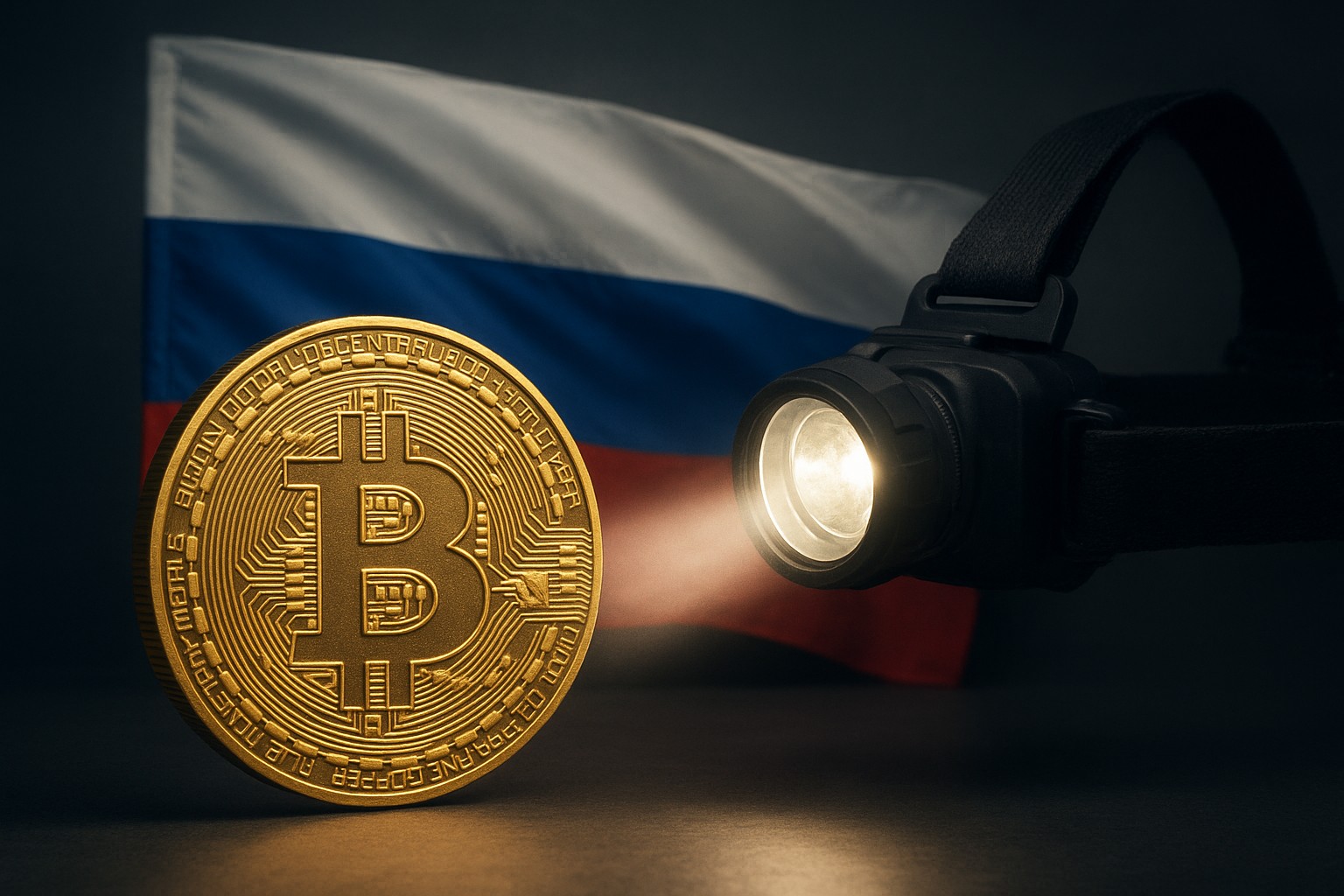
Grinex compromise shines light on the crypto tools Russia uses to dodge sanctions. When a sanctions-focused exchange suddenly loses access to funds, the incident becomes more than a hack story—it becomes an X-ray of the payment rails, tokens, and intermediaries that keep cross-border value moving.
What the Grinex compromise revealed about Russia’s crypto “financial plumbing”
A compromise at a hub like Grinex matters because exchanges sitting on the ruble-to-crypto boundary are not just trading venues—they’re conversion points. Even when volumes look modest compared with global giants, these platforms can be strategically important: they connect local bank transfers, OTC desks, and stablecoin liquidity into one practical workflow for moving money abroad.
From an operational perspective, a shutdown triggered by wallet infrastructure damage is especially disruptive. If the core hot wallets, signing systems, or withdrawal orchestration are impaired, users lose the ability to settle trades and redeem balances. In a sanctions-evasion context, that interruption can cascade: importers can’t pay counterparties on time, brokers can’t rotate liquidity, and offshore partners increase fees to compensate for uncertainty.
What I find most telling is how these incidents force everyone to acknowledge the real dependency chain. It’s not enough to say crypto is censorship-resistant. The pathways used for scale—fiat on-ramps, liquidity providers, stablecoin issuers, and messaging channels for OTC coordination—create choke points that are visible, measurable, and sometimes fragile.
Sanctions evasion and the ruble-to-crypto pipeline: how it works in practice
To understand why an exchange compromise can “break a pipeline,” you need to map the typical ruble-to-crypto route. Most flows begin with ordinary-looking local payments (bank transfers, card rails, payment processors) that end at an exchange account, a broker, or a trusted intermediary. From there, value is converted into assets with deep liquidity—usually stablecoins—before being moved onward.
The mechanics are often boring by design. A company might buy USDT or a dollar-pegged asset through an OTC desk, split it into multiple transactions to reduce counterparty risk, then forward funds to offshore wallets where they can be swapped again, paid out, or used as collateral. Each stage aims to keep settlement reliable and fees predictable, not necessarily to do something technically sophisticated.
Sanctions pressure changes incentives. Participants prioritize:
– fast settlement (minutes, not days),
– low slippage (stablecoins over volatile assets),
– and plausible operational cover (business invoicing, “consulting fees,” or commodity settlement narratives).
When one major venue is removed, the immediate effect is not that flows stop altogether—it’s that they reroute to less efficient paths. That usually means higher spreads, more reliance on informal brokers, and greater exposure to scams, freezes, or operational failures.
Russian crypto exchange exposure: why centralized venues remain the weakest link
Centralized exchanges (CEXs) are still the highest-throughput way to bridge fiat and crypto, which is why they’re so central to sanctions workarounds. But they are also the easiest place to apply pressure—legally, operationally, and technically. A “Russian crypto exchange” that touches local banking is exposed to domestic regulation, external sanctions lists, and cyber risk.
Security-wise, exchanges concentrate risk in a few places: signing keys, withdrawal pipelines, and privileged admin systems. Even if an exchange uses multi-sig or hardware security modules, attackers can target the surrounding processes—social engineering, compromised DevOps, poisoned updates, or insider access. In a sanctions-adjacent environment, the threat model is wider: the attacker could be financially motivated, politically motivated, or attempting to gather intelligence on counterparties.
There’s also the reputational and liquidity angle. Once a platform is suspected of being compromised—or even simply unstable—counterparties demand more collateral, shorten settlement windows, and increase fees. Liquidity providers pull back. OTC desks become choosier. This can turn a technical incident into a business-ending event faster than in “normal” markets.
From a practical standpoint, the lesson is straightforward: if a single venue is a critical off-ramp for a region, it becomes both a target and a systemic risk. Resilience requires redundancy—multiple venues, multiple settlement assets, and multiple banking relationships—yet sanctions pressure tends to collapse options rather than expand them.
Stablecoins, OTC desks, and shadow banking: the crypto tools most often used
The tools that support sanctions-avoidance flows are usually not exotic. They’re the same instruments that make global crypto liquid—repurposed under constraints. Stablecoins are the cornerstone because they minimize volatility and simplify accounting. OTC desks provide discretion and size. Informal “shadow banking” networks offer last-mile settlement when formal rails are blocked.
Common tools and tactics seen in sanctions-pressured crypto flows
- Stablecoins for settlement: USD-pegged tokens are favored for predictable value transfer and deep liquidity.
- OTC brokerage: Off-exchange matching reduces slippage and keeps large orders from moving public markets.
- Layered transfers: Breaking a payment into multiple hops and wallets to manage counterparty and seizure risk.
- Cross-border intermediaries: Regional brokers and payment agents who can settle locally and deliver crypto remotely.
- Tokenized “local currency” instruments: Assets marketed as ruble-linked or region-linked can be used as internal accounting units before converting to global stablecoins.
A key nuance: using stablecoins doesn’t automatically mean a transaction is illicit. Stablecoins are mainstream. The risk emerges when stablecoins become the standardized settlement layer for entities that cannot access dollars through traditional correspondent banking. In that situation, crypto can function like an alternative wholesale payments system—especially when combined with OTC credit lines and regional cash settlement.
My personal take is that the industry sometimes over-focuses on mixers and privacy coins in these conversations. They matter, but for many real-world commercial payments, the priority is reliability, not maximum anonymity. Stablecoins plus OTC relationships often beat more “privacy-preserving” routes because businesses need consistent settlement more than they need perfect concealment.
Blockchain analytics and compliance: how investigators trace and disrupt these networks
The counterweight to these tools is the growing sophistication of blockchain analytics and compliance operations. Investigators typically don’t need to “break crypto” to find patterns. They correlate on-chain flows with off-chain realities: exchange deposit clusters, recurring counterparties, timing patterns, and known service-wallet fingerprints.
Even when users try to obfuscate movements by hopping chains or swapping assets, there are practical limits. Bridges and large swaps create points of dependency: liquidity pools, bridge contracts, and centralized endpoints. Meanwhile, exchanges that want any access to global liquidity frequently need banking partners and market makers, and those relationships generate documents, logs, and human contacts.
Disruption tends to come from a combination of:
1. sanctions designations (which chill legitimate counterparties),
2. seizures or freezes (where legal authority applies),
3. exchange delistings and offboarding (compliance pressure),
4. and, sometimes, technical events—like compromises—that suddenly remove a critical node.
For businesses trying to stay compliant, the lesson is to treat sanctions risk as a supply-chain risk. If your counterparty uses a high-risk exchange or an opaque OTC chain, you inherit exposure. Strong compliance isn’t only about screening wallet addresses; it’s about understanding how counterparties fund, settle, and cash out.
What comes next: lessons for crypto security and sanctions enforcement
If a compromised exchange disappears, the ecosystem adapts—but usually at a cost. The immediate replacement may be smaller venues, more fragmented OTC settlement, and increased reliance on regional intermediaries. That fragmentation can reduce efficiency while increasing fraud and counterparty failures. In other words, losing a central node can make the network both harder to use and harder to monitor.
For security teams at exchanges and wallet providers, the takeaway is to harden the operational layer around keys: access control, withdrawal policies, segregated environments, and rigorous change management. For compliance teams, it’s to watch not only addresses but also infrastructure dependencies—where liquidity comes from, which stablecoins dominate settlement, and which intermediaries repeatedly appear at conversion points.
For policymakers and investigators, the broader implication is that sanctions evasion is not a single trick—it’s a toolkit. The Grinex compromise (and the disruption it caused) underlines that the most impactful pressure points often sit at the conversion layer: ruble entry, stablecoin exit, and the trusted brokers who connect the two.
Conclusion
The Grinex compromise shines light on the crypto tools Russia uses to dodge sanctions by exposing how much the system relies on a few practical conversion hubs, stablecoins, and OTC settlement relationships. While flows can reroute, disruptions at key exchanges raise costs, increase friction, and reveal the dependency chain that makes large-scale workarounds possible. The clearest long-term lesson is that both security and enforcement increasingly revolve around infrastructure—not ideology—and whoever controls the conversion points shapes what crypto can and cannot do under pressure.