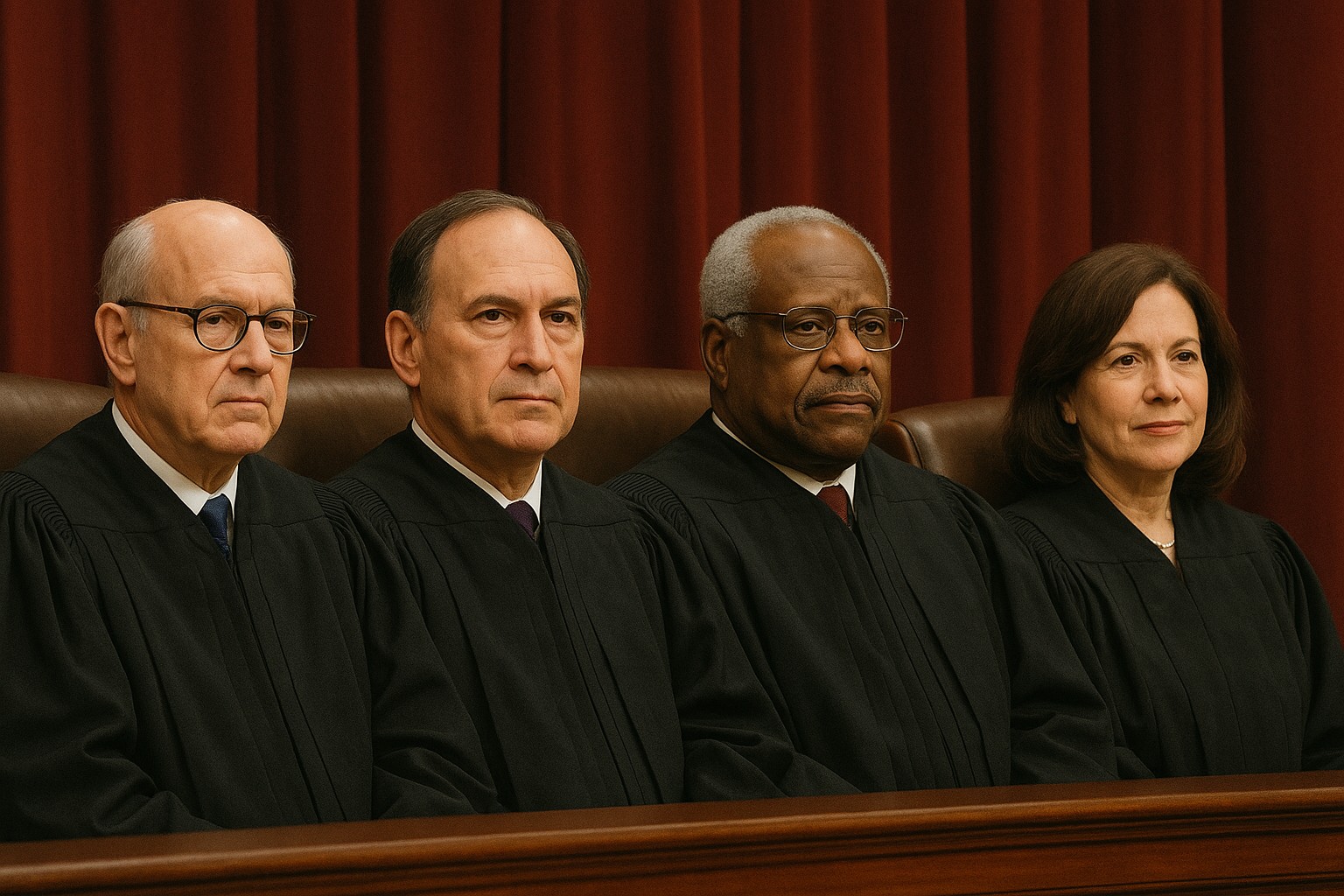
Supreme Court succession looks unchanged as Alito and Thomas stay in place. Their decision to keep serving into the next term dampens retirement speculation, stabilizes the Court’s immediate timeline, and reshapes the political expectations around nominations and Senate confirmation battles.
The latest signal: why Supreme Court succession looks unchanged
The core takeaway is simple: if two of the Court’s oldest members are not planning to step aside, the near-term lineup likely holds. That matters because Supreme Court succession is less about day-to-day headlines and more about timing—vacancies are rare, the stakes are enormous, and the downstream effects can last decades.
Even without formal announcements from the justices themselves, outward indicators often speak loudly. Hiring a full slate of clerks, accepting speaking engagements, and continuing to take on opinion-writing responsibilities are all signs a justice expects to remain active for at least another term. In practical terms, the Court and litigants can plan around continuity rather than disruption.
From a civic perspective, I find this moment clarifying: the public tends to treat retirements as inevitable once a justice reaches a certain age, but the institution runs on personal choice. That choice is influenced by health, family, workload, and—unavoidably—politics.
What staying put means for the Court’s balance
One widely searched question is whether a non-retirement changes the ideological direction of the Court. In the immediate sense, it doesn’t. The Court’s current alignment remains intact, and there is no sudden swing created by an unexpected vacancy or replacement.
However, “no change” at the top line can still produce meaningful effects in practice. Stability can reduce the incentive for strategic case selection by interest groups that try to time litigation around perceived shifts. It also affects how lower courts and agencies interpret signals: when the membership is steady, legal actors tend to treat recent Supreme Court rulings as firmer guideposts rather than temporary results of a fleeting lineup.
There’s also a subtle internal dimension. Senior justices shape institutional norms—how aggressively the Court uses the so-called shadow docket, how it frames standards like standing and deference, and how it approaches emergency relief. Even if the vote counts remain similar, the Court’s style and appetite for intervention can evolve slowly through who is writing, assigning, and persuading.
Retirement rumors vs. reality: how to read the tea leaves
Retirement chatter around older justices is perennial, and for understandable reasons. The modern Court is highly consequential, and the political branches treat vacancies as once-in-a-generation opportunities. Yet most rumors collapse under a basic reality: justices do not operate on a typical career timetable, and they often dislike appearing to respond to external pressure.
Health stories can amplify speculation, but they don’t necessarily predict retirement. Many public figures experience health scares and return to demanding roles, and Supreme Court work—while intense—can be managed with support systems that most jobs do not have. The more reliable indicator tends to be forward planning: clerks hired, book projects set, workload accepted.
It’s also worth remembering the strategic paradox. If a justice times retirement to align with a preferred White House and Senate, critics will accuse them of partisanship. If they refuse to time it, critics will accuse them of naïveté. Either way, the decision is read politically—even when it is primarily personal.
Practical indicators that often predict whether a justice is likely to stay
- Clerk hiring for the next term: a full complement suggests intent to remain active
- Opinion-writing pace: continuing to author major opinions signals engagement
- Travel and public schedule: planned events can imply long-range commitments
- Reduced workload patterns: persistent pullback can be more telling than a single incident
- Statements via close circles: indirect signals can matter, though they’re not definitive
Trump’s window for a fourth Court pick: why it narrows without vacancies
Another headline-friendly theme is whether staying in place closes a path for additional appointments. The logic is straightforward: without openings, no president can nominate, and no Senate can confirm. That makes Supreme Court succession a game of opportunity more than preference.
Politically, the absence of a vacancy can be stabilizing for lawmakers who would otherwise be pulled into a high-stakes confirmation fight. Confirmation battles consume weeks of hearings, preparation, and floor time, and they spill into fundraising, messaging, and midterm strategy. When no seat opens, leaders can focus on legislation, oversight, and campaigning rather than judicial warfare.
At the same time, the “window” conversation reveals how modern nominations have become central to political identity. Many voters now evaluate presidents partly through the lens of judicial appointments. If retirements don’t happen, that part of the legacy is effectively capped—at least until circumstances change.
Senate confirmation battle avoided—for now: what it changes in Washington
Even a single Supreme Court vacancy can dominate Washington’s schedule. When the Court’s composition is at stake, the Senate’s calendar, committee bandwidth, and political oxygen get rerouted toward vetting, messaging, and vote counting. With no seat to fill, that pressure valve is temporarily closed.
This matters beyond partisan strategy. Confirmation processes can influence the broader functioning of government: agency nominations slow down, legislative negotiations become more brittle, and bipartisan deals become harder to sustain. A steady Court lineup can therefore indirectly affect everything from budget deadlines to national security authorizations—not because the Court is involved, but because the Senate has limited time and attention.
As an observer, I also think it’s healthier—at least in the short run—when the country is not locked in an all-consuming nomination fight. The Court’s legitimacy debates are already intense. Avoiding a vacancy-driven clash doesn’t solve those debates, but it can lower the temperature long enough for more substantive discussion about ethics rules, transparency, and consistent standards.
Planning for the next term: what continuity means for litigants and the public
For attorneys, agencies, and advocacy groups, a stable Court is not boring—it’s actionable. When membership is predictable, legal strategy shifts from guessing who might leave to focusing on doctrine: which arguments persuade this Court, which procedural routes are most viable, and which cases are ripe for review.
Continuity can also influence settlement dynamics and regulatory planning. Companies deciding whether to litigate a rule, states weighing challenges to federal policy, and nonprofits choosing test cases all care about the Court’s current composition. A stable bench can reduce “wait and see” hesitation and encourage parties to litigate based on the merits and timing of their claims rather than vacancy speculation.
For the general public, the practical impact is that the next term is more likely to look like an extension of existing trends than a sharp pivot. That doesn’t mean outcomes are preordained—coalitions shift case by case—but the baseline expectations about method and ideology remain more consistent when the membership does.
Conclusion: unchanged succession, but not a static Court
Supreme Court succession looks unchanged as Alito and Thomas stay in place, and that single fact ripples outward—reducing the odds of a sudden confirmation showdown, limiting near-term nomination opportunities, and giving legal and political actors a clearer planning horizon. The Court’s balance may remain steady, but the consequences of stability are real: calmer Senate math, more predictable litigation strategy, and fewer incentives for vacancy-driven politicking.
Still, “unchanged” doesn’t mean “unmoving.” Even with the same nine justices, the Court can evolve through case selection, procedural choices, and the slow grind of precedent. If you’re trying to understand what comes next, the best approach is less speculation about retirements and more attention to the docket, the arguments the justices emphasize, and the doctrines they seem most eager to refine.