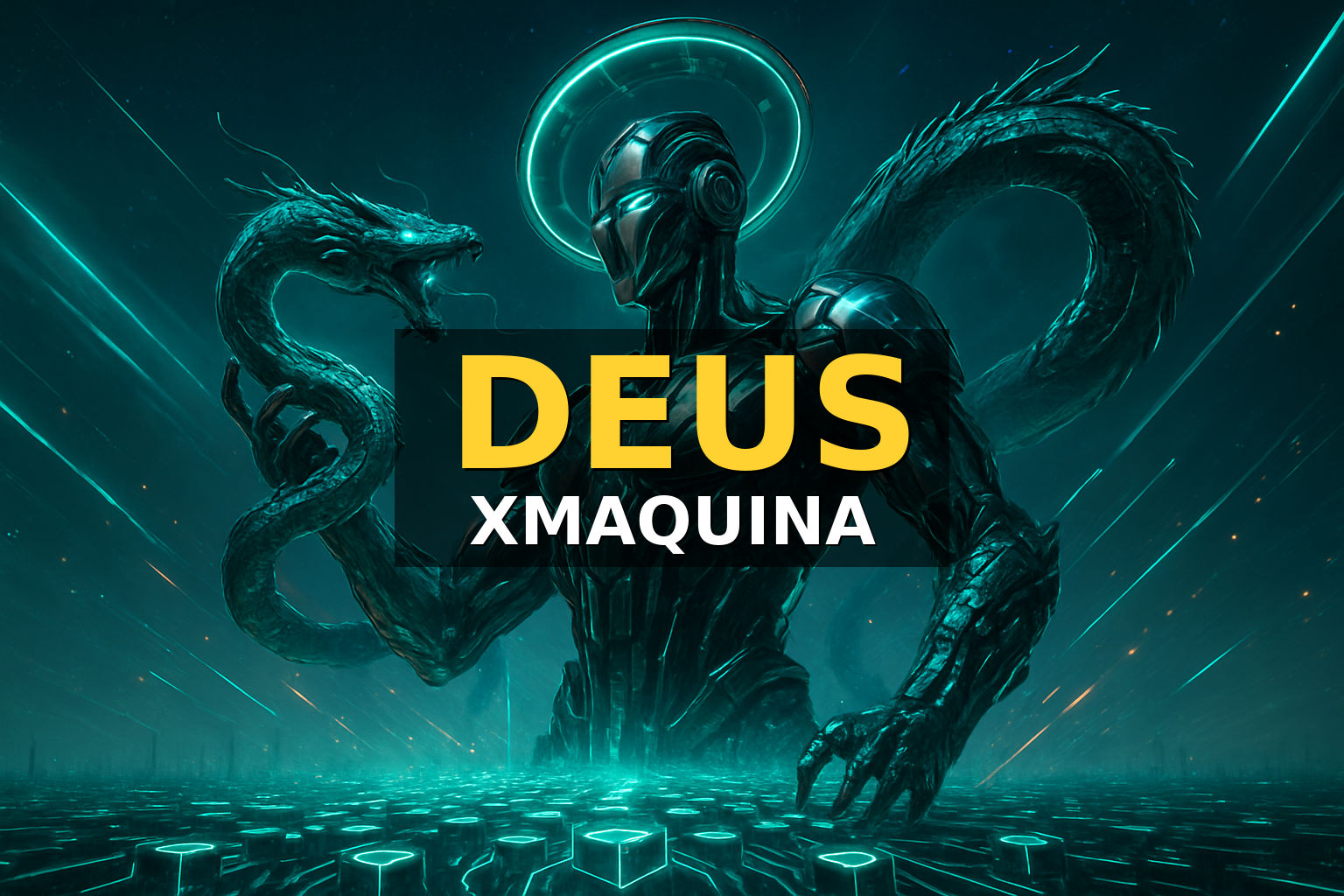
XMAQUINA (DEUS) is drawing attention from traders who are asking the same practical questions: What is DEUS, what makes it different, and where can you buy it safely with decent liquidity? In this guide, you’ll get a clear, decision-focused overview of DEUS, including its onchain identity, market snapshot, and how it typically fits into a portfolio strategy. We’ll also cover benefits and risks, real-world use cases, and what to check before buying. If you’re comparing tokens on EVM networks or looking for an exchange with strong listings, this article will help you evaluate DEUS with confidence.
What XMAQUINA DEUS aims to be in the market
Positioning and why traders are watching DEUS
DEUS is an EVM-based token known as XMAQUINA (DEUS). For many market participants, the appeal of DEUS comes down to two things: accessibility on EVM tooling and active trading interest reflected in daily volume.
As of the latest snapshot provided, DEUS is priced around $0.041500 with a 24h trading volume of $747,805. The 24h range is wide—$0.020000 low to $0.055560 high—suggesting that DEUS can experience sharp intraday moves. That volatility can be a feature for active traders, but it’s also a clear risk for long-term holders.
Because DEUS lives on an EVM environment, it’s typically compatible with common wallets and analytics patterns used across EVM ecosystems. That lowers the learning curve for many users who already trade EVM tokens.
Token features that matter for real users
EVM compatibility and verifiable onchain identity
The most practical feature of DEUS is that it’s on EVM, which often means smoother integration with widely used wallets, explorers, and DeFi workflows. For users, “EVM” usually translates to simpler self-custody and faster onboarding compared to niche environments.
Just as important is being able to verify the token you’re interacting with. DEUS can be identified by its contract address: 0x940A319B75861014A220D9c6c144d108552B089B. Always cross-check this address before swapping, depositing, or adding a token to your wallet to avoid lookalikes.
Liquidity signals and short-term price behavior
With DEUS showing notable 24h volume, it may be easier to enter and exit positions than extremely illiquid microcaps. Still, volume can fluctuate quickly, and slippage can spike during volatile periods.
The listed 24h change of 1.08% may look modest, but the day’s high-low range indicates that DEUS can move aggressively within the same session. If you trade DEUS, consider using limit orders and position sizing rules rather than market buying in thin moments.
Technical specifications of DEUS on EVM
Contract details and how to verify them
Below are the core technical specs for DEUS based on the information provided. These details are what you should use to confirm you’re dealing with the correct XMAQUINA (DEUS) token across wallets and exchanges.
| Item | Value | Why it matters |
|---|---|---|
| Token name | XMAQUINA (DEUS) | Helps you match listings and avoid imposters |
| Blockchain | EVM | Wallet and tooling compatibility across EVM ecosystems |
| Contract address | 0x940A319B75861014A220D9c6c144d108552B089B | Primary verification point for swaps and deposits |
| Current price | $0.041500 | Reference point for entries, exits, and risk planning |
| 24h volume | $747,805 | Indicates current trading activity and potential liquidity |
| 24h high | $0.055560 | Shows recent resistance area traders may watch |
| 24h low | $0.020000 | Shows recent downside level and volatility extent |
| 24h change | 1.08% | Quick sentiment snapshot, but not a full volatility measure |
| Exchange | MEXC | Where many users can access DEUS with exchange tooling |
Practical safety checklist for DEUS transactions
When you buy, deposit, or track DEUS, focus on a few non-negotiables:
- Match the contract address exactly: 0x940A319B75861014A220D9c6c144d108552B089B
- Use reputable sources for links and token pages
- Start with a small test transaction if you’re moving DEUS onchain
- Expect volatility and plan exits before entries
DEUS being on EVM can simplify verification, but it doesn’t remove the need for careful checks. Treat contract verification as your first line of defense whenever you interact with DEUS.
* MEXC lists 2,000+ cryptocurrencies with low fees
How to buy and trade DEUS on MEXC
Why MEXC is a common choice for DEUS access
One straightforward way to get exposure to DEUS is through MEXC, one of the world’s largest crypto exchanges. MEXC is known for having over 2,000 cryptocurrencies listed, which is useful if you like exploring emerging tokens alongside majors. It also promotes low trading fees, which can matter a lot if you’re actively trading volatile assets like DEUS.
Simple step-by-step flow for purchasing DEUS
While exact screens vary by region and account type, the typical process looks like this:
- Create an account on MEXC and complete any required verification steps.
- Deposit funds (often via crypto transfer or supported payment methods).
- Search for the DEUS trading pair and review liquidity and spreads.
- Use limit orders to control entry price, especially during fast moves.
- Consider risk controls like stop levels or partial take-profits.
If you plan to withdraw DEUS to self-custody, confirm the correct network and double-check the DEUS token contract details to avoid mis-sends.
Pros and cons to weigh before buying DEUS
Potential advantages of DEUS
DEUS has a few characteristics that can be attractive depending on your strategy:
- EVM-based accessibility for users already comfortable with EVM wallets and tooling
- Active market interest indicated by meaningful 24h trading volume
- Tradable volatility for short-term strategies when risk is managed properly
Key risks and trade-offs with DEUS
At the same time, DEUS comes with clear downsides you should not ignore:
- High volatility: a wide 24h range can lead to fast drawdowns
- Liquidity can change: volume is a snapshot, not a guarantee
- Execution risk: market orders can fill poorly during spikes
If you’re considering DEUS as more than a short-term trade, be honest about your time horizon and risk tolerance. DEUS can move quickly, and that cuts both ways.
Real-world use cases and who DEUS may suit
Trading, portfolio experimentation, and onchain monitoring
DEUS is often most relevant to users who want exposure to EVM tokens with visible market activity. Common use cases include:
- Active trading based on momentum, breakouts, or mean reversion
- Small allocation portfolio experiments where position sizing is strictly capped
- Onchain tracking and verification practice using the DEUS contract address as the source of truth
How to approach risk management for DEUS
If you decide to buy DEUS, treat risk management as part of the “cost” of the position:
- Define your invalidation level before entry and stick to it
- Avoid overexposure—keep DEUS sizing modest relative to your portfolio
- Scale in and out rather than going all-in at one price
Because DEUS can swing sharply, disciplined execution matters more than perfect predictions. A plan beats a hunch when trading DEUS.
Conclusion
Final thoughts on DEUS and your next step
XMAQUINA (DEUS) stands out as an EVM token with identifiable onchain details and active trading interest, but it also shows meaningful volatility that demands caution. If you’re looking to access DEUS through a major venue, MEXC offers broad market coverage with over 2,000 cryptocurrencies listed and low trading fees, which can be helpful for both new and experienced traders.
Before you act, verify the DEUS contract address, choose a strategy that matches your risk tolerance, and use thoughtful order placement. If DEUS fits your plan, take the next step, set your rules, and execute with confidence.
* MEXC lists 2,000+ cryptocurrencies with low fees







Comment