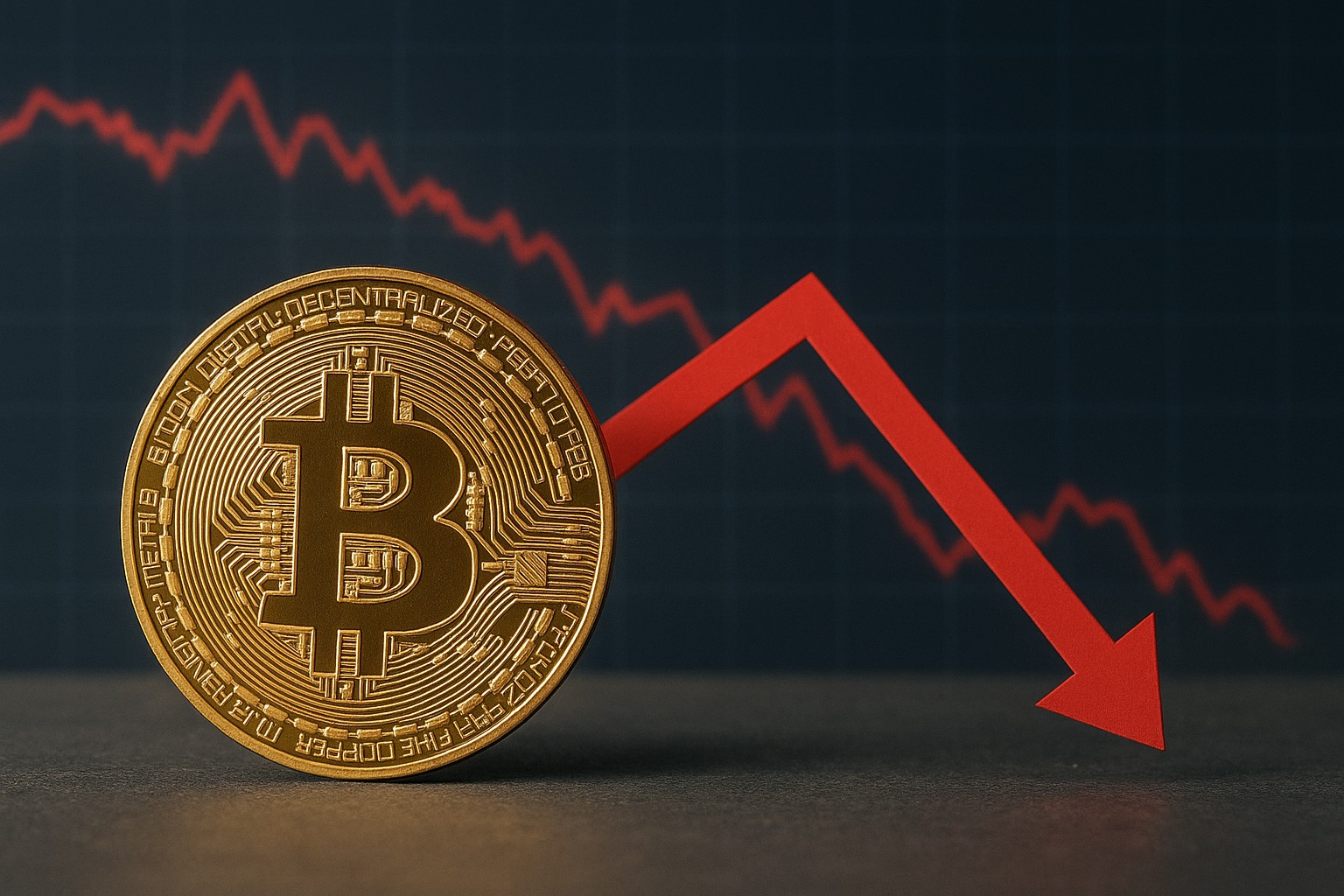
Bitcoin ends Q1 down 23 percent, marking one of its weakest starts since 2013. The drawdown has reignited familiar debates about crypto cycles, risk management, and what “long-term bullish” actually means when quarterly returns turn ugly.
What a -23% Q1 means in context (and why it matters)
A 23% decline in the first quarter is not just a rough few months—it’s a meaningful data point for anyone who allocates to Bitcoin with a quarterly or yearly lens. Q1 is often psychologically important because it sets the tone for the year: budgets reset, portfolio targets are recalculated, and fresh inflows (or redemptions) tend to cluster around the turn of the calendar.
From a market-structure perspective, a weak Q1 also shapes positioning. Leveraged traders typically become more cautious after large quarterly losses, while spot buyers may become more opportunistic, viewing drawdowns as entry windows. Either way, the impact goes beyond price: volatility rises, narratives polarize, and correlation with broader risk assets becomes a bigger factor in day-to-day moves.
Personally, I treat quarters like “chapters,” not verdicts. But chapters still matter: a second straight losing quarter can change how institutions measure risk, how exchanges manage margin, and how retail investors interpret every bounce as either a dead-cat bounce or a new base.
Bitcoin historical Q1 pattern shows mixed performance across years
The first quarter has never been a guaranteed “up-only” period for Bitcoin. Some years have delivered explosive Q1 gains, while other years have produced sharp reversals that felt like the start of a deeper bear market. That inconsistency is precisely why headline numbers like “average Q1 return” can be misleading—outlier years can inflate averages and hide the more common experience.
A more useful way to think about Q1 is to compare it against Bitcoin’s broader seasonal tendencies and the market’s typical rhythm. In many cycles, Q4 has been associated with strong performance (driven by liquidity conditions, risk-on sentiment, and narrative momentum), while Q1 can act as a digestion phase—especially after a euphoric run into year-end or a blow-off top.
If you’re building an investment process, the takeaway is simple: don’t assume Q1 is “supposed” to be green. Instead, assume Q1 can be anything—and plan sizing, stops, and time horizon accordingly. In practice, that means having rules for adding during drawdowns and rules for reducing exposure when volatility expands.
2026 Q1 decline follows October liquidation event: catalysts and market mechanics
Large quarterly drops rarely happen in a vacuum. A common pattern is that the market peaks, leverage builds, and then a sharp move triggers forced selling—cascading liquidations that push price further than most spot investors expect. When a major liquidation event occurs, the aftershocks often last for months: liquidity thins out, derivatives premiums compress, and rallies face heavier selling pressure.
In this case, the “why” behind a weak start to the year can be framed as a blend of positioning and confidence. After an October peak, the market tends to spend time repairing itself: late buyers look for exits, long-term holders reassess risk, and market makers widen spreads during turbulence. The result is choppy price action where both bulls and bears get punished—bulls on failed breakouts, bears on violent short squeezes.
The practical implication is that post-liquidation markets are different markets. Indicators that worked during the melt-up—buying every dip, ignoring funding costs, assuming trend continuation—can fail repeatedly. This is exactly when disciplined entries, lower leverage (or none), and realistic time frames become essential rather than optional.
Ethereum falls 32% too: what it signals for the broader crypto market
Bitcoin rarely moves alone, and when major altcoins drop even more sharply, it can reveal how risk appetite is shifting. A larger decline in Ethereum versus Bitcoin often suggests investors are rotating toward perceived “quality” or reducing exposure to higher-beta assets. That doesn’t mean Ethereum is fundamentally broken; it means the market is repricing risk, leverage, and liquidity preferences.
When ETH underperforms BTC during a quarterly selloff, it can also impact the rest of the ecosystem: DeFi collateral values shrink, liquidation thresholds get closer, and traders become less willing to fund long-tail altcoin bets. In other words, ETH weakness can act like a tightening of financial conditions inside crypto—even if macro conditions outside crypto are unchanged.
For long-term investors, this is a reminder to distinguish between conviction and concentration. If you believe in crypto’s multi-year trajectory, you can keep exposure—but it may be wise to review whether your portfolio has accidentally become a “beta stack” where everything is effectively leveraged to the same risk-on regime.
Practical risk-management moves investors can consider
- Rebalance rules: Pre-define thresholds (e.g., quarterly) to trim winners and add to laggards—without relying on emotion.
- Position sizing: Reduce size when volatility expands; increase only after conditions stabilize.
- Leverage discipline: Avoid using high leverage in post-liquidation environments where wicks and gaps are common.
- Liquidity planning: Keep a cash buffer so you can act during sharp dips rather than being forced to sell.
- Time-horizon matching: Don’t fund long-term holdings with short-term money you may need soon.
Reading the signals: on-chain, derivatives, and macro cues to watch next
After a weak quarter, many investors look for a single indicator that will call the bottom. In reality, “bottoming” is usually a process: volatility compresses, sellers get exhausted, and the market forms a range that frustrates both sides. The goal isn’t to predict the exact low; it’s to identify when conditions shift from fragile to healthier.
On the derivatives side, watch for signs that leverage is being reset. When funding rates normalize (or stay modest), open interest stops rising aggressively, and liquidations become less frequent, the market often becomes easier to trade and invest. On-chain metrics can add context—such as whether long-term holders are distributing or whether coins are moving to exchanges—but they should be treated as probabilistic, not prophetic.
Macro still matters, too. Bitcoin’s performance increasingly interacts with real rates, dollar strength, and broad equity risk sentiment. When liquidity tightens, speculative assets can struggle. When liquidity eases, crypto can rebound quickly—sometimes before the macro headlines “feel” positive. My own bias is to treat macro as the tide and crypto structure as the waves; you want both moving in your favor when you size up.
Strategy playbook for long-term holders and active traders
If Bitcoin ends Q1 down 23 percent, the key question becomes: what now? The answer depends on whether you’re investing over years or trading over weeks. Mixing those two approaches is where many portfolios get into trouble—buying like an investor, then selling like a panicked trader during volatility spikes.
Long-term holders may choose a simple framework: periodic buying, conservative allocation, and patience. The main risk is overexposure—owning more than you can emotionally or financially hold through another drawdown. Active traders, meanwhile, should respect that post-selloff markets often remain headline-sensitive and prone to sharp mean reversion. That environment can reward strict risk controls more than bold conviction.
A balanced approach can work: keep a core position sized for multi-year holding, and use a smaller “satellite” allocation for tactical trades. That way, you avoid the all-or-nothing mindset where every dip is either a catastrophe or a life-changing opportunity.
Conclusion: weakness in Q1 isn’t the end of the story
Bitcoin ending Q1 down 23 percent marks one of its weakest starts since 2013, but it doesn’t automatically define the whole year. Q1 has historically been mixed, and the path forward will likely depend on how quickly the market digests the aftermath of leverage-driven moves and whether liquidity conditions improve.
If you take one actionable lesson from this quarter, let it be process over prediction: set allocation limits, define rebalancing rules, and respect volatility. Crypto can recover faster than most expect—but it can also fall further than most feel is reasonable. The investor who survives both possibilities is the one still around when the next sustained trend finally arrives.