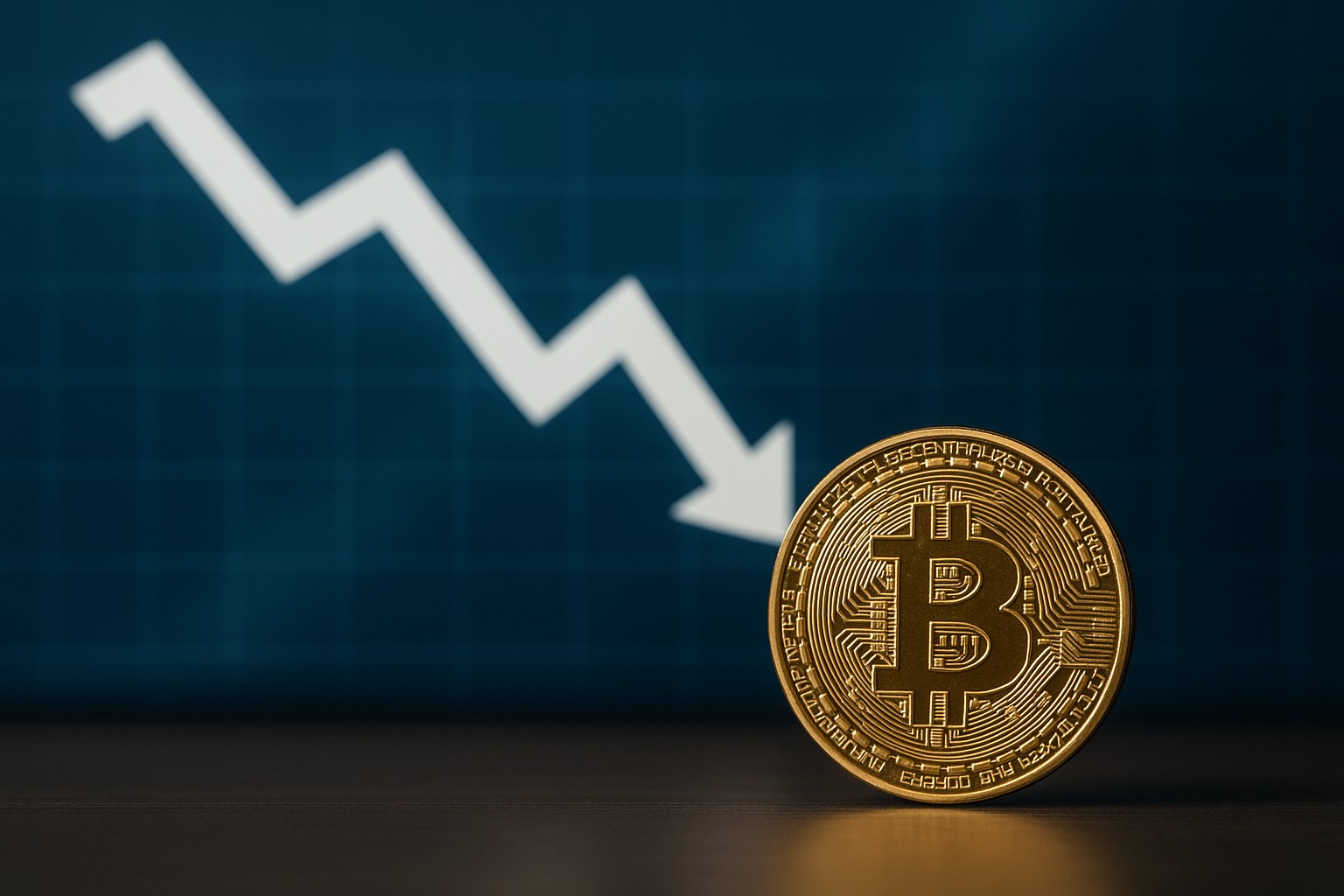
Bitcoin seeks a stable 70000 level as market leverage unwinds, and that shift matters more than a single green candle. When futures froth cools and spot demand steadies, price often becomes less exciting day-to-day—but more meaningful for what comes next.
Why the $70,000 zone matters right now
Bitcoin hovering around the 70,000 area is not just a psychological milestone—it’s also a practical battleground where different types of participants reveal themselves. Long-term holders often view round numbers as checkpoints for rebalancing, while short-term traders treat them like magnets for stop-losses and breakout orders. When BTC repeatedly revisits the same area without collapsing, it can hint at absorption: sell pressure gets met by buyers willing to hold.
Another reason this level matters is positioning. A stable range near 70,000 can become a reference point for the whole market: altcoins, mining equities, and even crypto-linked credit products tend to recalibrate risk when Bitcoin stops trending and starts basing. In my experience watching cycles, boring price action around an important level can be the quiet stage where better trades are built—especially after a volatile month.
Finally, the 70,000 zone sits naturally in the conversation between “macro” and “micro.” Macro narratives (rates, liquidity, risk-on sentiment) set the wind direction, but microstructure (open interest, funding, liquidation cascades) determines whether Bitcoin can actually sail smoothly—or gets tossed around.
Retail flows and leverage show cooling market conditions
One of the more constructive developments during consolidation is the market’s ability to “de-risk” without breaking down. When leverage unwinds, you often see fewer forced liquidations and less reflexive selling. That can translate into tighter ranges, slower trends, and more meaningful reactions to real spot buying rather than derivatives-driven noise.
Retail flows are another puzzle piece. When smaller investors are aggressively sending coins to exchanges, it can correlate with distribution (people preparing to sell) or heightened speculative churn. A decline in those inflows doesn’t automatically mean bullishness, but it can suggest that the market isn’t in a frantic risk-on phase where everyone is racing to trade every move. In a consolidation phase, that kind of cooling can be healthy.
Importantly, “cooling” is not the same as “dead.” You can have lower leverage and fewer retail deposits while still having strong two-sided participation from larger players—market makers, funds, and sophisticated spot buyers. The mix tends to produce steadier price action and fewer dramatic wicks, which is exactly what a potential $70K base would need.
Open interest drops across exchanges: what deleveraging really signals
Open interest (OI) is one of the best quick-read indicators for whether a move is being fueled by leverage. When OI drops across multiple exchanges, it usually means traders are closing positions rather than adding fresh exposure. That can happen through voluntary risk reduction (closing longs/shorts) or involuntary events (liquidations). Either way, the key outcome is the same: less leverage sitting underneath price.
That matters because high leverage can make Bitcoin fragile. If too many traders are positioned the same way, a small move can trigger liquidations, which then create a cascade. When that leverage is removed, price can start behaving more “normally,” responding more to spot demand and less to mechanical forced selling. The tradeoff is that rallies can look slower and less explosive—at least until a new catalyst brings fresh positioning back.
Practical ways to read leverage unwinds (without overreacting)
- Check OI and price together: OI down while price holds is often healthier than OI down with price collapsing. Holding suggests the market is reducing risk without panic selling.
- Watch funding rates: Flat-to-mild funding tends to signal balanced positioning; extreme positive funding can precede long squeezes.
- Track liquidation intensity: A decline in large liquidation spikes can imply the market is clearing out “weak hands.”
- Compare spot vs. perp volume: If spot participation improves while perp activity cools, it can support a sturdier base.
A personal note: I treat deleveraging as a “market detox.” It doesn’t guarantee a breakout, but it can improve the odds that the next trend—up or down—won’t be immediately reversed by a leverage-driven snapback.
Bitcoin price technical analysis: range structure and key levels to watch
From a charting standpoint, consolidation near 70,000 often resolves into one of two outcomes: a continuation higher once supply is absorbed, or a breakdown if bids keep weakening. The good news for bulls is that repeated defenses of a range low can build confidence; the risk is that each retest can also drain demand if buyers become exhausted or if macro sentiment turns sour.
Traders commonly map a working range and then refine it into “decision zones.” Think in terms of boundaries rather than a single magical number: an upper band where sellers reliably appear, a lower band where buyers step in, and a middle area that acts like a churn zone. When Bitcoin spends more time in the middle, it can indicate equilibrium—useful for longer-term positioning, but frustrating for momentum traders.
To make this actionable, focus on what would invalidate the base-building narrative. If Bitcoin can’t hold higher lows, if rebounds get weaker, or if sell-offs happen on expanding volume while recoveries happen on thin volume, the base may be failing. On the flip side, a clean reclaim of key moving averages and a breakout with sustained spot volume tends to be a higher-quality signal than a quick wick through resistance.
Volatility tightens: how to plan for a breakout without chasing
Periods of tightening volatility are like coiling springs: they don’t tell you the direction, but they warn you that the next move could be sharper than the recent past. When Bitcoin’s daily range compresses, it becomes easier for large orders to move price, and it becomes more dangerous to place tight stops at obvious levels. Planning matters more than prediction here.
A practical approach is to build a “conditional plan.” Instead of deciding you’re bullish or bearish right now, decide what you’ll do if price confirms strength or weakness. This reduces emotional trading and helps you avoid chasing a breakout candle after it’s already extended. In other words, let the market prove it can hold above a trigger level, not just touch it.
Risk management is the edge during volatility compression. If you’re trading, position sizing and stop placement should reflect the possibility that Bitcoin can quickly travel from one side of the range to the other. If you’re investing, compression can be a reminder to zoom out: the goal is to avoid making long-term decisions based on short-term noise.
How investors and traders can respond to a $70K “base” scenario
If Bitcoin truly is attempting a base around 70,000, the most important question becomes time horizon. Investors might prefer gradual accumulation, while traders might prefer defined entries around range boundaries. The mistake I see most often is mixing these approaches: investing with a trader’s impatience or trading with an investor’s lack of exits.
For longer-term participants, a base-building market can be a good environment for structured accumulation—especially if leverage is unwinding and the market is less prone to sudden liquidation cascades. For active traders, it’s a market of humility: fewer straight-line trends, more mean reversion, and more false starts. That usually means taking profits faster and avoiding oversized bets.
A balanced, practical checklist can help:
– Define your role: Are you accumulating BTC, swing trading, or intraday trading? Don’t blend rules.
– Use levels, not vibes: Identify a range high, range low, and an invalidation point.
– Respect leverage signals: If open interest starts rising sharply again, expect volatility to return.
– Avoid “obvious” stop clusters: Many traders place stops just beyond round numbers; the market often hunts them.
– Track spot strength: Durable breakouts typically need real spot demand, not just perpetuals excitement.
Conclusion: stability at $70K is a feature, not a flaw
Bitcoin seeks a stable 70000 level as market leverage unwinds, and that combination often creates the kind of quieter tape that can frustrate traders but benefit the market’s structure. Cooling retail flows, reduced open interest, and tightening volatility can all point to a reset—where price becomes less dependent on leverage and more responsive to genuine supply and demand.
The next major move will likely arrive with a narrative attached, but the groundwork is being laid now through positioning, liquidity, and discipline. If Bitcoin can keep absorbing sell pressure near 70,000 while leverage remains contained, the odds improve that the next breakout—whenever it comes—will be more sustainable than a quick, overleveraged spike.