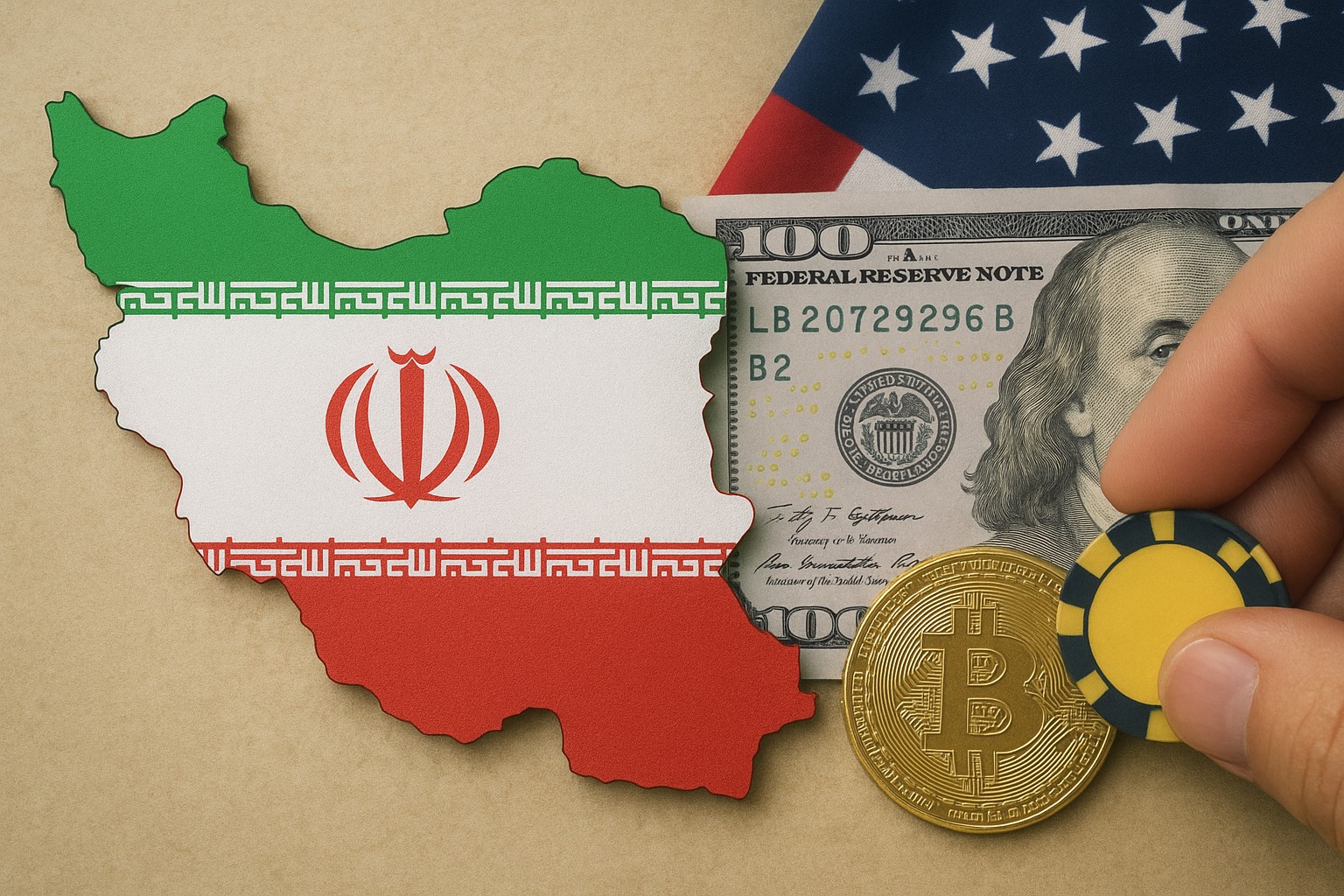
Iran conflict wagers top $700M as unusual gains raise calls for tighter prediction market rules in Washington. What began as niche forecasting has suddenly become a high-stakes policy fight, forcing regulators, lawmakers, and platforms to confront how “probability trading” behaves when the subject is war.
News: Why Iran-related contracts suddenly became a Washington problem
The speed of the shift has been striking. Prediction markets have existed for years as an alternative way to express beliefs about elections, economic data, or sports. But once contracts tied to the Iran conflict started attracting hundreds of millions of dollars in wagers, the conversation moved from tech curiosity to national-security adjacent controversy.
The issue isn’t only the headline number (now widely reported as topping $700M across Iran-related markets). It’s the perception that a handful of traders may have captured unusually well-timed gains, which inevitably triggers a familiar Washington reflex: when money, sensitive information, and public trust collide, rules tighten.
From a practical standpoint, this “news” cycle matters because it changes incentives overnight. Liquidity draws more liquidity; attention pulls in larger traders; and heightened stakes encourage sophisticated strategies that look, to outsiders, uncomfortably close to insider trading—even if the trader simply read signals faster than the crowd.
Markets: How prediction markets turn attention into transactions
Prediction markets convert uncertainty into a tradable price. In calm topics, that can be useful: prices can aggregate dispersed information and highlight shifting expectations. In conflict-linked topics, however, the same mechanism can look like monetizing tragedy, or worse, creating incentives around harm.
The market structure is straightforward: participants buy and sell “Yes/No” shares whose price implies an estimated probability. When volume balloons—like it has around Iran conflict outcomes—prices become a public scoreboard that journalists, analysts, and even policymakers can’t help but notice.
A less-discussed detail is how leverage-like behavior can emerge without formal leverage. Even in simple contracts, a well-funded trader can scale positions across correlated markets—timing, leadership stability, retaliation likelihood—creating large exposure. That’s not inherently wrong, but it magnifies the optics problem when profits cluster in a few accounts or appear to precede major developments.
Learn: What “unusual gains” can mean—and what it does not prove
Unusual gains are not automatically proof of misconduct. They are a signal that warrants scrutiny, especially when the underlying event is sensitive. In prediction markets, a trader can outperform for many legitimate reasons: better data sources, faster interpretation, automated execution, or simply higher risk tolerance when others hesitate.
That said, in Washington, the question tends to be less about mathematical possibility and more about governance. If a platform cannot convincingly explain how it deters and detects trading on non-public, material information, lawmakers will assume the worst-case scenario and design rules accordingly. And those rules often outlive the specific scandal that triggered them.
Red flags regulators typically look for in conflict-linked prediction markets
- Concentrated profits across a small number of accounts during narrow time windows
- Repeated “perfect timing” entries that beat the market by a suspicious margin
- Links between traders and government, defense, intelligence, or contractor ecosystems
- Trades placed immediately before information becomes widely available
- Sudden liquidity spikes that don’t match normal user growth patterns
My personal take: even if 90% of these patterns have benign explanations, platforms should behave as though they will need to defend themselves under hostile questioning. Because they will.
The CFTC is cracking down: How oversight could change product design
In the US, the Commodity Futures Trading Commission (CFTC) is the gravitational center for derivatives-like products, including many prediction-market structures. When a topic shifts from entertainment or public-policy forecasting into something that resembles event-driven speculation with potential public harm, pressure builds for more formal rulemaking and enforcement.
If the CFTC moves toward tighter standards, the biggest changes may show up not as dramatic bans, but as design constraints: which events can be listed, what disclosure is required, what surveillance tools must be in place, and how platforms prove they can police manipulation and prohibited participation.
For operators and users, the near-term practical implication is uncertainty. Market listings might become more conservative; certain categories (assassination, coups, military strikes, leadership removal) could be restricted; and KYC/AML expectations may rise. Even platforms that want to remain “information markets” could be pushed to behave more like traditional financial venues—because the underlying risks begin to resemble those venues.
Wall Street is buying the probability layer story—until policy risk reprices it
A major subplot is that investors increasingly see prediction markets as a new interface for information: a probability layer that can be embedded into media, trading, and decision workflows. When that narrative takes hold, valuations can jump quickly, because the total addressable market looks enormous—advertising, subscriptions, data licensing, API products, and integration into fintech ecosystems.
But policy risk is real, and it reprices growth stories fast. Once Washington frames a product category as a problem—especially a problem touching war, misinformation, or insider advantage—fundraising gets harder, partnerships become cautious, and compliance costs rise. “Move fast” becomes “prove control.”
In practical terms, platforms that want to survive the next phase should invest in credibility as aggressively as they invest in growth. It’s not glamorous, but it’s cheaper than rebuilding after a forced shutdown, a drawn-out investigation, or a high-profile scandal.
Market Structure: Tighter rules that could actually improve legitimacy
The debate in Washington is often portrayed as regulation versus innovation, but that framing is too simplistic. For prediction markets to be sustainable, they need legitimacy. And legitimacy comes from clear boundaries, transparent enforcement, and user protections that match the risk of the product.
A smart regulatory approach could distinguish between socially valuable forecasting (elections, macroeconomic indicators, public health logistics) and contracts that may create perverse incentives (violence, targeted harm, sensitive military outcomes). It could also require platforms to demonstrate real surveillance capacity—auditable, not just promised.
From a user perspective, tighter market structure can be positive if it reduces manipulation, wash trading, or coordinated attempts to move odds for propaganda. From a platform perspective, it can unlock partnerships with mainstream institutions that currently keep prediction markets at arm’s length.
Conclusion: $700M in wagers is the catalyst, but trust is the real battleground
Iran conflict wagers topping $700M didn’t just set a volume record—it forced a public reckoning with what prediction markets become when the underlying events are deadly serious. Unusual gains, even if not definitive proof of wrongdoing, are enough to trigger calls for tighter prediction market rules in Washington because the credibility of the entire category is at stake.
The next chapter likely won’t be decided by a single headline or one enforcement action. It will be decided by whether platforms can convincingly show they can prevent insider-like behavior, restrict harmful contract types, and operate with governance standards closer to financial markets than social apps. If they can, prediction markets may mature into a durable information layer. If they can’t, the crackdown narrative will write the rules for them.