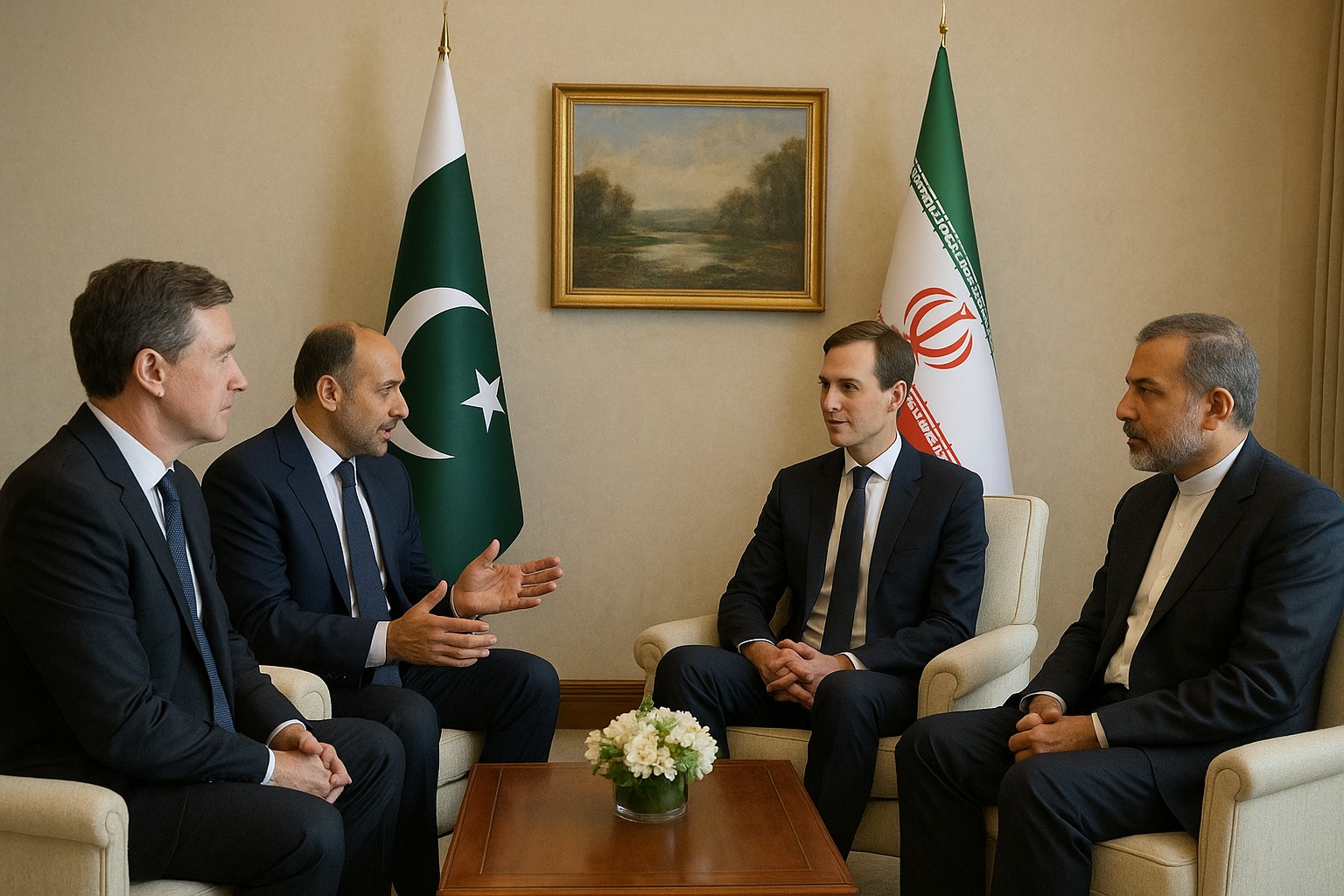
Islamabad becomes hub for Iran peace dialogue as Vance, Witkoff and Kushner take part. The talks arrive at a moment when ceasefire durability, sanctions, and maritime security are tightly intertwined with energy prices and global risk sentiment.
Why Islamabad is suddenly the center of high-stakes diplomacy
Islamabad’s role is not just symbolic; it’s practical. Pakistan sits at the crossroads of Gulf security, South Asian stability, and the logistics of shuttle diplomacy. When conflicts involve the Strait of Hormuz, sanctions enforcement, and regional airspace, a host city that can speak credibly to multiple blocs matters as much as the negotiators themselves.
From a process standpoint, hosting in Islamabad can lower the temperature compared with venues that carry heavier historical baggage for either side. It also allows rapid coordination with regional stakeholders—think Gulf states, China, and neighboring security partners—without turning the meeting into a media spectacle that forces participants into rigid public postures. Personally, I view Islamabad’s “quiet competence” as an underrated diplomatic asset: it’s easier to explore options when cameras aren’t dictating every sentence.
Who’s at the table: Vance, Witkoff, and Kushner—and why their mix matters
The participation of JD Vance alongside Steve Witkoff and Jared Kushner signals a layered U.S. approach: political weight, negotiating bandwidth, and backchannel capability all in one delegation. In modern crisis bargaining, having both formal authority and informal access can compress timelines—especially when the window for preventing escalation is narrow.
Witkoff’s style is typically associated with pragmatic deal-making and iterative drafts, while Kushner’s presence suggests an emphasis on relationship management and regional coordination. Vance’s involvement, meanwhile, raises the perceived stakes: it tells counterparts and allies that Washington is invested enough to put senior political capital behind outcomes, not just exploratory dialogue.
That mix can help if the talks move from broad principles to concrete sequencing: ceasefire verification, phased sanctions relief, and guarantees around future military actions. It can also complicate things if domestic politics in any country turns the talks into a test of “toughness.” The best-case scenario is that the team’s internal diversity produces options; the worst-case is that it produces mixed signals. The delegation’s discipline—what they can commit to, and what they must defer—will shape the credibility of any Islamabad framework.
What Iran Wants and Where the Gaps Remain
Iran’s core asks in peace dialogues typically cluster around three areas: security guarantees, economic normalization, and recognition of sovereignty concerns in contested theaters. The toughest gaps often arise because each side wants irreversible concessions from the other while offering reversible steps themselves—an asymmetry that can stall even well-intentioned negotiations.
A common sticking point is the order of operations. Iran may push for clear commitments on sanctions relief (or at least enforceable waivers), while the U.S. and partners may insist on verifiable limits, monitoring mechanisms, or restrictions related to regional activities before major economic concessions. Even when both sides agree in principle, the implementation details become the battlefield: which agency verifies, what counts as compliance, and what triggers snapback measures.
The Strait of Hormuz adds another layer. Any ambiguity around maritime transit—whether through explicit tolling proposals, inspection regimes, or informal constraints—creates immediate global friction. Here, the “gap” is not only between Washington and Tehran; it’s also between what regional trading partners can tolerate and what domestic politics in Iran can accept. A durable deal must therefore be legible to shipping markets: simple rules, predictable enforcement, and a credible path to de-escalation if incidents occur.
Market Implications: oil, inflation, and crypto risk appetite
Even without a signed agreement, the mere trajectory of talks can move markets. Energy traders price in probabilities: a higher chance of sustained calm reduces the geopolitical premium in crude; a higher chance of renewed confrontation widens it fast. This is why headlines from Islamabad can ripple through gasoline prices, freight insurance rates, and inflation expectations within hours.
For central banks, the key channel is inflation persistence. If energy costs stabilize, it can soften the “higher for longer” rate narrative; if shipping risks rise, imported inflation pressures return. That’s not abstract—household costs, industrial input prices, and the pace of rate cuts are all indirectly exposed to whether Hormuz stays open under predictable conditions.
Crypto tends to respond as a high-beta expression of risk sentiment. When geopolitical stress eases, liquidity and speculative appetite can rebound, pulling major assets upward. But it’s not purely bullish: if talks fail and volatility spikes, crypto can drop alongside equities in a broad risk-off move. In my experience following these cycles, the most useful mindset is probabilistic: avoid trading the headline; focus on whether negotiations produce verifiable steps that reduce tail risk.
Practical signals to watch (without overreacting)
- Verification language: mentions of monitoring, inspection, third-party verification, or clear compliance triggers
- Sequencing detail: phased steps with dates, deliverables, or conditional waivers rather than vague promises
- Maritime clarity: explicit commitments about safe passage, transit rules, and incident response channels
- Sanctions mechanics: references to specific instruments (waivers, licenses, escrow structures) instead of generic relief
- Domestic framing: how each side explains progress to its own public; rhetoric often predicts durability
The “Islamabad framework”: what a workable deal could look like
A realistic diplomatic package tends to be modular, not monolithic. Instead of one sweeping document, negotiators often build a scaffold: a ceasefire layer, a humanitarian layer, an economic layer, and a long-term security layer. Islamabad can function as the place where these modules are aligned into a single timetable—especially if the goal is to prevent incidents from unraveling progress.
In practical terms, expect heavy attention to compliance design. That means defining what counts as a violation, what evidence is required, and what the response should be. This may sound technical, but it is the difference between a ceasefire that holds and one that collapses under its first disputed event. An agreement that relies on trust alone is fragile; an agreement that relies on procedures can survive stress.
Another under-discussed element is “off-ramps.” A deal needs built-in de-escalation channels: direct lines between military commands, maritime incident protocols, and a dispute resolution forum that doesn’t require public confrontation. If Islamabad talks produce these guardrails—even without solving every political question—they can still meaningfully reduce the chance of renewed conflict.
What businesses, travelers, and observers can do with this information
For readers who aren’t trading oil futures or drafting foreign policy memos, the value is in preparedness and interpretation. Companies with exposure to shipping, fuel costs, or Middle East supply chains should treat Islamabad as an operational risk signal—especially if their budgets assume stable energy prices. Travelers and diaspora communities should pay attention to airspace notices and insurance advisories, which often change before major news outlets catch up.
If you manage procurement or logistics, scenario planning is the most practical step: identify alternate routes, review force majeure clauses, and set thresholds for when to hedge fuel costs. Investors can reduce emotional decision-making by predefining what outcomes matter: not optimistic statements, but verifiable steps like reopened shipping lanes, clear compliance mechanisms, and staged sanctions actions that can actually be implemented.
On a human level, it’s worth remembering that peace dialogues are rarely linear. Progress can be real even when headlines sound messy. I tend to look for boring indicators—technical committees, schedules for follow-up meetings, and agreed terminology—because boredom in diplomacy often means seriousness.
Conclusion: Islamabad’s moment could reshape more than the ceasefire
Islamabad becoming a hub for Iran peace dialogue as Vance, Witkoff, and Kushner take part reflects a push to convert a fragile pause into a structured process. The biggest question isn’t whether the talks produce grand statements; it’s whether they produce enforceable sequencing on security, sanctions, and maritime stability.
If negotiators can narrow the gaps and build mechanisms that survive inevitable frictions, the payoff extends far beyond politics—into energy affordability, inflation trends, and global risk appetite. If they can’t, markets and ordinary lives will feel the consequences quickly, because the Strait of Hormuz and sanctions policy are not distant abstractions; they’re levers that move the real economy.