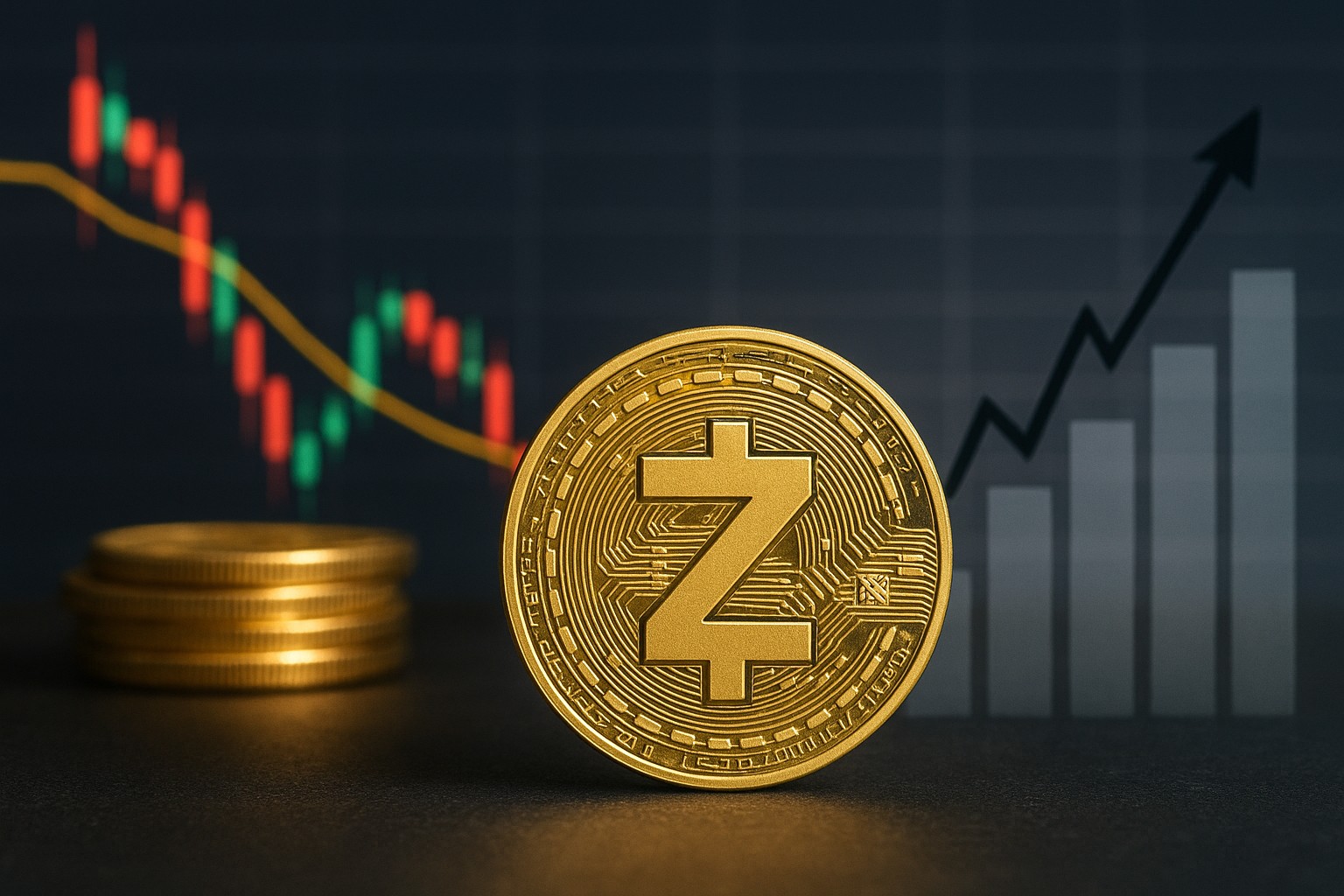
Zcash rally slows as options and futures activity spikes, and traders are now asking whether $400 remains on the table. After a near-vertical move, ZEC is entering the phase where derivatives positioning can matter as much as spot demand, making risk management as important as upside targets.
What’s behind the slowdown after a parabolic run?
Zcash (ZEC) can cool down even while the broader trend stays bullish. After a strong impulse leg, price often pauses to digest profits, rebalance leverage, and retest areas where late buyers first piled in. This is especially common when a move starts to look like a parabolic run: momentum attracts momentum, then the market needs breathing room.
A slowdown doesn’t automatically mean the rally is over. In practice, consolidation is how many uptrends survive. What changes is the character of price action: wicks get longer, intraday reversals increase, and headlines shift from simple spot buying to the mechanics of futures, options, funding, and liquidations.
From my perspective, this is the point where ZEC becomes less about predicting a single direction and more about mapping scenarios. If $400 is a magnet, the path there may include shakeouts designed to test conviction—especially when leverage is elevated.
Derivatives froth: why open interest and volume can amplify moves
A key reason Zcash can feel unstable during these phases is the feedback loop between price and derivatives positioning. When futures open interest rises quickly, it often signals that traders are adding leverage faster than the underlying spot market is absorbing it. That leverage can accelerate upside in a squeeze, but it can also unwind violently.
Higher spot volume alongside soaring futures activity can be interpreted in two very different ways: healthy participation or late-stage chasing. The difference usually shows up in how price reacts to dips. If dips are bought quickly without large liquidation cascades, that’s constructive. If dips trigger forced selling and a rapid drop, the market was likely over-levered.
Another nuance: options activity can increase even when traders are cautious. A spike in options volume may reflect hedging (protective puts), yield strategies (covered calls), or speculative bets on continued volatility. In other words, the mere presence of options demand isn’t bearish or bullish by itself—its structure matters.
Technical analysis: overbought RSI, MACD signals, and key ZEC levels
Technical analysis becomes most useful when it’s tied to decision points rather than predictions. In fast ZEC rallies, RSI can remain overbought for longer than many expect, especially on lower timeframes. Overbought doesn’t mean price must fall; it often means entries are riskier and timing matters.
MACD staying positive typically supports the idea that trend momentum remains intact, even if price is stretched. Where traders get trapped is assuming momentum indicators guarantee continuation. In reality, momentum can remain bullish while price chops sideways, slowly resetting the indicators and shaking out impatient longs.
For practical levels, traders commonly watch:
– The psychological round number near $400 as an upside trigger and potential take-profit zone
– Prior breakout areas below current price as first support zones during pullbacks
– The most recent consolidation range (if formed) as a line in the sand for trend structure
If ZEC can build a base without repeatedly wicking below support, $400 can remain realistic. If it repeatedly fails to hold the breakout zone, the market is signaling that buyers are no longer willing to defend higher prices.
Options activity spikes: what it suggests about positioning and hedging
Options are where uncertainty gets priced in. When options activity spikes during a cooling rally, it often means one of two things: traders are paying up for protection, or they’re betting the next move will be large (either direction). Both scenarios imply that volatility expectations are elevated.
How to interpret options and futures signals (without overreacting)
Use derivatives data as a risk dashboard rather than a crystal ball:
- Rising futures open interest + rising price
- Can indicate strong trend participation
- Also raises the odds of liquidation-driven pullbacks
- Rising options volume with elevated implied volatility
- Suggests demand for hedges or volatility bets
- Often precedes larger candles and wider ranges
- Funding turning persistently expensive for longs
- Can signal crowded positioning
- Increases vulnerability to a sharp flush
- Put/call balance shifting during consolidation
- More puts can be simple insurance, not necessarily bearish conviction
- More calls can reflect upside chase, but may cap upside if dealers hedge dynamically
Personally, I like to see options activity increase in a healthy uptrend—if it’s paired with stable spot support. If the only thing holding price up is leverage, the rally becomes fragile.
Is $400 still in range? Bull, base, and bear scenarios
Whether $400 remains on the table depends on how ZEC behaves during this slowdown. Markets often revisit round numbers because they’re natural zones for limit orders, stop placement, and profit-taking. But reaching them sustainably requires more than a single wick—it requires follow-through.
In a bullish scenario, ZEC consolidates in a relatively tight range, funding normalizes, and spot buyers step in on dips. That combination can set up a second leg higher where $400 acts as the next obvious magnet. If the market clears $400 cleanly, the next question becomes whether it can hold above it, not just tag it.
In a base-building scenario, price chops sideways, RSI cools off, and the market “pays” for the earlier rally through time rather than a deep drawdown. This is often the most constructive outcome for continuation, even if it feels boring day-to-day.
In a bearish scenario, leverage unwinds aggressively: liquidations cascade, supports fail quickly, and bounce attempts are sold. In that case, $400 may still be reachable later, but the market likely needs a deeper reset before another serious attempt.
Practical playbook: managing risk when leverage is high
When derivatives froth rises, the best edge for many traders is simply surviving the volatility. If you’re trading ZEC in this environment, consider simplifying your approach and tightening your process.
First, size matters more than being right. Smaller position sizing can keep you in the game when intraday swings widen. Second, plan exits in advance: decide where you’re wrong, where you’re taking partial profits, and how you’ll react if $400 is tapped and rejected.
Finally, treat headlines as noise compared to market structure. In late-stage momentum phases, the market often moves first and explains later. I’ve found it’s more useful to watch how ZEC reacts to stress—dips, failed breakouts, and liquidation spikes—than to chase every narrative.
Conclusion
Zcash rally slows as options and futures activity spikes, and that combination tends to increase volatility while making price action more sensitive to leverage. $400 can still be in range, but the quality of the move matters: a stable base and resilient spot buying keep the target realistic, while a leverage-driven unwind can delay it. For traders, the priority now is balancing upside participation with disciplined risk control in a market that can swing sharply in either direction.