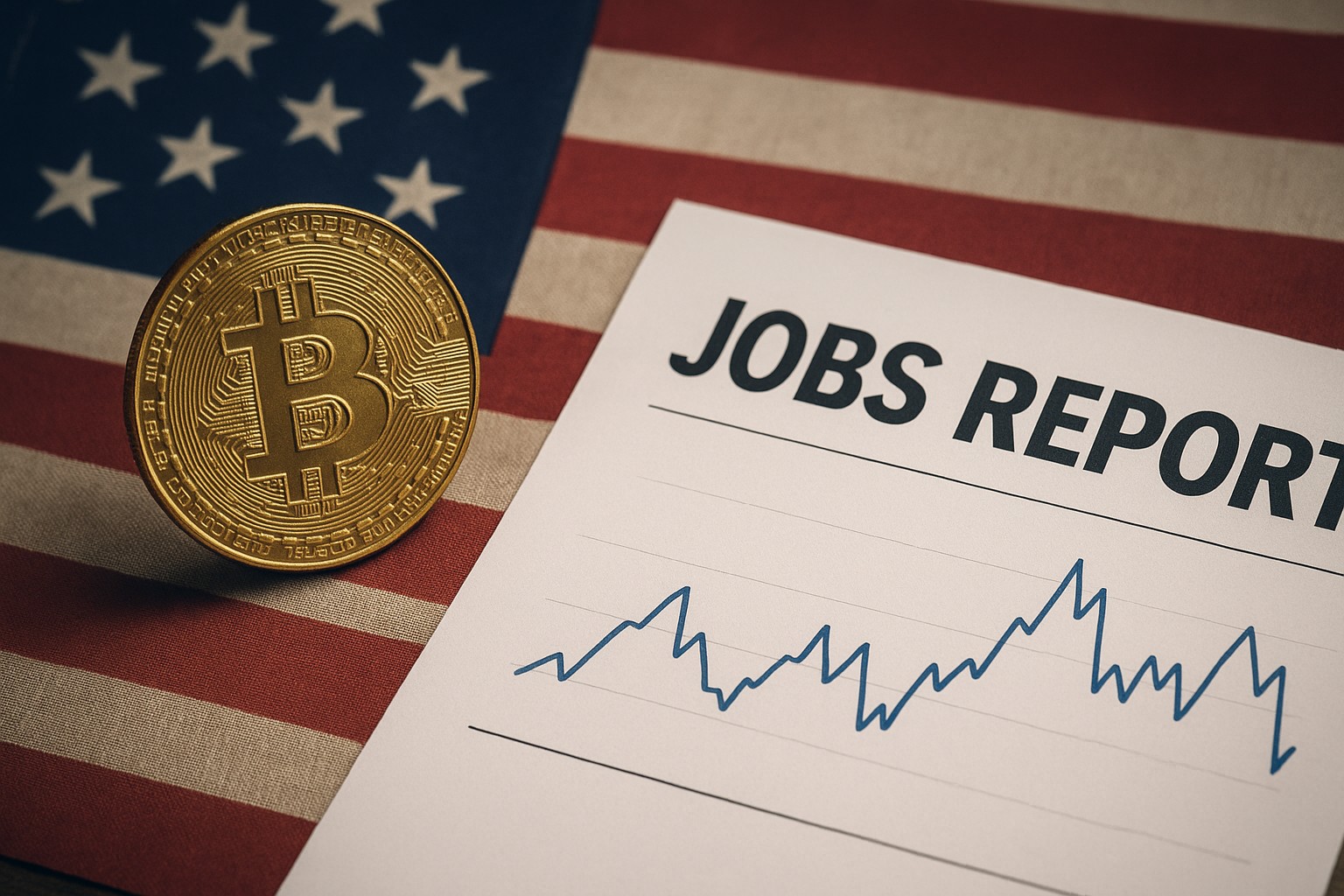
Bitcoin’s next move may hinge on whether the jobs numbers hold up. When payroll data surprises, crypto often reacts before traditional markets fully digest what it means for interest rates, liquidity, and risk appetite.
Introduction: Why a single jobs report can steer Bitcoin
Bitcoin trades as a global, always-on asset, but its biggest directional pushes still tend to cluster around macro catalysts—especially US labor data. A strong or weak jobs print can change expectations for inflation, Federal Reserve policy, and real yields, which then ripple into everything from equities to the dollar and, increasingly, Bitcoin.
I’ve watched plenty of “clean” narratives fall apart within hours because the market wasn’t really trading the headline number—it was trading the path of rates implied by that number. In that sense, the key question isn’t just whether the jobs report is hot or cool, but whether markets trust it enough to reprice the next few months of policy and risk.
Markets: How jobs numbers translate into Bitcoin price action
Jobs data matters because it feeds directly into the rate-cut/rate-hike debate. When employment stays resilient, the Fed has more room to keep policy tight, which typically lifts bond yields and strengthens the dollar. That combination often pressures risk assets, including Bitcoin, because “safe” cash yields become more competitive and liquidity tends to tighten.
But the relationship isn’t one-way. Bitcoin sometimes rallies on strong jobs numbers if traders interpret them as “growth is fine,” especially when positioning is defensive and a relief rally is primed. The nuance lies in which part of the macro stack dominates: growth optimism, inflation fear, or policy restriction.
A practical way to read the reaction is to track three things right after the release: the 2-year Treasury yield, the US Dollar Index (DXY), and implied Fed policy probabilities. If yields and the dollar spike while Bitcoin can’t hold key levels, it’s often a sign the market is prioritizing tighter financial conditions over growth optimism.
When the NYSE goes dark, Bitcoin becomes the market
Unlike stocks, Bitcoin doesn’t wait for the opening bell. When major macro data hits during equity-market downtime—holidays, weekends, or simply outside US hours—Bitcoin becomes a kind of first responder for global risk sentiment. That can create exaggerated moves because liquidity is thinner and cross-asset arbitrage isn’t fully active.
This is where traders get trapped: Bitcoin may “pre-price” a macro shock, then reverse when equities reopen and the broader market interprets the same data differently. If futures, ETFs, and systematic flows come in later with a conflicting read, Bitcoin’s initial move can look like a fake-out even if it was rational given the information and liquidity at the time.
From a risk-management perspective, the takeaway is straightforward: treat off-hours macro reactions as provisional. If you’re trading directionally, consider waiting for confirmation once US rates markets and equity index futures show their hand. If you’re investing, use the volatility to evaluate whether the move changes the longer-term thesis—or just reflects temporary market structure.
The Fed has no chair, the market has no floor: what “holding up” really means
“Jobs numbers holding up” isn’t just about one month beating expectations. It’s about persistence and credibility—whether the labor market remains tight enough to keep wage growth sticky and inflation risks alive. If the data repeatedly shows resilient hiring and low unemployment, markets will be slower to price rate cuts, and Bitcoin may struggle to sustain upside breakouts without a fresh catalyst.
Just as important is whether the report is internally consistent. Payroll gains can look strong while hours worked, participation, or revisions tell a different story. When the underlying details weaken, traders often fade the headline because they anticipate future downgrades or methodological noise.
There’s also a second-order effect: if markets decide the labor market is “too strong,” they may worry about the Fed needing to be more restrictive for longer. That doesn’t always crash Bitcoin, but it can cap rallies, keep volatility elevated, and shift leadership toward defensive crypto positioning (higher-quality, more liquid assets) rather than speculative altcoin expansions.
Learn: How to read a jobs report for crypto (without overcomplicating it)
Use the headline as a starting point, not a conclusion. The fastest way to improve your read is to follow a short checklist and connect it to rates expectations.
- Nonfarm payrolls (NFP): Big upside surprises tend to lift yields; downside surprises can boost cut expectations.
- Unemployment rate: A rising trend often matters more than a single tick.
- Average hourly earnings: Markets treat this as inflation-adjacent; hot wages can negate a weak payroll print.
- Revisions: Prior months being revised down can quietly flip the story.
- Participation rate & hours worked: Helpful for judging whether “strength” is broad-based.
News: Revisions risk, narrative whiplash, and why Bitcoin can overshoot
One of the most underappreciated elements of jobs data is revision risk. The first print gets headlines, but subsequent revisions can materially change the interpretation of the labor market. When that happens, traders who positioned aggressively on the initial story may be forced to unwind, creating volatility that looks disconnected from “new” information.
Bitcoin can overshoot in both directions because it trades continuously and is highly sensitive to leverage and liquidation cascades. If a jobs print pushes yields sharply higher, leveraged longs may get squeezed, accelerating downside. Conversely, a softer report can trigger a fast upside move as shorts cover and traders chase a rate-cut narrative.
In my experience, the cleanest way to avoid getting whipsawed is to separate “data shock” from “trend confirmation.” A single report can spark a move, but Bitcoin tends to sustain trends when multiple releases (CPI, PCE, ISM, claims) align with the same policy trajectory. If jobs data conflicts with inflation data, the market often chops until one side wins.
Market Structure: ETFs, liquidity, and why macro now hits harder
Bitcoin’s market structure has matured. With spot ETFs, institutional custody, and more integration with traditional finance, macro signals transmit faster and more mechanically. When yields move, portfolio managers and systematic strategies may rebalance risk, and Bitcoin can get pulled into the same factor buckets as high-beta tech.
That doesn’t mean Bitcoin is “just another stock,” but it does mean the pathway from jobs data to Bitcoin price is more direct than it was years ago. Liquidity conditions—like dealer balance sheets, funding rates, and the availability of leverage—shape whether the reaction is smooth or violent. During tight liquidity, even modest surprises can produce outsized candles.
For investors, this can be a positive development: deeper markets and broader participation can reduce long-term fragility. For traders, it raises the bar. You’re no longer only trading crypto-native flows; you’re trading a hybrid arena where rates, dollar strength, and cross-asset risk models can dominate for stretches.
Conclusion: What to watch next if jobs numbers “hold up”
If labor data continues to look sturdy—and the market believes it—Bitcoin’s next move may depend on whether yields keep rising, whether the Fed stays restrictive, and whether liquidity can expand anyway through risk-on sentiment or policy guidance. In that scenario, upside is still possible, but it may come with sharper pullbacks and more sensitivity to every macro release.
If, however, the jobs numbers weaken through revisions or deteriorating internals, markets may lean harder into rate-cut expectations. That can be supportive for Bitcoin, especially if the dollar softens and financial conditions ease. Either way, the best approach is to treat jobs reports as part of a sequence: follow the yields, watch the revisions, and look for confirmation across the next inflation prints before assuming the first reaction is the final verdict.