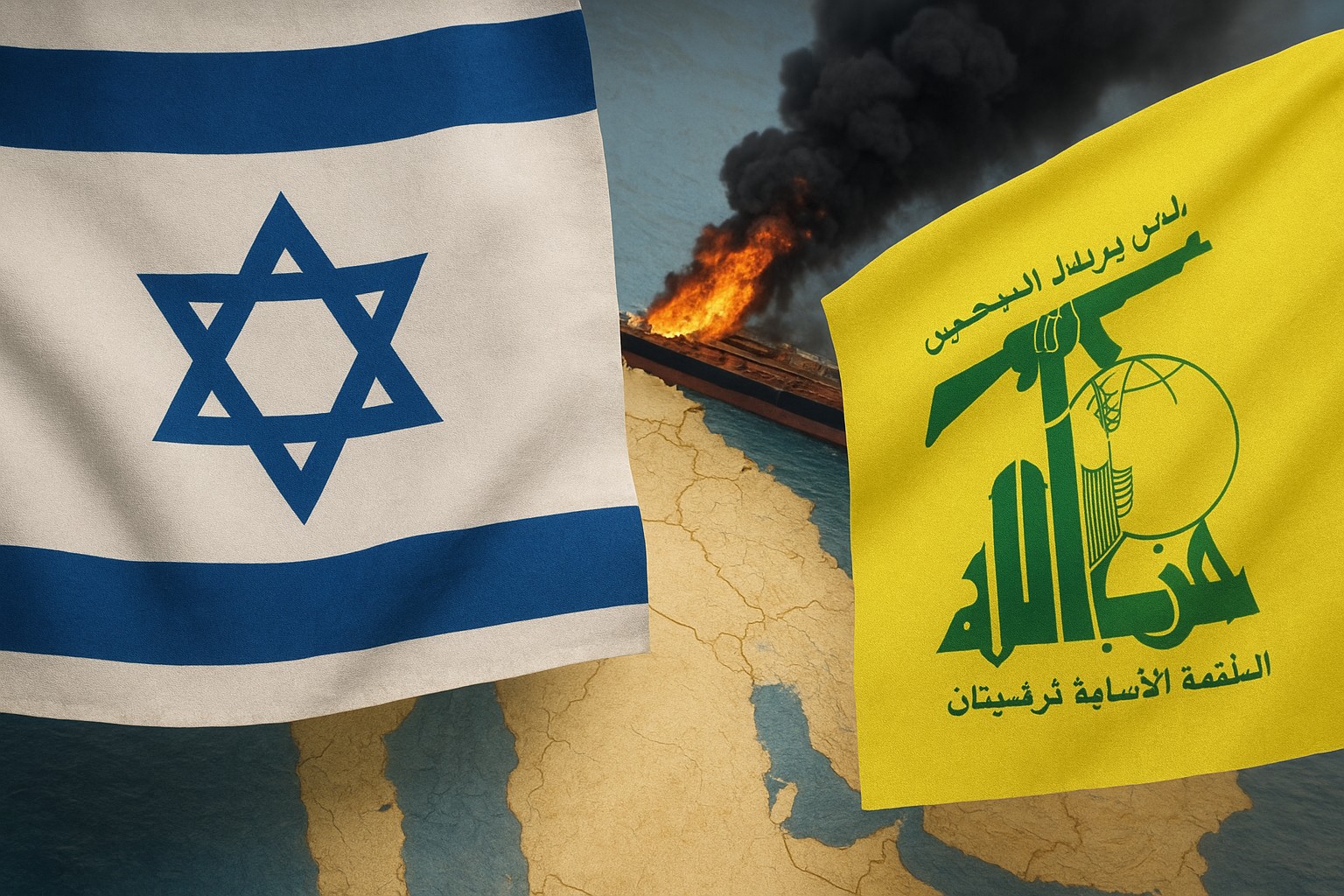
Odds on Polymarket imply Israel Hezbollah fighting could drag on even after Hormuz settlement. Even if a narrow maritime or US–Iran de-escalation cools oil markets, traders are signaling the Lebanon front may follow its own timetable—and the fine print of what counts as a ceasefire matters.
Why Polymarket odds matter for the Israel–Hezbollah timeline
Prediction markets like Polymarket are not crystal balls, but they are useful barometers of how thousands of participants weigh public information, incentives, and uncertainty in real time. When odds tilt toward a later ceasefire date, it typically reflects more than a headline-driven mood swing: traders are pricing in operational realities, political constraints, and the risk that announcements fall short of a verifiable, mutual halt in fighting.
In practical terms, a Polymarket contract forces clarity. It doesn’t reward vague optimism; it rewards the outcome defined by the market’s resolution rules. For the Israel–Hezbollah track, that means traders can be skeptical even when diplomats sound constructive, because skepticism often comes down to whether both parties will publicly and mutually commit, not whether one side hints at restraint.
My take: the most valuable signal from these markets isn’t a single percentage number—it’s the spread between “soon” and “later” timelines, which reveals how traders judge the sticking points. If early dates consistently trade at a discount, the crowd is effectively saying: expect friction, ambiguous statements, and events on the ground that keep escalation risk alive.
Polymarket traders doubt quick Israel–Hezbollah ceasefire despite Hormuz deal
A Hormuz settlement—especially one framed around keeping shipping lanes open and reducing US–Iran friction—can meaningfully lower global risk sentiment. But it doesn’t automatically translate into quiet along the Israel–Lebanon border. Polymarket pricing that leans toward a prolonged conflict suggests traders think the Lebanon theater has distinct drivers: deterrence dynamics, domestic politics, military posture, and questions of sovereignty and security guarantees.
This distinction is crucial for anyone reading markets. A maritime de-escalation can reduce energy volatility and calm broader regional fears, yet still leave room for Israel–Hezbollah exchanges to continue if leaders believe they can achieve tactical objectives without crossing a threshold that triggers wider war. The “decoupling” narrative—Hormuz cools down, Lebanon stays hot—is exactly the kind of scenario prediction markets are built to express.
If you’re using these odds for decision-making (portfolio hedging, business planning, or risk briefings), treat them like an early-warning dashboard. They reflect how quickly participants expect a specific condition to be satisfied—mutual ceasefire—rather than whether tensions generally feel lower this week.
What counts as a ceasefire? Resolution rules, wording, and verification
The biggest trap with ceasefire talk is semantic: leaders may announce pauses, partial stand-downs, or conditional restraint that sounds like peace but fails the standard of a mutually agreed stop to direct military engagement. In prediction markets, the exact language and corroboration requirements determine whether an event resolves as Yes or No, and traders price that legalistic risk.
Even outside Polymarket, wording drives real-world interpretation. One side may claim it is honoring calm while continuing “defensive” operations; the other side may label those same actions as violations. In the Israel–Hezbollah context, where operations can range from border skirmishes to deeper strikes, the difference between a tactical lull and an actual ceasefire can be thin—and politically convenient to blur.
Practical checklist for interpreting ceasefire headlines
- Mutuality: Did both Israel and Hezbollah (not just intermediaries) explicitly agree?
- Public confirmation: Is there an official statement, not just anonymous briefings?
- Scope: Does it cover Lebanon, or only another theater (maritime, Gaza, Iran-linked dynamics)?
- Verification: Are credible media and monitoring channels converging on the same interpretation?
- Behavioral follow-through: Do airstrikes, launches, and incursions measurably drop for days, not hours?
Personally, I watch for a mismatch between diplomatic optimism and operational tempo. If strikes and counter-strikes continue while officials trade carefully worded phrases, prediction markets often keep “ceasefire soon” odds capped—even if cable news chatter grows hopeful.
Why a Hormuz settlement may not end the Lebanon front
The Strait of Hormuz is a global chokepoint; any settlement there can lower oil prices, reduce shipping insurance costs, and ease pressure on policymakers to prevent a wider conflagration. But Israel–Hezbollah dynamics are frequently driven by local deterrence and border security calculations that aren’t solved by maritime stabilization. Traders appear to be pricing that separation: a broader cooling can happen while the Lebanon front remains active.
Another reason is sequencing. Diplomatic deals often start with the most systemically dangerous pressure point (like shipping lanes) because it’s easier to rally international support around it. The Israel–Hezbollah front, however, involves deeper disputes—rules of engagement, sovereignty, displaced populations, and the credibility of security assurances. Those issues take longer to negotiate, and they can be disrupted by a single high-casualty event.
Finally, domestic politics can be a spoiler. Leaders may face incentives to avoid appearing weak, to maintain deterrence, or to keep military options open even while endorsing a broader de-escalation framework. Markets, sensing that these incentives don’t disappear overnight, may continue to price a non-trivial probability of prolonged fighting well beyond any Hormuz-related progress.
On-the-ground signals traders watch: airstrikes, retaliation cycles, and red lines
Prediction market participants tend to anchor to observable patterns: frequency of airstrikes, intensity of cross-border fire, and whether actions creep beyond prior red lines. If strikes persist in Lebanon or retaliatory cycles become more regular, it becomes harder to justify high odds of an imminent, mutually recognized ceasefire—even if negotiations are happening in parallel.
Traders also track the difference between intent and capability. Even when one side signals conditional restraint, the other side may continue operations to degrade capabilities or to shape negotiations from a position of strength. That creates a bargaining environment where neither side wants to be the first to fully stop, because stopping first can look like conceding leverage.
For readers trying to make sense of the noise, focus on trendlines rather than individual incidents. A single quiet day isn’t a ceasefire; a sustained decline in operations plus aligned political messaging is closer to what markets will treat as a real turning point.
How to use Polymarket odds for risk planning (without over-trusting them)
Polymarket odds are best used as a probabilistic input, not a verdict. They can help you think in scenarios: What if fighting persists for weeks? Months? What if there’s a partial pause that doesn’t meet formal ceasefire criteria? The utility comes from mapping actions to timelines—especially for businesses exposed to energy prices, shipping costs, or regional supply chains.
A practical approach is to translate market-implied probabilities into triggers:
– If “ceasefire by X date” drops materially, consider that a signal to extend hedges or contingency plans.
– If near-term ceasefire odds rise sharply, validate whether it’s driven by confirmed mutual statements or just rumor momentum.
– Compare multiple markets (oil, shipping, regional escalation) to see if the narrative is consistent or diverging.
Light personal commentary: prediction markets can be brutally honest about ambiguity. Diplomacy often speaks in flexible language to keep doors open; traders punish that flexibility because contracts demand binary outcomes. That doesn’t make traders right—but it does make their skepticism informative.
Conclusion: Markets are pricing a longer, messier path than headlines suggest
Odds on Polymarket imply Israel Hezbollah fighting could drag on even after Hormuz settlement because the Lebanon front is shaped by its own incentives, red lines, and verification hurdles. A Hormuz deal may reduce systemic regional risk and calm global markets, yet still fail to produce the kind of clear, mutual ceasefire declaration that prediction market rules require.
If you’re following this story for investment, policy, or operational planning, treat the odds as a living map of uncertainty. Watch the wording, the verification, and the on-the-ground tempo—and assume that partial pauses and political carve-outs can extend the conflict timeline even when a broader de-escalation framework appears to be taking shape.