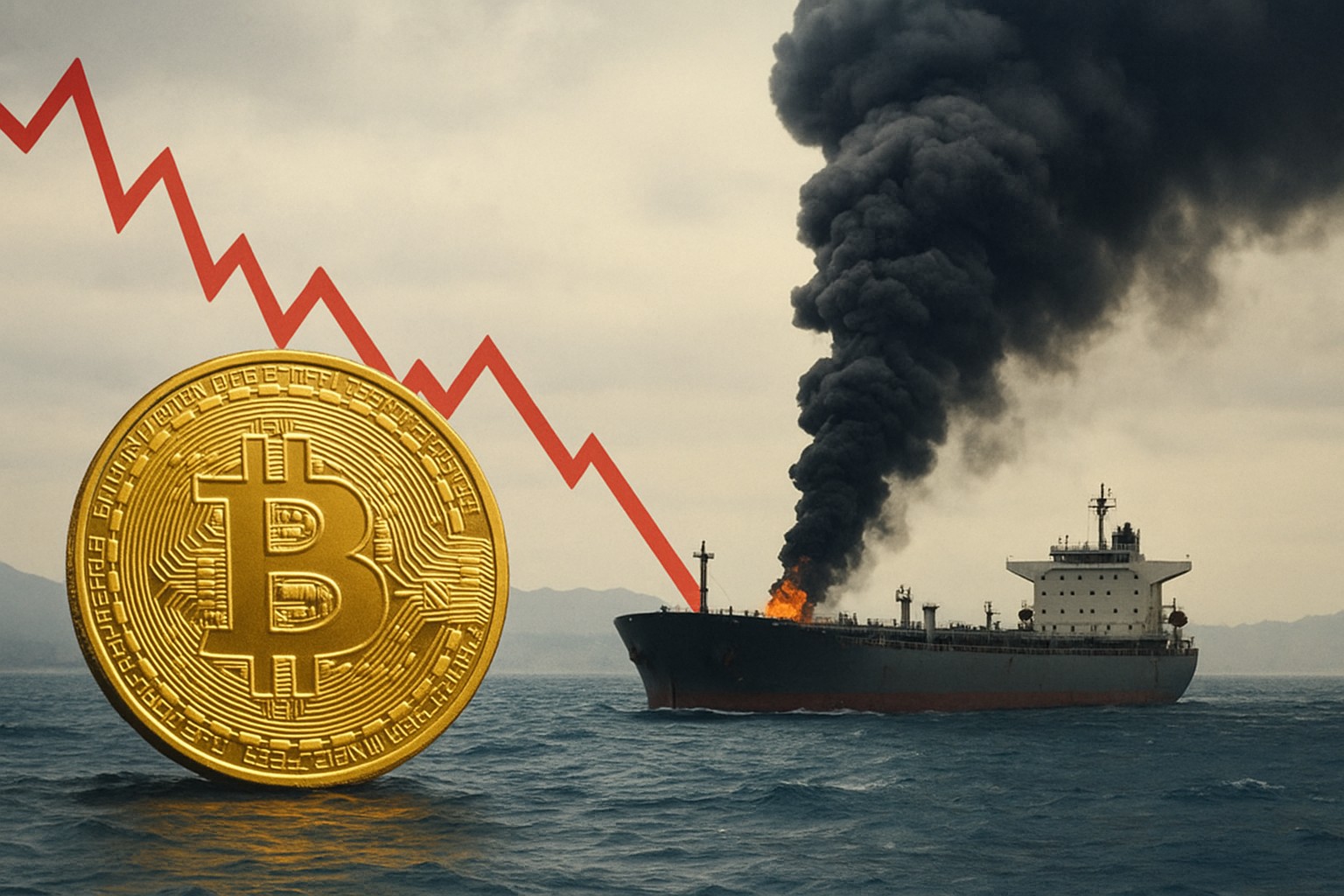
Bitcoin’s recovery looks shaky with Strait of Hormuz uncertainty still in play. Even after the first wave of panic faded, the market is still pricing the possibility that energy and inflation shocks return quickly, and crypto rarely shrugs those off for long.
News: Why the Strait of Hormuz still matters for Bitcoin
The Strait of Hormuz is a narrow chokepoint that sits at the heart of global oil shipping, and that is why it keeps resurfacing in crypto headlines. When the risk of disruption rises, oil can jump, inflation expectations can re-accelerate, and “risk assets” like Bitcoin can suddenly trade like a high-beta macro bet rather than a standalone technology story.
What makes Bitcoin’s recovery look shaky isn’t only the immediate price of crude; it’s the uncertainty premium that creeps into everything from shipping insurance to refinery margins to short-term inflation swaps. Markets can rally on a calm headline and then reverse on a single incident report. In practice, that creates a fragile rebound where momentum is driven more by relief than by durable demand.
I also think it’s easy to underestimate how quickly “geopolitics” becomes “liquidity.” When investors fear inflation, they fear fewer rate cuts, tighter financial conditions, and less marginal capital chasing speculative upside. Bitcoin can still perform—but the path gets bumpier.
Markets: The oil–inflation–rates chain that can cap upside
Bitcoin tends to look strongest when two things happen together: liquidity is improving and volatility is falling. A Hormuz-linked oil spike threatens both. Higher energy prices can bleed into CPI prints, transportation costs, and consumer sentiment—exactly the inputs central banks watch when deciding whether to cut rates or stay restrictive.
Even if oil retraces after a scare, the market can remain jumpy because the base case becomes “headline-sensitive.” That’s the environment where rallies stall into resistance, funding flips rapidly, and traders demand faster confirmation before committing. You’ll often see Bitcoin bounce with equities, then lag as soon as bond yields firm up again.
A useful mental model is a simple sequence: disruption risk → oil up → inflation expectations up → yields up → rate-cut odds down → risk appetite down. Bitcoin doesn’t need every link to fire to feel pressure; sometimes a rise in yields alone is enough to cool the rebound.
The macro chain: How a single shock turns into a crypto drawdown
Macro narratives can feel abstract, so it helps to translate them into concrete crypto mechanics. When inflation risk rises, the “price” of leverage rises too—either directly (higher funding/borrow costs) or indirectly (risk desks cutting exposure).
Practical indicators to monitor (and how to interpret them)
Use these as a simple dashboard during Hormuz-driven news cycles:
- Brent/WTI price and intraday range: big ranges often mean positioning is nervous, not confident
- US 2-year and 10-year yields: rising yields can pressure BTC even if stocks look okay
- Rate-cut probabilities (CME-style expectations): fading cut odds often = weaker speculative bid
- DXY (US dollar index): a strengthening dollar can drain global liquidity from risk assets
- Crypto funding rates and open interest: rising OI with flat price can signal crowded leverage
- Spot ETF flows (where applicable): steady inflows can stabilize dips; outflows amplify them
If you want one “tell” that Bitcoin’s recovery is genuinely improving, look for a combination of cooling yields plus healthier spot-led demand (not just perp leverage). Relief rallies built on leverage can vanish in hours when the next Hormuz headline hits.
Likely scenarios: What happens to BTC if Hormuz risk fades—or flares again
Scenario planning is valuable here because the market can move from calm to chaos quickly. If shipping lanes remain broadly open and energy markets continue normalizing, Bitcoin can grind higher on improving sentiment—especially if broader financial conditions ease. In that scenario, dips are more likely to be bought, and volatility tends to compress.
The second scenario is the one traders fear: intermittent disruptions, contradictory headlines, and insurance/transport costs rising even without a complete shutdown. That kind of “slow burn” stress can keep oil supported and make inflation sticky, which is a worst-of-both-worlds setup for Bitcoin: not an immediate crisis big enough to trigger coordinated stimulus, but enough uncertainty to suppress risk-taking.
A third, less discussed outcome is “macro decoupling attempt,” where Bitcoin initially sells off with risk, then rebounds as some investors rotate into hard-asset narratives. That can happen, but it usually requires time, clear evidence of currency debasement concerns, and strong spot accumulation. In the short run, Bitcoin still trades like a liquidity-sensitive asset more often than people want to admit.
Market Structure: Why the rebound can break even without bad news
Even if geopolitical headlines go quiet for a week, Bitcoin can still struggle if the internal market structure is fragile. The most common failure mode is a rally powered by aggressive perpetual futures positioning while spot demand remains modest. That setup can unwind on minor catalysts because liquidation cascades don’t need a “big” headline—just a thin order book and a crowded trade.
Watch for signs that the rebound is being carried by short covering rather than new buyers. Short covering can look impressive on the chart, but it doesn’t always create lasting support. If spot bids don’t show up after the squeeze, price often drifts back into the prior range.
From experience, a healthier recovery typically shows: rising spot volume on up days, calmer funding, and open interest that grows slowly (not explosively). If you see the opposite—spiking OI, hot funding, and frequent wicks—assume the market is trading nervously and keep position sizing conservative.
Learn: Risk management playbook for traders and long-term holders
If you’re trading this environment, the goal is not to predict every Hormuz headline—it’s to avoid being forced out by volatility. Reduce the chance that a sudden oil spike or yield jump turns into a portfolio-level event.
For active traders, consider structuring exposure around invalidation points rather than conviction. For example, scale in smaller, keep stops where the trade thesis is clearly wrong, and avoid chasing breakouts that happen during peak news hours. Volatility clusters around uncertainty, and Hormuz uncertainty is a classic volatility magnet.
For longer-term holders, the most practical approach is to separate “core” from “tactical.” Keep a core allocation you can hold through drawdowns, and use a smaller tactical sleeve for rebalancing—adding on deep pullbacks, trimming into euphoric relief rallies, and keeping cash available. If you’re using leverage at all, treat it like a short-duration tool, not a lifestyle.
Conclusion: A rebound can be real and still be fragile
Bitcoin can absolutely recover from geopolitical scares, and it often does—sometimes faster than traditional markets. But Bitcoin’s recovery looks shaky with Strait of Hormuz uncertainty still in play because energy risk feeds inflation risk, inflation risk feeds rate risk, and rate risk feeds liquidity. That chain doesn’t need to fully materialize to cap upside.
If you want to stay on the right side of this market, focus less on single headlines and more on the dashboard: oil’s trend, yields, rate-cut expectations, dollar strength, and whether BTC demand is spot-led or leverage-led. In a news-sensitive tape, durability matters more than speed—and the cleanest rallies usually arrive after the market stops flinching at every new update.